Free-floating DNA levels differed across human age groups
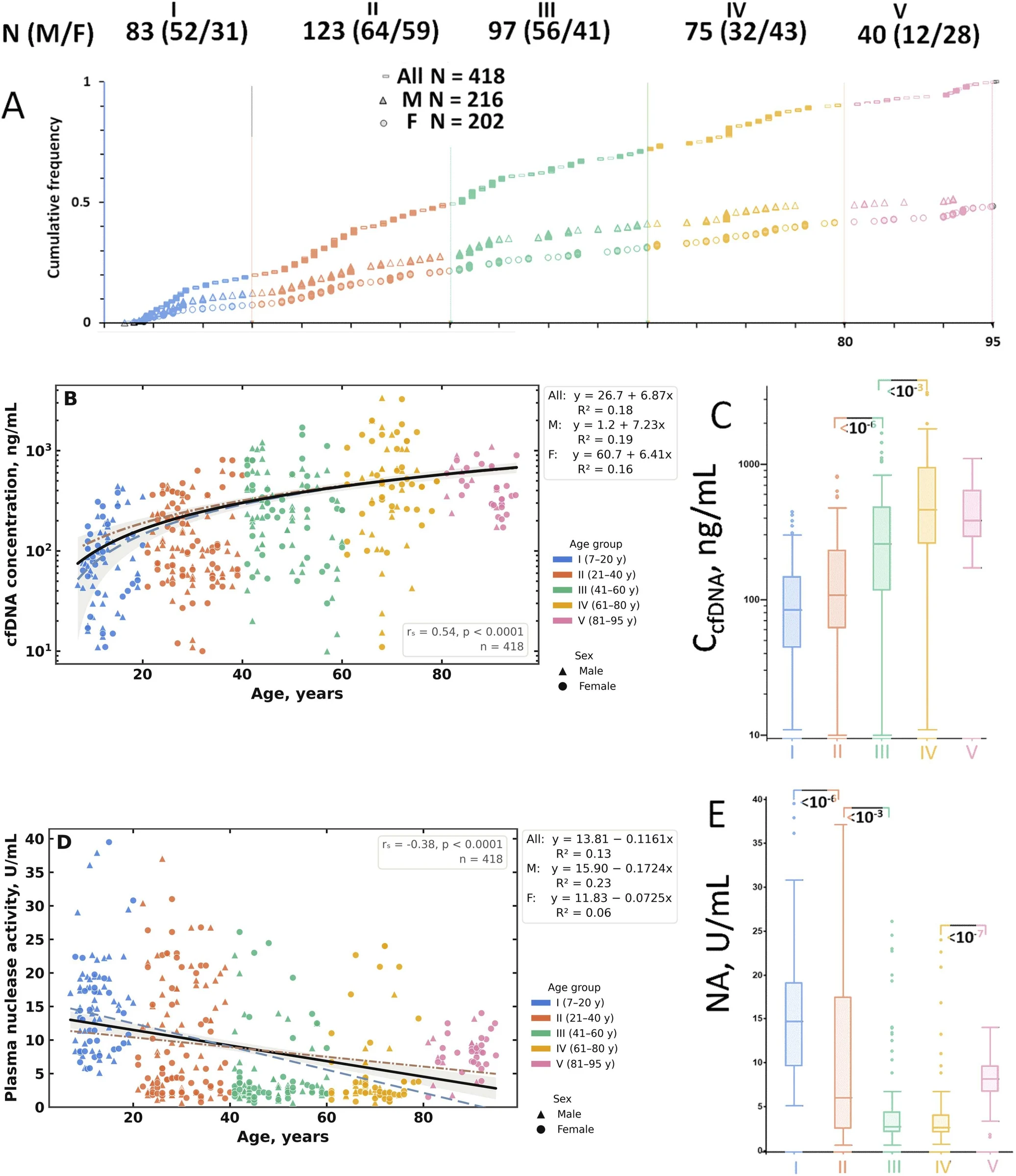
In a cross-sectional study of 418 people aged 7–95, free-floating DNA levels increased across ages 7–80 but were lower at 81–95 than at 61–80.
Our read
Mechanisms- Studied:
- Cross-sectional study of 418 community-dwelling participants aged 7–95 years
- What changed:
- Free-floating DNA levels rose across ages 7–80, but were lower at 81–95 than at 61–80
- The catch:
- Individual changes in DNA levels over time were not measured
- Why it’s aging research:
- Change across ages, or exceptional longevity.
Editor of record: Boris Djordjevic · AgingResearch.News
Among 418 community-dwelling participants aged 7–95, a cross-sectional observational study measured free-floating DNA in plasma, the liquid part of blood, and the activity of enzymes that break down DNA. Researchers also measured oxidative damage, a type of chemical damage, in this DNA from 333 participants.
DNA levels increased and enzyme activity decreased across ages 7–80. Participants aged 81–95 had lower DNA levels and higher enzyme activity than those aged 61–80. The ratio of DNA levels to enzyme activity peaked at ages 61–80 and declined thereafter. Oxidative damage in the DNA increased with age and was highest in the oldest group. An exploratory index combining DNA levels, oxidative damage and enzyme activity increased until about age 45 and then stabilized.
Why it matters
Free-floating DNA is an emerging marker of aging. The findings support investigating how the body breaks down oxidized DNA outside cells as people age.
Caveats
The cross-sectional measurements compared different people at different ages rather than tracking individuals over time. Differences between age groups may reflect differences between participants as well as aging.
Where the evidence stands
Oxidative stress and ROS signaling
- 974 independent labs in 73 countries
- 128 findings against
- Funders: National Natural Science Foundation of China and others
- 138 of 2,983 findings with company ties
- Oxidative stress and ROS signaling
- cfDNA 8-oxodG content
- cfDNA concentration–oxidation–nuclease activity composite index
- cfDNA-to-nuclease activity ratio
- Circulating cell-free DNA
- Humans
The paper
Circulating cell-free DNA and plasma nuclease activity in human aging
Mechanisms of Ageing and Development, Nov 2026
Comments
Be the first to comment.