Oxidized molecule triggers brain inflammation in mice
Mouse experiments found that raising the molecule caused cognitive decline, while drugs blocking certain enzymes counteracted the induced inflammation and cognitive changes.
Limit: The abstract does not report sample sizes
Edited by Boris Djordjevic · AgingResearch.News
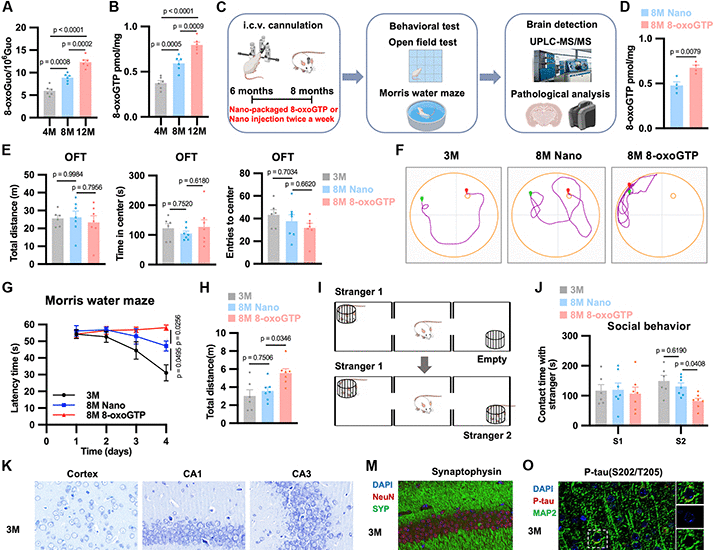
In experiments in mice, researchers studied 8-oxoGTP, a molecule formed when GTP, a building block of RNA, becomes oxidized. It accumulated in aging mouse brains. Raising its levels was enough to disrupt communication between nerve cells, cause nerve cell loss and induce cognitive decline.
The researchers identified 8-oxoGTP as a signal that activated microglia, the brain’s immune cells. It bound more strongly than GTP to parts of G proteins, which relay signals inside cells. This triggered signaling in microglia that led to production of inflammatory molecules and reactive oxygen molecules. Drugs that blocked Src family kinases, enzymes involved in cell signaling, counteracted the brain inflammation and cognitive changes induced by 8-oxoGTP.
Why it matters
The work addresses how molecular damage from oxidation may contribute to age-associated brain degeneration.
Caveats
These animal experiments do not establish effects in people. The abstract does not report sample sizes or the magnitude of the cognitive changes.

