DNA repair protein deficiency triggers DNA leakage in human cells
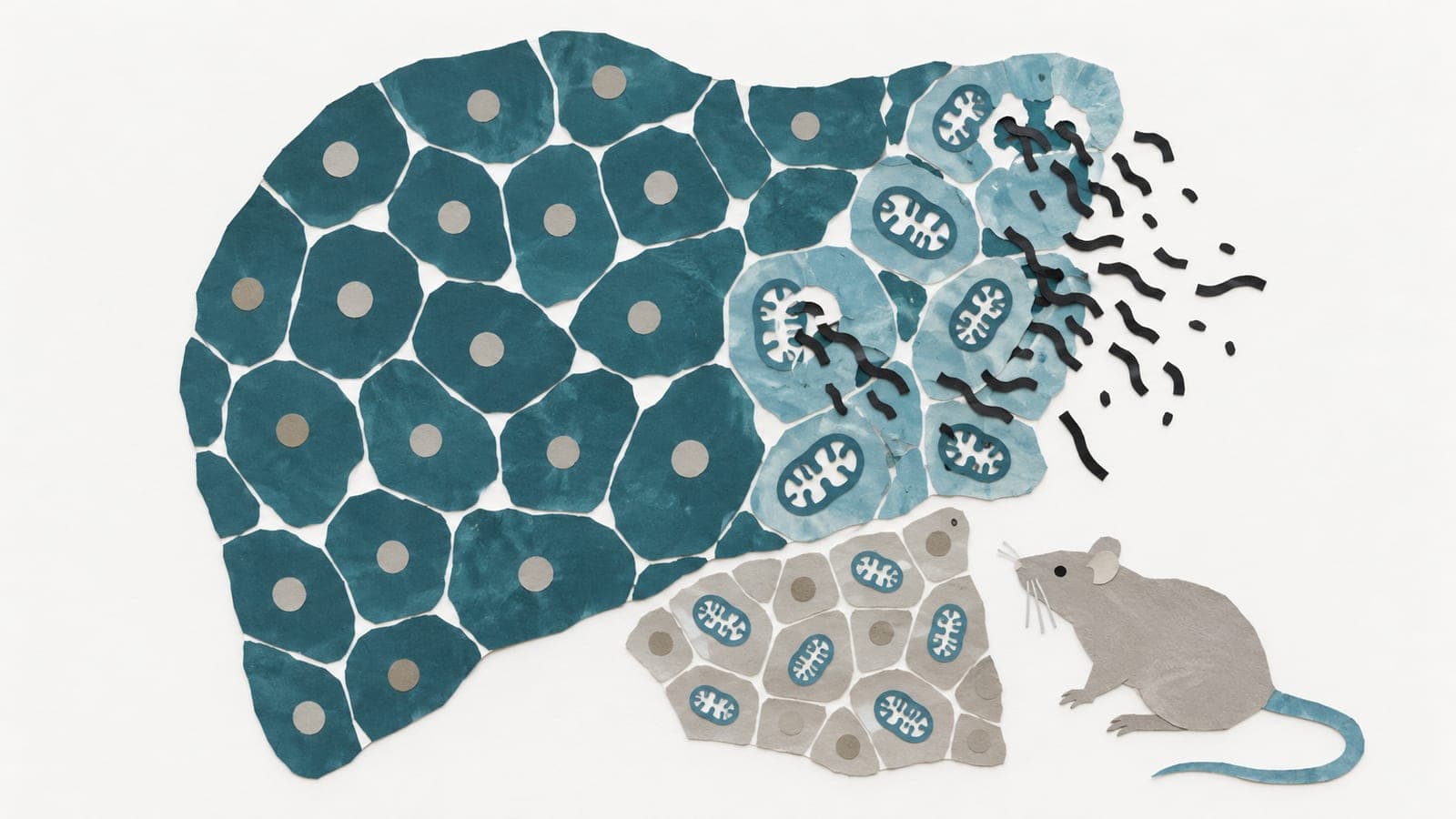
DNA fragments outside the nucleus appeared in 11.8% of breast cells deficient in the repair protein, compared with 2.2% of controls under normal conditions.
Limit: Immunity against tumors in a living body was not measured
Edited by Boris Djordjevic · AgingResearch.News
Researchers experimented with two human breast cell lines grown in the lab: noncancerous MCF10A cells and MCF7 breast cancer cells. They disrupted genes for XRCC1 and APE1, two proteins involved in DNA repair. They examined normal growth conditions and exposure to 10 millimolar potassium bromate, a DNA-damaging chemical, for 30 minutes.
In MCF10A cells, XRCC1 deficiency increased DNA damage signaling and DNA fragments outside the nucleus, the cell’s DNA-containing compartment, more than APE1 deficiency did. These fragments contained telomeric DNA, from chromosome ends. XRCC1-deficient MCF10A cells also showed activation of an immune-signaling pathway and inflammatory signaling. MCF7 cancer cells deficient in XRCC1 also showed activation of this pathway. Both cell types deficient in XRCC1 showed signs of senescence, a state in which cells stop dividing.
Why it matters
For cancer, an age-related disease, one question is whether tumor cells can be pushed into senescence. The authors suggest targeting XRCC1 may offer a way to trigger tumor senescence and promote anti-tumor immunity.
Caveats
These were experiments in cell lines, not animals or people. They do not establish that targeting XRCC1 would promote immunity against tumors in a living body.
The paper
XRCC1 deficiency drives telomeric chromatin leakage, inflammatory signalling and senescence
University of Naples Federico II
Redox Biology, Jun 17, 2026, Open access
Comments
Be the first to comment.