Gut nerve cells develop signs of cellular aging in mice
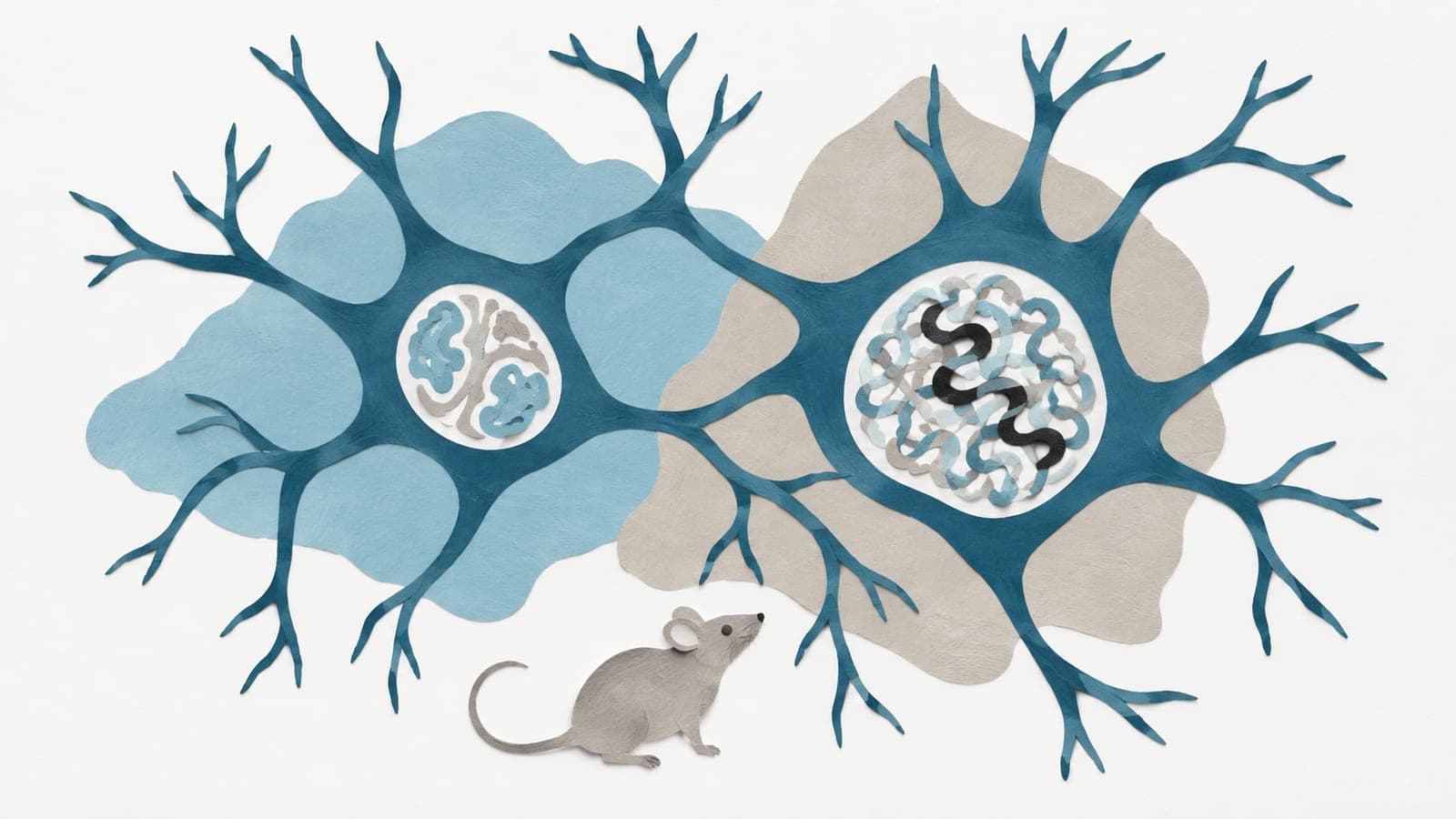
At 24 months, approximately 25–30% of mouse gut nerve cells carried a marker of senescence, a state in which cells stop dividing.

Our read
Mechanisms- Studied:
- Preprint: experiments in mice of different ages, against young mice
- What changed:
- With age, gut neurons developed aging signs: approximately 25-30% expressed the senescence marker p21 at 24 months
- The catch:
- The age-group comparisons did not assess whether senescence-like changes caused digestive problems
Editor of record: Boris Djordjevic · AgingResearch.News
Mice aged 2, 13–15 and 22–24 months were studied in experiments on nerve cells from the jejunum, part of the small intestine, and the colon. These cells help control digestion and movement through the gut. DNA damage accumulated with age in both regions. Changes in DNA packaging consistent with senescence-associated clusters of tightly packed DNA appeared by 15 months.
At 24 months, the colon contained fewer neurons, while average nerve cell bodies were larger. Approximately 25–30% of neurons contained p21, a protein that halts cell division, outside the cell nucleus. The authors described the aging cells as having a senescence-like pattern. Selected measurements in aged human gut nerve cells also showed stronger signals of DNA damage and tightly packed DNA.
Why it matters
The gut’s nerve network controls digestion and gut movement. Understanding how it ages may help clarify the cellular changes underlying age-related digestive problems.
Caveats
The age-group comparisons did not test whether the senescence-like changes caused digestive problems. The work is a preprint and has not been peer-reviewed.
Where the evidence stands
Cellular senescence
- 871 independent labs in 75 countries
- 523 findings against
- 52 trials, 15 with no results posted
- Funders: National Natural Science Foundation of China and others
- 699 of 10,000 findings with company ties
- 50 of 52 trials sponsored by developers of drugs aimed at it
Chromatin and 3D genome organization
- 58 independent labs in 23 countries
- 2 findings against
- Funders: National Institutes of Health and others
- 12 of 88 findings with company ties
The paper
Aging enteric neurons develop chromatin remodeling, DNA damage and a senescence-like phenotype
Hasselt University
bioRxiv, Nov 17, 2026, Open access, Preprint, not yet peer-reviewed


Comments
Be the first to comment.