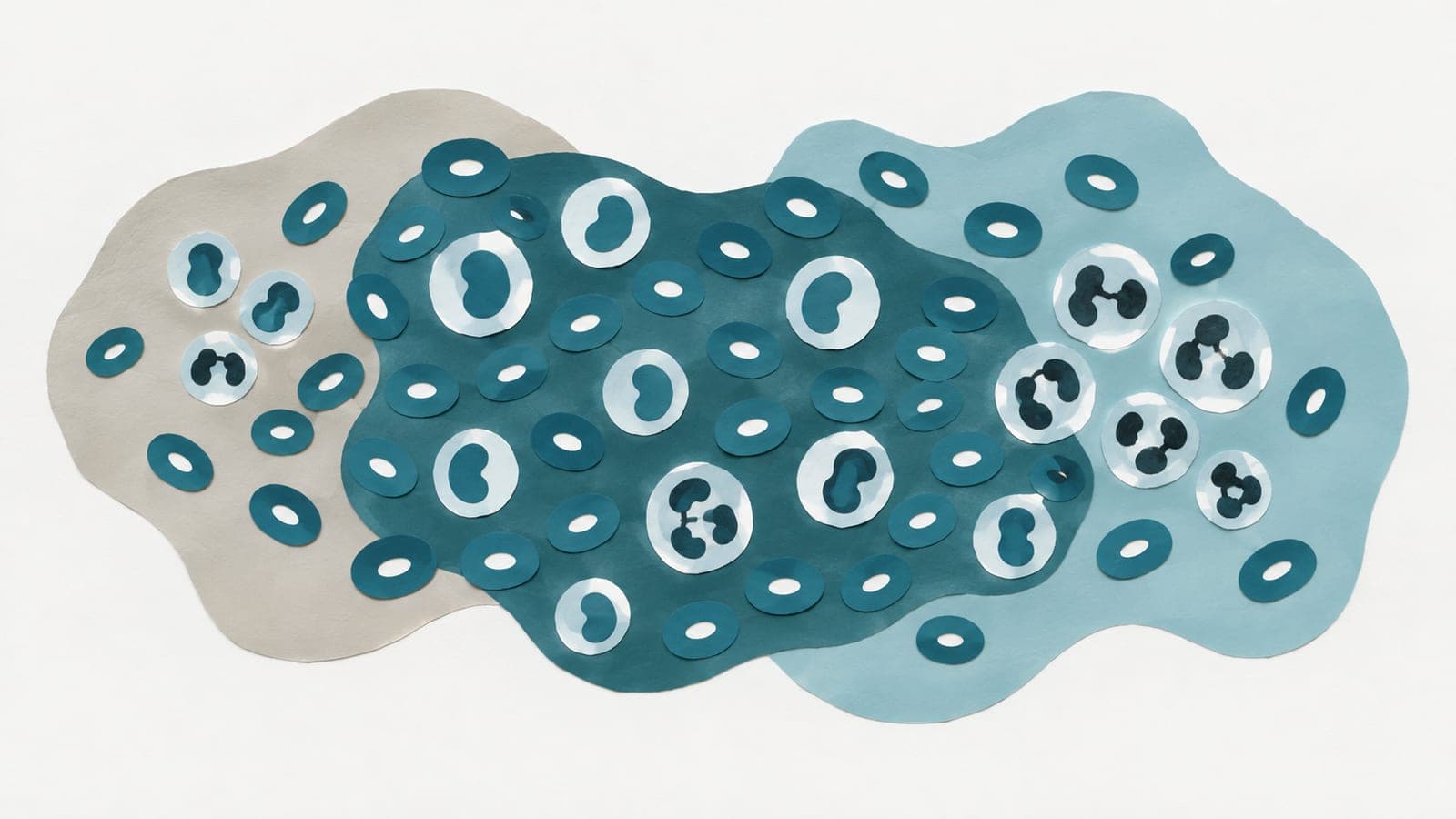
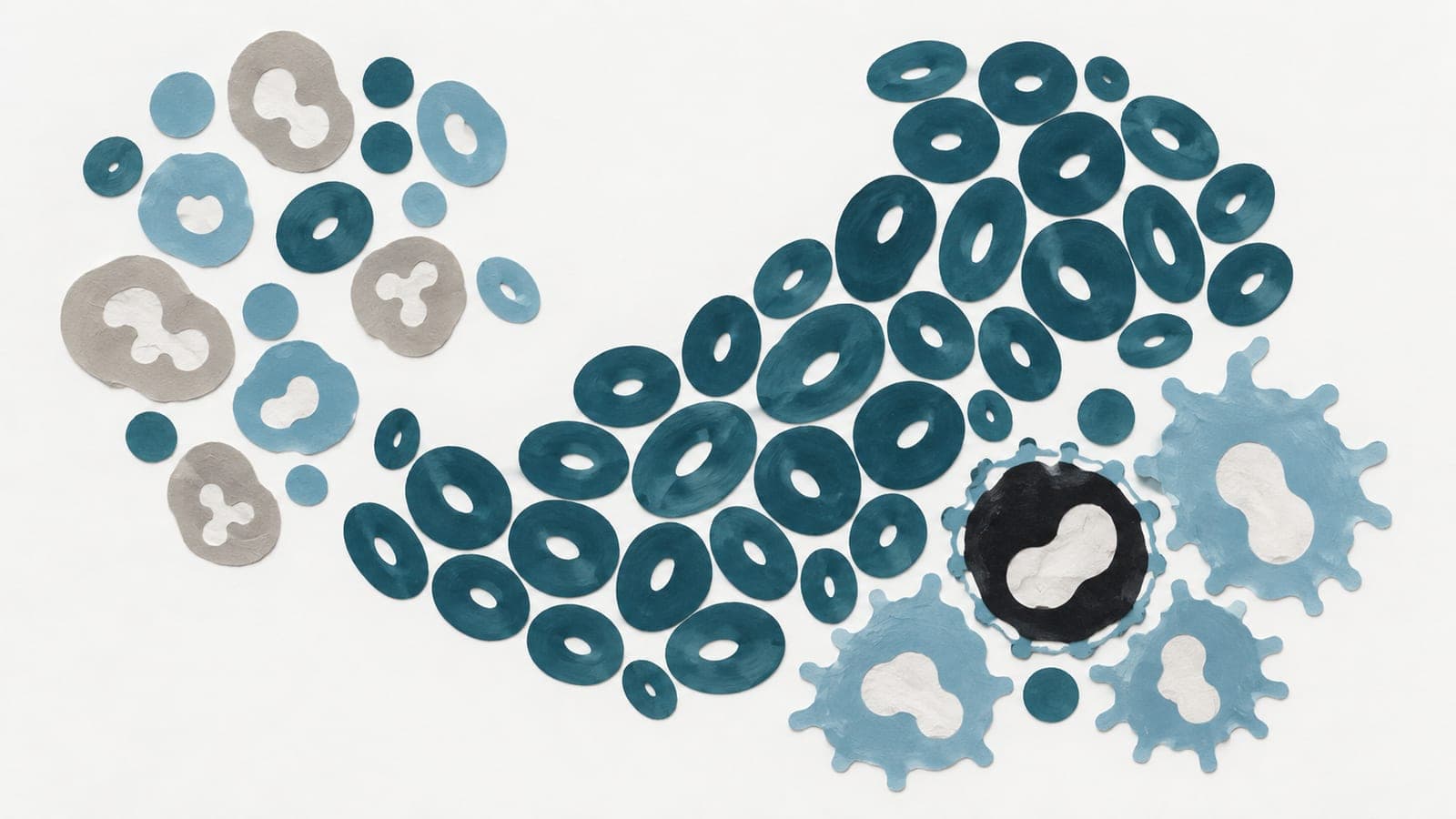
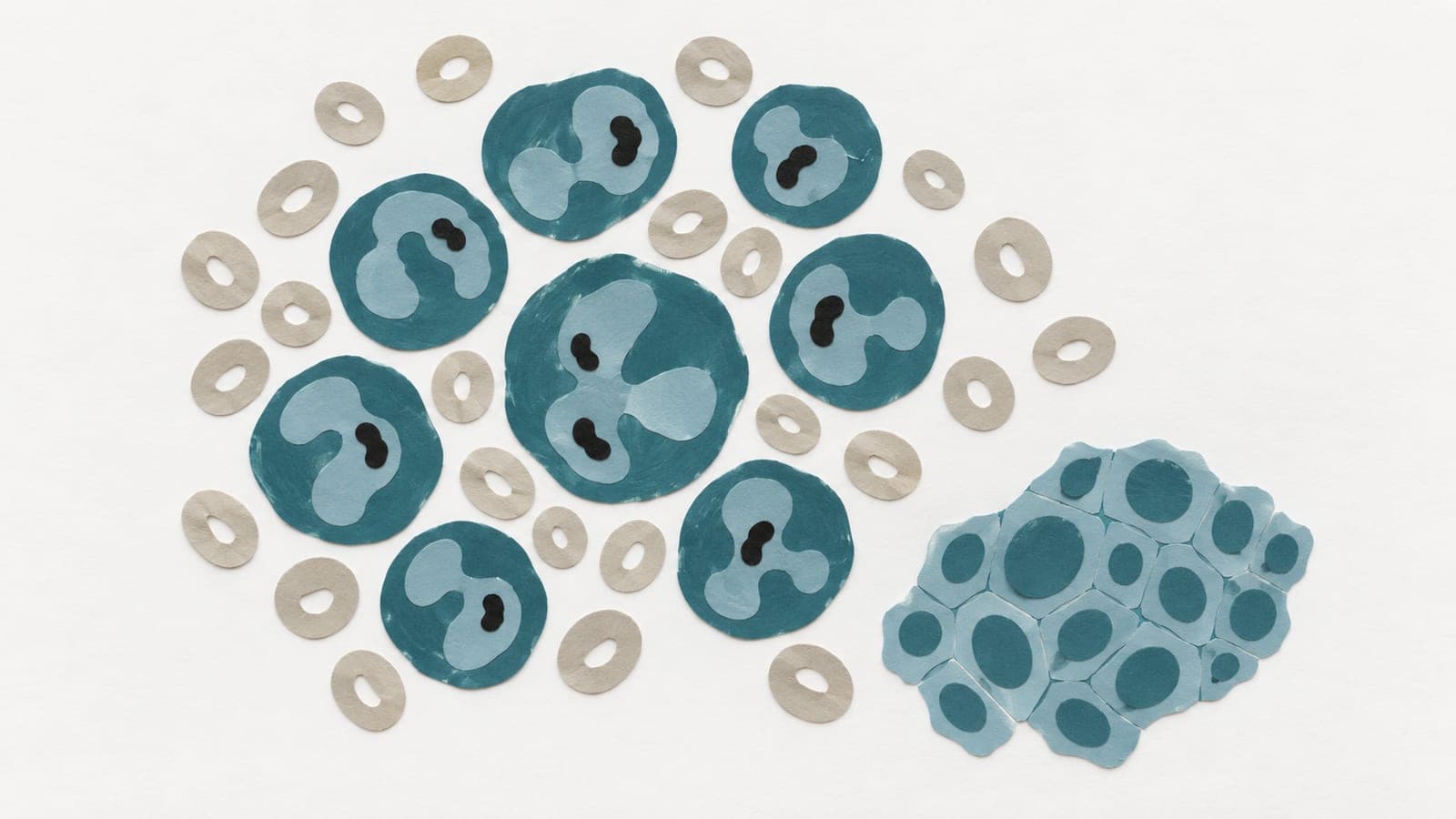
Some preleukemic cells suppress normal neighbors in culture
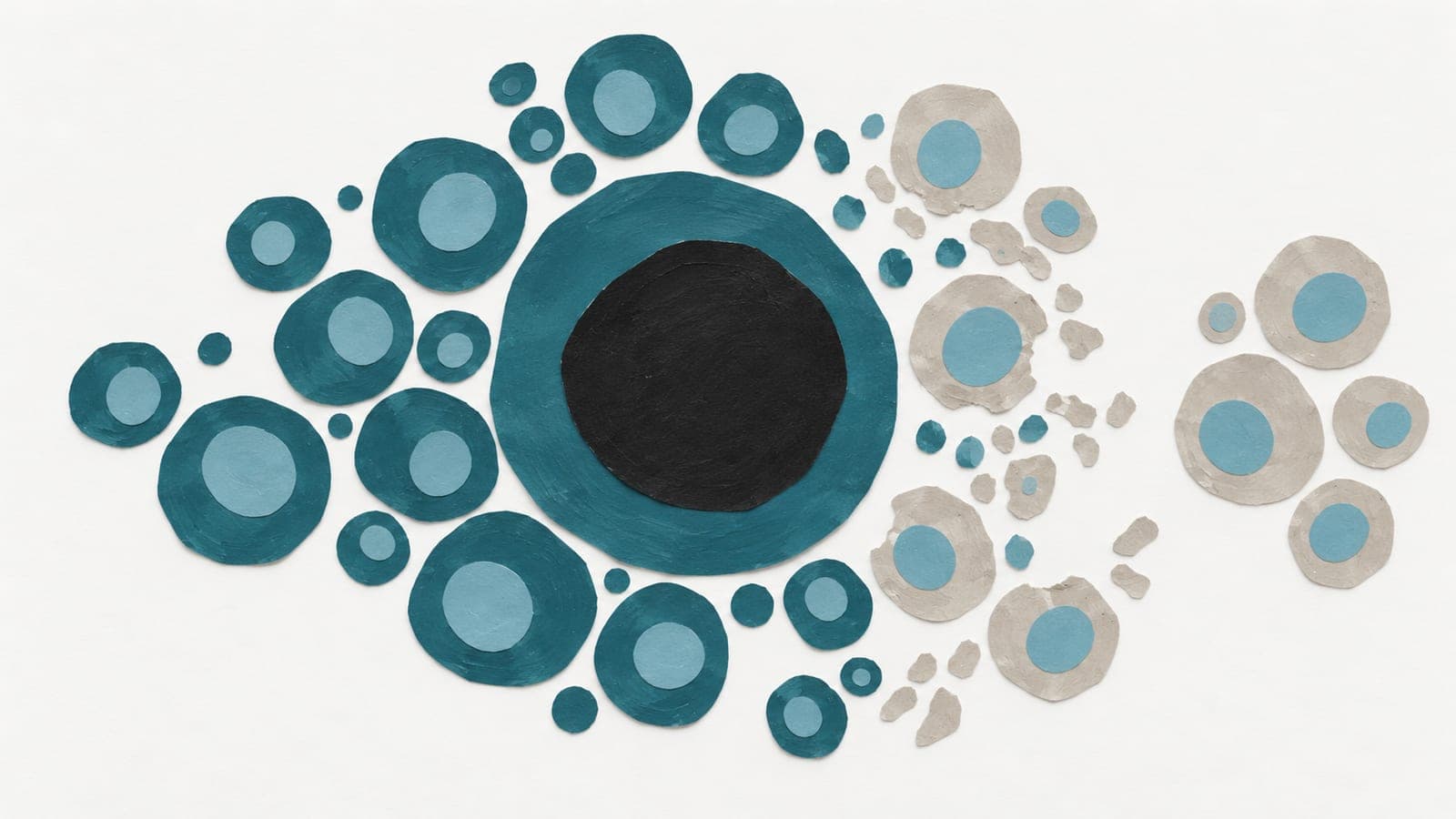
About 10% of preleukemic mutant clones actively suppressed or completely eliminated competing normal cells in a laboratory culture model.
Limit: Tested in laboratory dishes; interactions inside living bone marrow were not measured
Edited by Boris Djordjevic · AgingResearch.News
In an experiment using cells grown in the lab, researchers examined how normal cells interact with cells carrying mutations in ten-eleven translocation 2, or TET2, a gene often mutated in preleukemic conditions. They created a culture system where single-cell-derived clones were split into fractions and competed simultaneously against multiple clones of the opposing genetic type. About 10% of the mutant clones showed super-competition, actively and selectively suppressing the expansion of normal cells and, in some cases, completely eliminating them. Molecular profiling and functional tests indicated that mutant clones promoted the inhibition of a cell-signaling process called RAC1-GEF. Normal cells were vulnerable to this inhibition, while neighboring mutant cells tolerated it.
Why it matters
Clonal hematopoiesis, in which mutant blood stem cell clones expand, becomes more common with age and raises the risk of blood cancers. Understanding how mutated cells suppress their normal neighbors helps clarify how competitive clones gain an early advantage in aging tissues.
Caveats
The study tested cells only in laboratory dishes, which may not capture how cells interact inside living bone marrow. The findings were reported in a preprint and have not yet undergone peer review.
- Resources: datasets, atlases and tools
- TET2
- RAC1
- Preleukemia
- Clonal hematopoiesis of indeterminate potential
- Humans
The paper
A scalable in vitro cell competition model identifies preleukemic super competitor clones
University of York
bioRxiv, Oct 22, 2026, Open access, Preprint, not peer-reviewed