RISE UP

Papers on RISE UP

7,564 papers476 new in 30 days

Saturday, November 7

AHA Scientific Sessions 2026 Abstract

Stress-related and sleep disorders linked to higher stroke risk

Adults with both kinds of disorders had a stroke hazard ratio—a measure of relative risk—of 1.33 compared with those with neither.Adults with both kinds of disorders had a stroke hazard ratio—a measure of relative risk—of 1.33 compared with those with neither.

A brain seen from above has a blocked vessel and damaged patch beside dark blue-green figures, with gray figures beside intact tissue.
Cohort · 373,417 peopleSleep disorders
AHA Scientific Sessions 2026 Abstract

Lung artery pressure kept rising into very late life

In 479 older adults followed for 12.5 years, average lung artery pressure rose by 8 millimeters of mercury from its starting level.In 479 older adults followed for 12.5 years, average lung artery pressure rose by 8 millimeters of mercury from its starting level.

Pulmonary arteries connect hearts to lungs, with dense dark flow shapes in the larger pair and sparse pale shapes in the smaller pair, above faceless people.
Cohort · 479 peoplePopulations
AHA Scientific Sessions 2026 Abstract

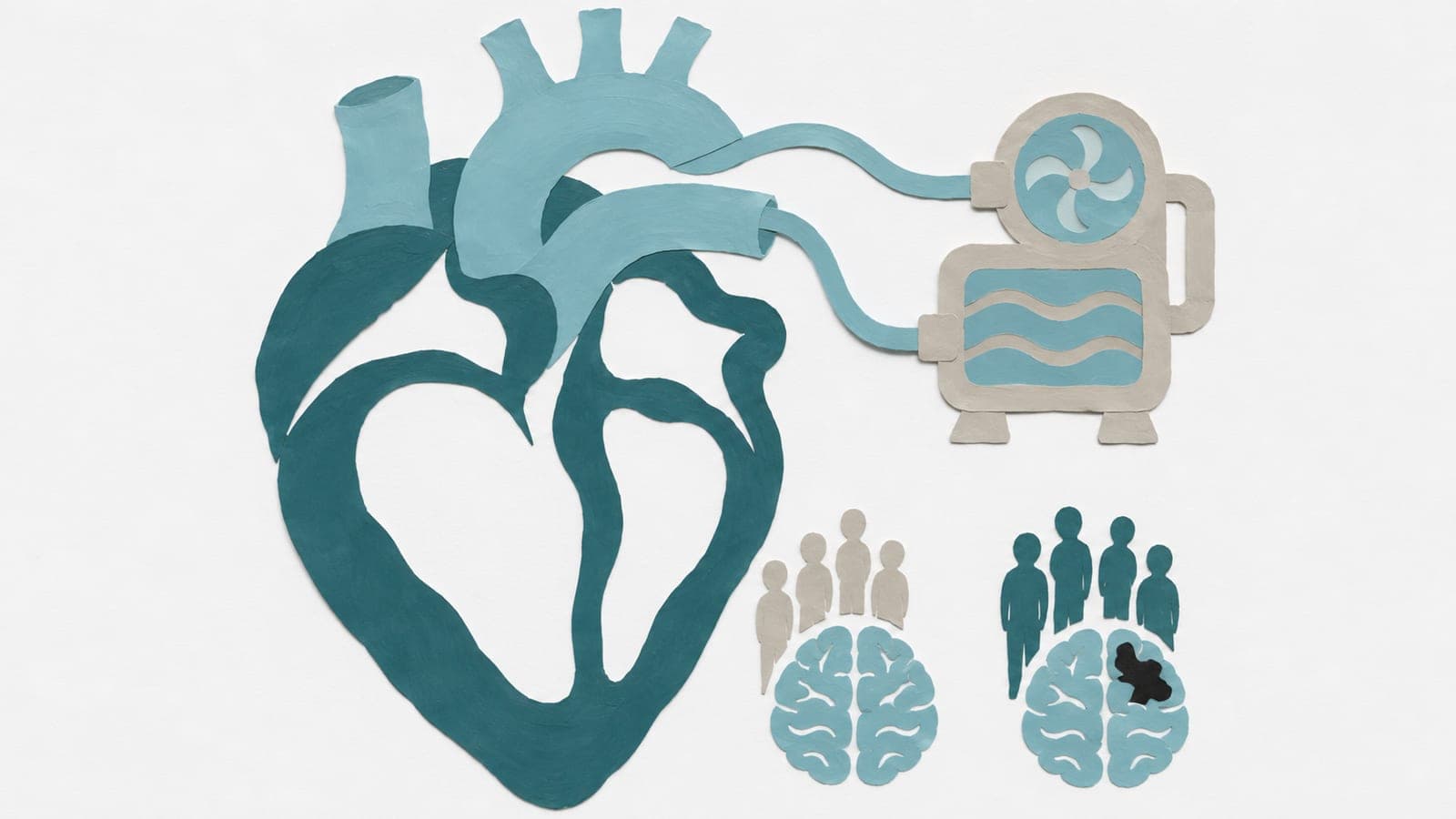
Higher frailty linked to hospital deaths on heart-lung support

Deaths occurred in 49.3% of hospitalizations with high frailty scores versus 45.6% with low scores among adults on heart-lung support.Deaths occurred in 49.3% of hospitalizations with high frailty scores versus 45.6% with low scores among adults on heart-lung support.

A heart cross-section connects to an external blood pump beside groups of upright people with an intact brain and a brain marked by a dark damaged patch.
Cohort · 34,260 peopleBiomarkers
AHA Scientific Sessions 2026 Abstract

US heart death rate from high blood pressure rose at ages 65 and older

The age-adjusted death rate rose from 53.31 per 100,000 in 1999 to 204.2 in 2024 among US adults aged 65 and older.The age-adjusted death rate rose from 53.31 per 100,000 in 1999 to 204.2 in 2024 among US adults aged 65 and older.

A thick-walled heart cross-section sits between upright groups, with sparse gray hearts on one side and many dark blue-green hearts on the other.
Cross-sectional · 1,338,405 peoplePopulations
AHA Scientific Sessions 2026 Abstract

Heart risk scores underestimated risk after cancer immunotherapy

Among patients rated low risk, heart attacks and strokes occurred at 8.0-fold and 6.5-fold the rates predicted by two standard calculators.Among patients rated low risk, heart attacks and strokes occurred at 8.0-fold and 6.5-fold the rates predicted by two standard calculators.

An opened artery narrows around fatty deposits and a dark clot, with blood cells crowded before the blockage and damaged patches on a nearby heart and brain.
Cohort · 23,727 peopleCancer
AHA Scientific Sessions 2026 Abstract

Blood protein patterns changed years before heart failure

More than 1,200 blood proteins were linked to future heart failure about 18 years before diagnosis, rising to about 3,600 closer to diagnosis.More than 1,200 blood proteins were linked to future heart failure about 18 years before diagnosis, rising to about 3,600 closer to diagnosis.

Blood plasma holds sparse and dense clusters of folded proteins, with a small heart cross-section and tangled fibers beside the denser cluster.
Cohort · 6,264 peopleMechanisms
AHA Scientific Sessions 2026 Abstract

Wearable data predicted blood pressure crises 72 hours ahead

In a separate validation group, the model detected 82.1% of crises; 31.6% of positive predictions corresponded to a crisis.In a separate validation group, the model detected 82.1% of crises; 31.6% of positive predictions corresponded to a crisis.

A large heart cross-section with damaged muscle sits beside a smaller intact heart and a group of upright, faceless people.
Cohort · 4,190 peopleBlood pressure
AHA Scientific Sessions 2026 Abstract

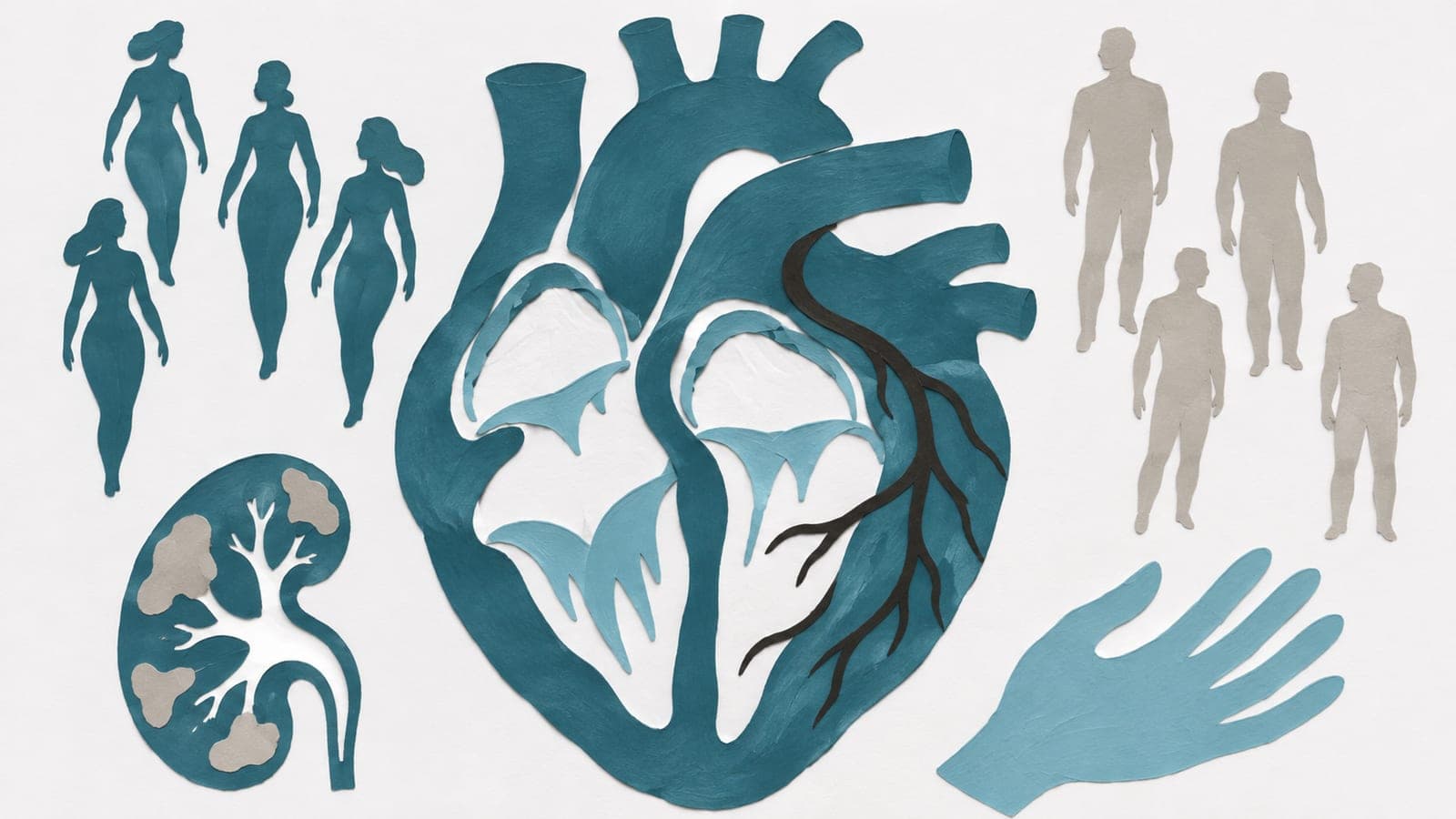
Cardiovascular risk links varied by sex and age at onset

A cohort study followed 261,291 women and 205,873 men for a median 15.4 years, finding that risk-factor links differed by age when disease began.A cohort study followed 261,291 women and 205,873 men for a median 15.4 years, finding that risk-factor links differed by age when disease began.

A heart cross-section sits between dark blue-green women and gray men, with a patchy kidney below the women and an open hand below the men.