Lung artery pressure kept rising into very late life
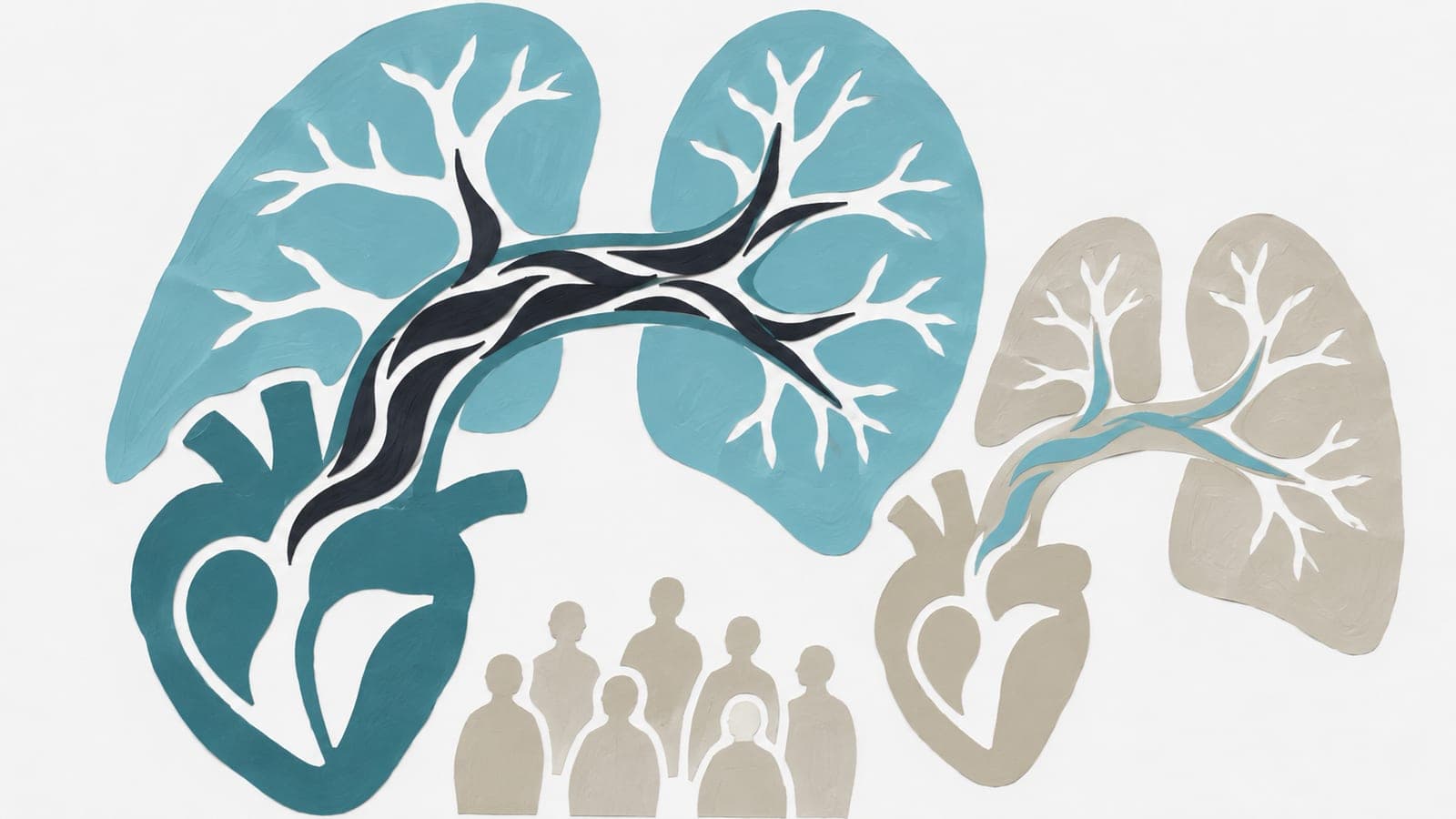
In 479 older adults followed for 12.5 years, average lung artery pressure rose by 8 millimeters of mercury from its starting level.
Our read
Populations- Studied:
- Cohort study of 479 older adults, 12.5 years
- What changed:
- Estimated lung artery pressure rose by an average of 8 millimeters of mercury in older adults
- The catch:
- Only people with usable measurements at all three visits were included
- In the record:
- The 226th paper on NT-proBNP with results in people; 621 on record in all.
- Why it’s aging research:
- It looks at how biology varies with age or lifespan.
Editor of record: Boris Djordjevic · AgingResearch.News
The 479 participants in the community-based Atherosclerosis Risk in Communities observational cohort had heart ultrasound measurements at three visits between 2011 and 2025. Their average age rose from 73 to 86, and 24% were men.
Estimated pressure in the arteries carrying blood to the lungs rose by an average of 8 millimeters of mercury over 12.5 years. The estimated prevalence of pulmonary hypertension, or abnormally high pressure in these arteries, rose from 3% to 38%, using a definition based on ultrasound measurements of blood flow. Poorer heart pumping and relaxation at the first visit were each associated with steeper pressure increases. Higher initial levels of a blood marker of heart strain were also associated with steeper increases.
Why it matters
Higher pressure in the lung arteries is a marker of worse outcomes in heart and lung disease. The authors emphasized the importance of prevention efforts continuing into late life.
Caveats
The analysis included only people with usable measurements at all three visits, and pressure estimates relied on an assumed pressure in the heart’s right upper chamber. Other health differences could have contributed to the association between poorer heart function and rising pressure.
- Pulmonary hypertension
- E velocity
- E/E′ ratio
- Left atrial reservoir strain
- Left atrial volume index
- Humans
The paper
The University of Texas Southwestern Medical Center
AHA Scientific Sessions 2026 Abstract, Nov 2, 2026
Presented at AHA Scientific Sessions 2026, abstract 14667
Comments
Be the first to comment.