Cell-free DNA

Papers on cell-free DNA

176 papers30 new in 30 days

Thursday, November 19

Wednesday, November 18

Saturday, November 14

International Immunopharmacology

Immune-cell traps induce senescence-related changes in eye cells

Experiments in lab-grown human retinal pigment cells found changes associated with senescence, a state in which cells stop dividing.Experiments in lab-grown human retinal pigment cells found changes associated with senescence, a state in which cells stop dividing.

Figure from International Immunopharmacology
Human cell studyCellular senescence

Friday, November 13

Thursday, November 12

Wednesday, November 11

Tuesday, November 10

medRxiv

Blood DNA patterns flag early cancers in computer tests

In cross-validation tests using two datasets, Blackjack detected at least 91.8% of cancers while correctly identifying 98% of healthy samples.In cross-validation tests using two datasets, Blackjack detected at least 91.8% of cancers while correctly identifying 98% of healthy samples.

Blood samples beside two groups of faceless people contain round cells and DNA fragments, with dark ends distinguishing fragments in one sample.
Preprint: computational studyCancer

Monday, November 9

Friday, November 6

Biology

Older female mice lacking a DNA sensor had worse liver injury

An experiment comparing 8- and 56-week-old female mice found the worst damage after interrupted liver blood flow in older mice missing a DNA-sensing enzyme.An experiment comparing 8- and 56-week-old female mice found the worst damage after interrupted liver blood flow in older mice missing a DNA-sensing enzyme.

Damaged liver tissue crowded with inflammatory cells contrasts with orderly tissue, beside a laboratory mouse and a gut lining with gaps.
Mouse studyMechanisms

Wednesday, November 4

Mechanisms of Ageing and Development

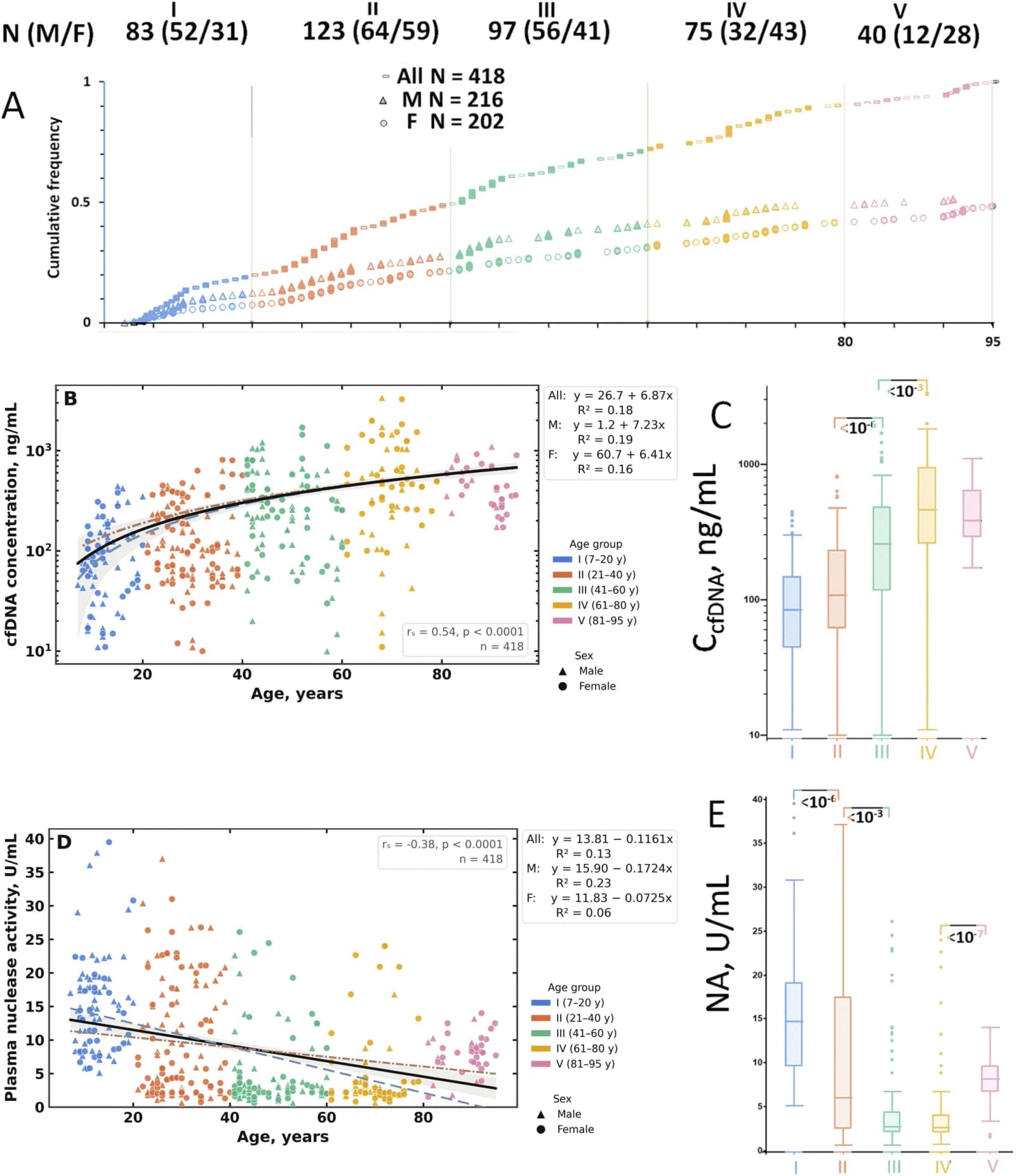
Free-floating DNA levels differed across human age groups

In a cross-sectional study of 418 people aged 7–95, free-floating DNA levels increased across ages 7–80 but were lower at 81–95 than at 61–80.In a cross-sectional study of 418 people aged 7–95, free-floating DNA levels increased across ages 7–80 but were lower at 81–95 than at 61–80.

Figure from Mechanisms of Ageing and Development
Cross-sectional · 418 peopleMechanisms

Friday, October 30

Nature Methods

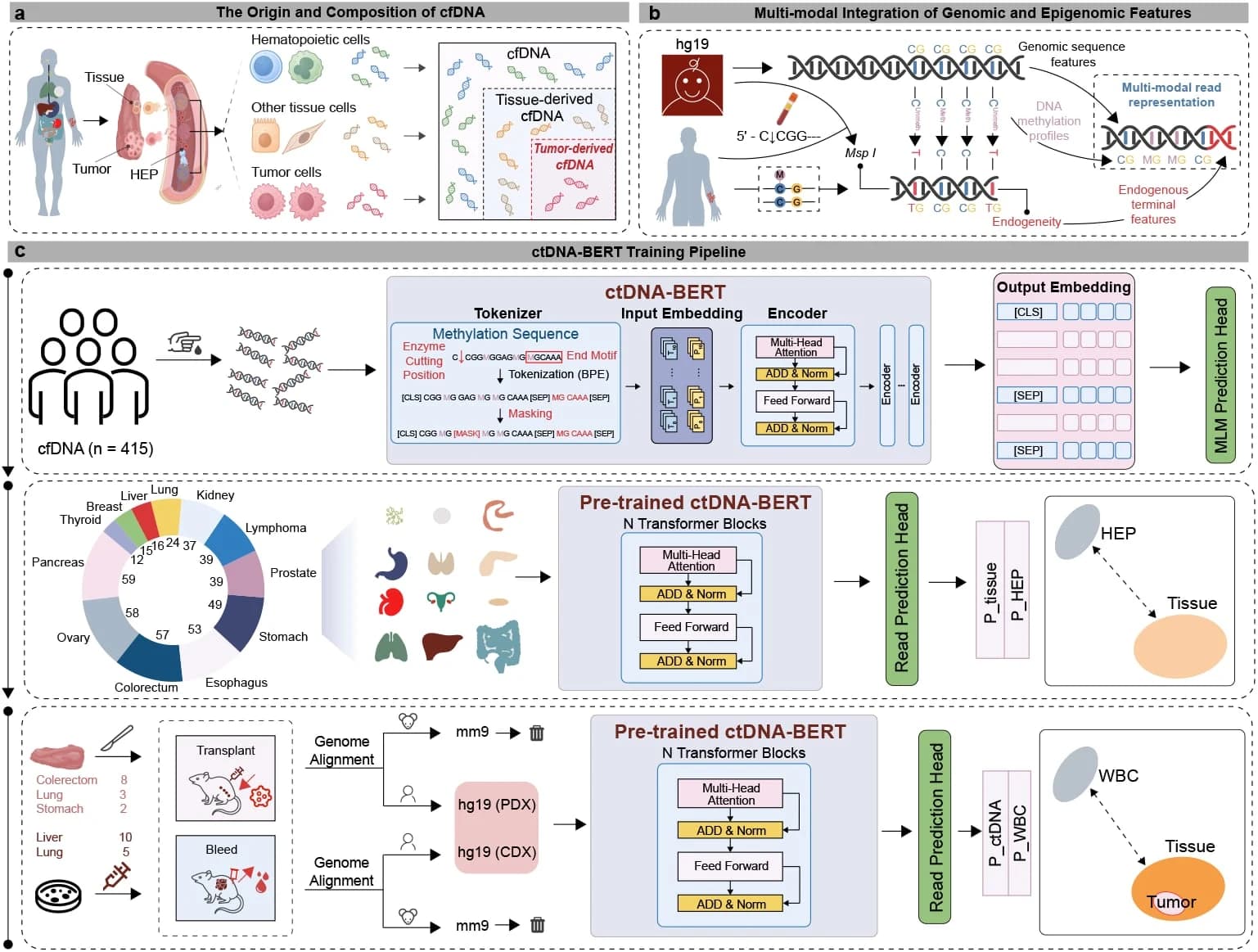
DNA-end correction linked to better cell-free DNA profiling

The JEEPERS framework detected and corrected false methylation signals introduced when cell-free DNA was prepared for sequencing.The JEEPERS framework detected and corrected false methylation signals introduced when cell-free DNA was prepared for sequencing.

Figure from Nature Methods
Computational studyBiomarkers

Wednesday, October 28

Tuesday, October 27

Monday, October 26

Friday, October 23