Older female mice lacking a DNA sensor had worse liver injury
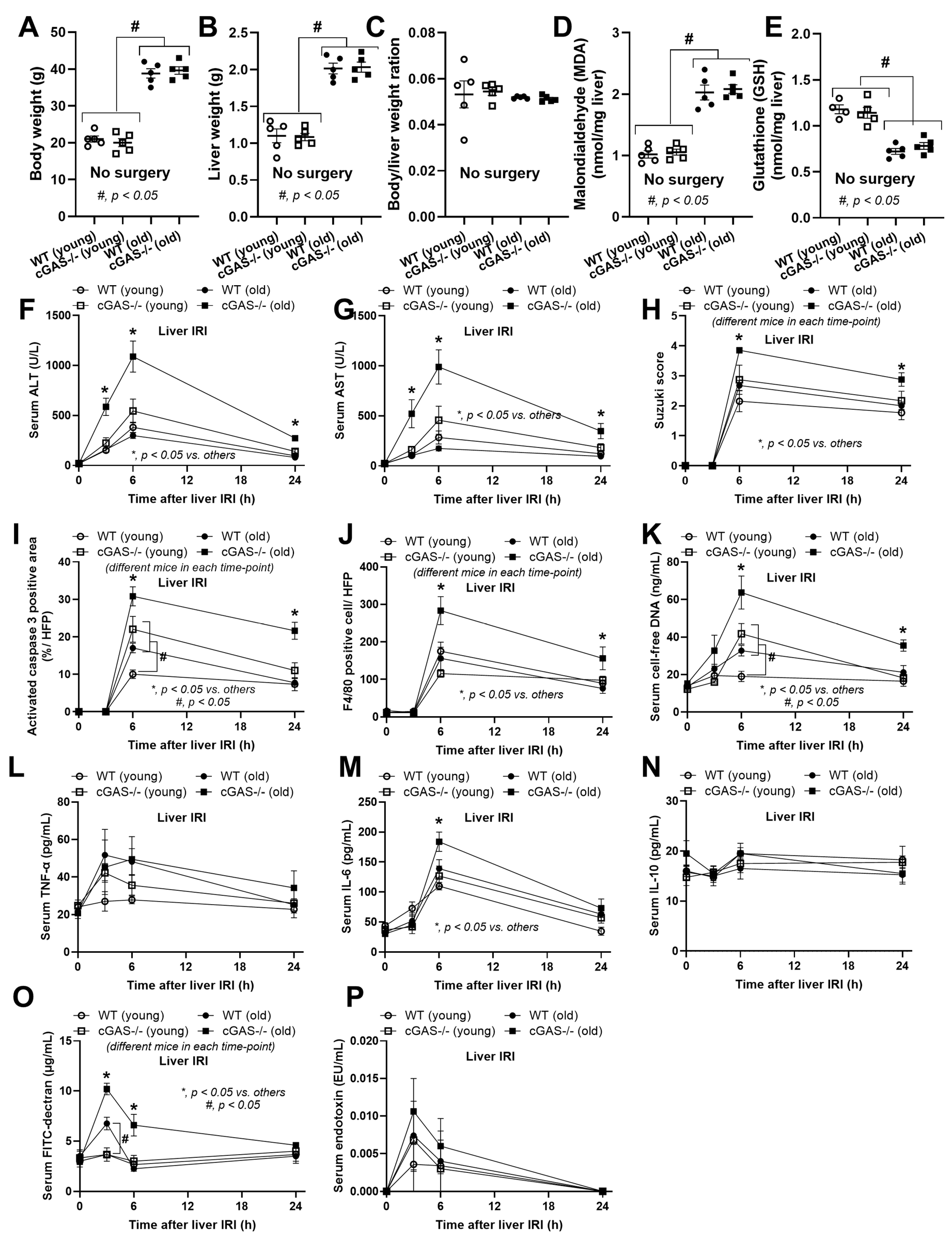
An experiment comparing 8- and 56-week-old female mice found the worst damage after interrupted liver blood flow in older mice missing a DNA-sensing enzyme.
Our read
Mechanisms- Studied:
- Experiments in young and older female mice, 24 h, against aged wild-type and young mice (Independent replication)
- What changed:
- Older female mice lacking cGAS had worse liver injury than other groups after liver blood flow was interrupted and restored
- The catch:
- Knockout and wild-type mice had different genetic backgrounds that could partly explain injury differences
- Why it’s aging research:
- It studies organisms or tissues that aged naturally.
Editor of record: Boris Djordjevic · AgingResearch.News
Female mice aged 8 or 56 weeks, either normal or genetically lacking a DNA-sensing enzyme, underwent an animal experiment involving interrupted liver blood flow. The enzyme is called cyclic guanosine monophosphate–adenosine monophosphate synthase (cGAS). Researchers blocked blood flow to part of the liver for 60 minutes, then restored it.
Before surgery, both older groups had more signs of oxidative damage and lower levels of a protective antioxidant in their livers than young mice. Afterward, older mice lacking cGAS had the most severe liver injury. They had higher blood levels of liver enzymes, worse tissue damage and more cell death than the other groups. At six hours, they also showed a surge in an inflammatory signal and a leakier gut barrier.
Why it matters
Research on inhibiting this enzyme to reduce inflammation has relied mainly on young mice. The authors called for reevaluating these models in older animals.
Caveats
The experiment tested genetic absence of the enzyme, not a drug that blocks it. All mice were female, and the 56-week-old animals were middle-aged.
Where the evidence stands
CGAS
- 116 independent labs in 24 countries
- 7 findings against
- 1 trial
- Funders: National Natural Science Foundation of China and others
- 16 of 236 findings with company ties
- 1 of 1 trial sponsored by developers of drugs aimed at it
Apoptosis
- 615 independent labs in 58 countries
- 137 findings against
- Funders: National Natural Science Foundation of China and others
- 54 of 1,775 findings with company ties
From the paper
- Limitation
First, the in vivo experiments involved certain technical constraints, notably the use of different mouse substrains (cGAS-/- on a C57BL/6J background versus WT on a C57BL/6NJcl background) without littermate controls.
4.3. Clinical Translation, Limitations and Future Directions
Quoted word for word from the full text on mdpi.com.

Comments
Be the first to comment.