Deleting an immune-related gene eased bone loss in female mice
An experiment compared female mice with and without an immune-regulating gene after ovary removal, finding higher bone density in mice without it.
Limit: Knockout methods name Sestrin1 as the target, conflicting with the claimed Crlf2 deletion
Edited by Boris Djordjevic · AgingResearch.News
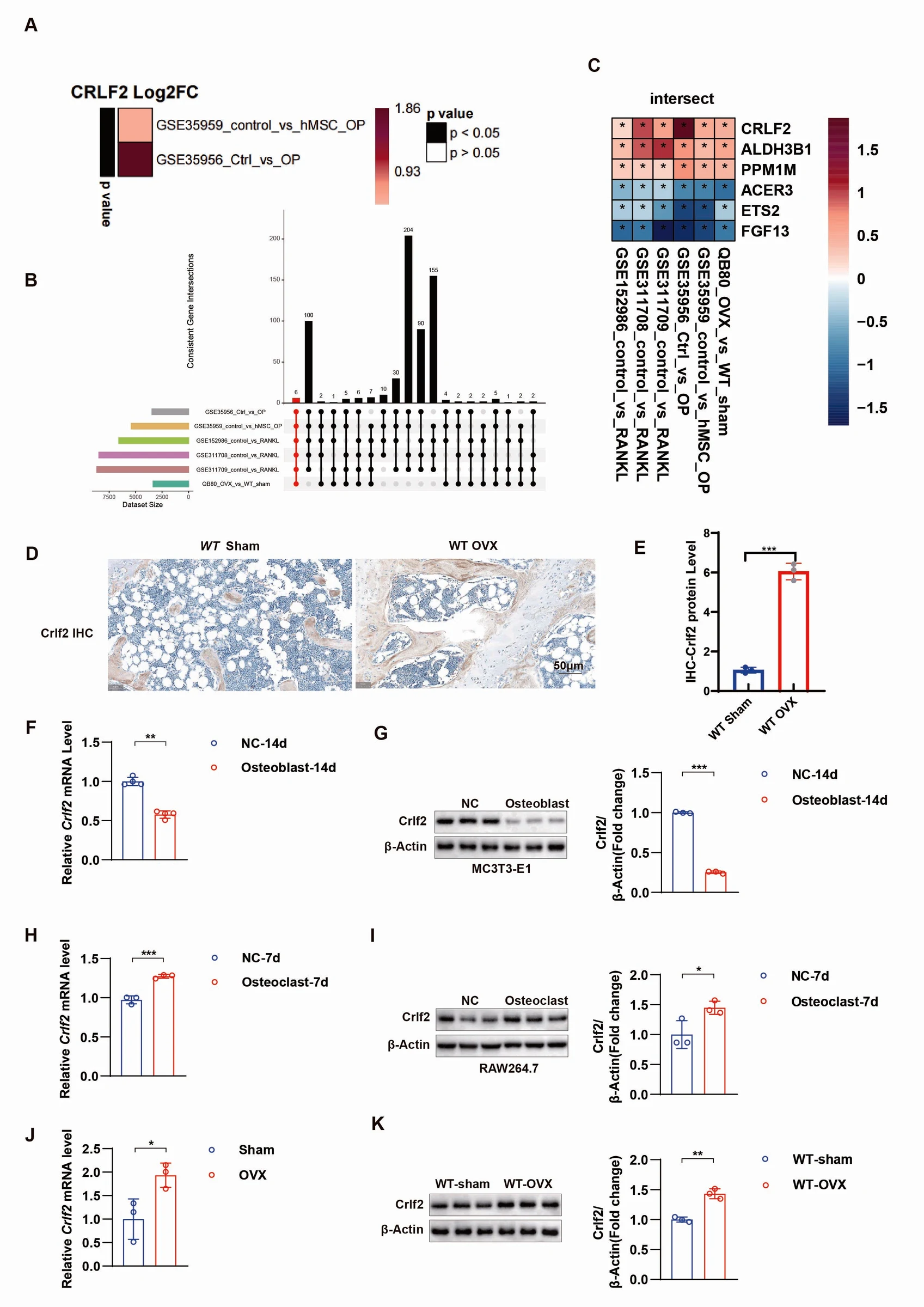
In an animal experiment, researchers removed the ovaries of female mice to induce osteoporosis, a disease that weakens bones. They compared mice lacking Crlf2, a gene involved in immune regulation, with mice that retained it. Mice lacking the gene had higher bone density and more of the small supporting struts inside bones. They also had higher levels of markers of bone formation and lower levels of local inflammatory factors.
In separate experiments with primary bone marrow cells grown in the lab, increasing CRLF2, the receptor protein encoded by Crlf2, inhibited their development into bone-forming cells. Reducing CRLF2 had the opposite effect.
Why it matters
The work suggests that immune-system signaling may offer a target for treating osteoporosis, an age-related disease.
Caveats
This was a gene-deletion experiment in mice, not a test of an osteoporosis drug in people. The report is a preprint and has not been peer-reviewed.
The paper
The CRLF2-JAK2/STAT3 Axis Promotes Bone Formation and Ameliorates OVX-Induced Osteoporosis
Qichun County People's Hospital
Research Square, Oct 27, 2026, Open access, Preprint, not peer-reviewed