Epalrestat reduced bone loss in mouse disease models
Early-intervention experiments tested the drug in mice with diabetes or bone loss induced by ovary removal or inflammation.
Limit: The experiments addressed early intervention, not treatment of established bone loss
Edited by Boris Djordjevic · AgingResearch.News
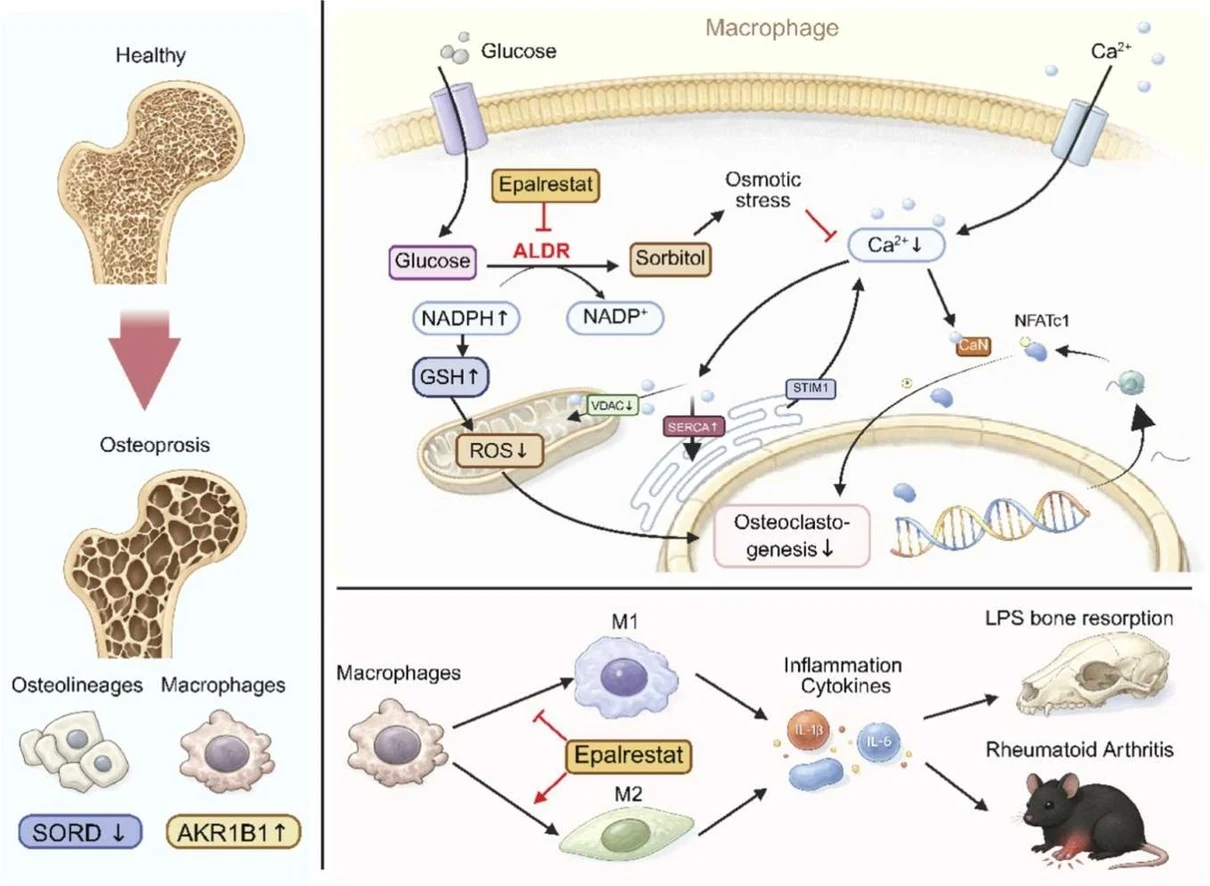
In mice with diabetes or bone loss induced by ovary removal or inflammation, researchers tested epalrestat in early-intervention experiments. The drug inhibits aldose reductase, an enzyme in a pathway that processes glucose. It reduced bone loss across these mouse models.
In separate laboratory experiments, epalrestat suppressed the development of macrophages, immune cells derived from bone marrow, into osteoclasts, cells that break down bone. An exploratory analysis of two human specimens from the top of the thighbone also suggested greater activity of the glucose-processing pathway associated with macrophages in the osteoporosis specimen. This human analysis did not test the drug.
Why it matters
For osteoporosis, an age-related disease, the findings provide a rationale for further evaluation of epalrestat as a potential approach to limiting bone loss.
Caveats
The bone-loss results came from early-intervention mouse experiments, not a trial in people. The exploratory human analysis involved only two specimens.
The paper
Sir Run Run Shaw Hospital
Pharmacological Research, Oct 24, 2026


