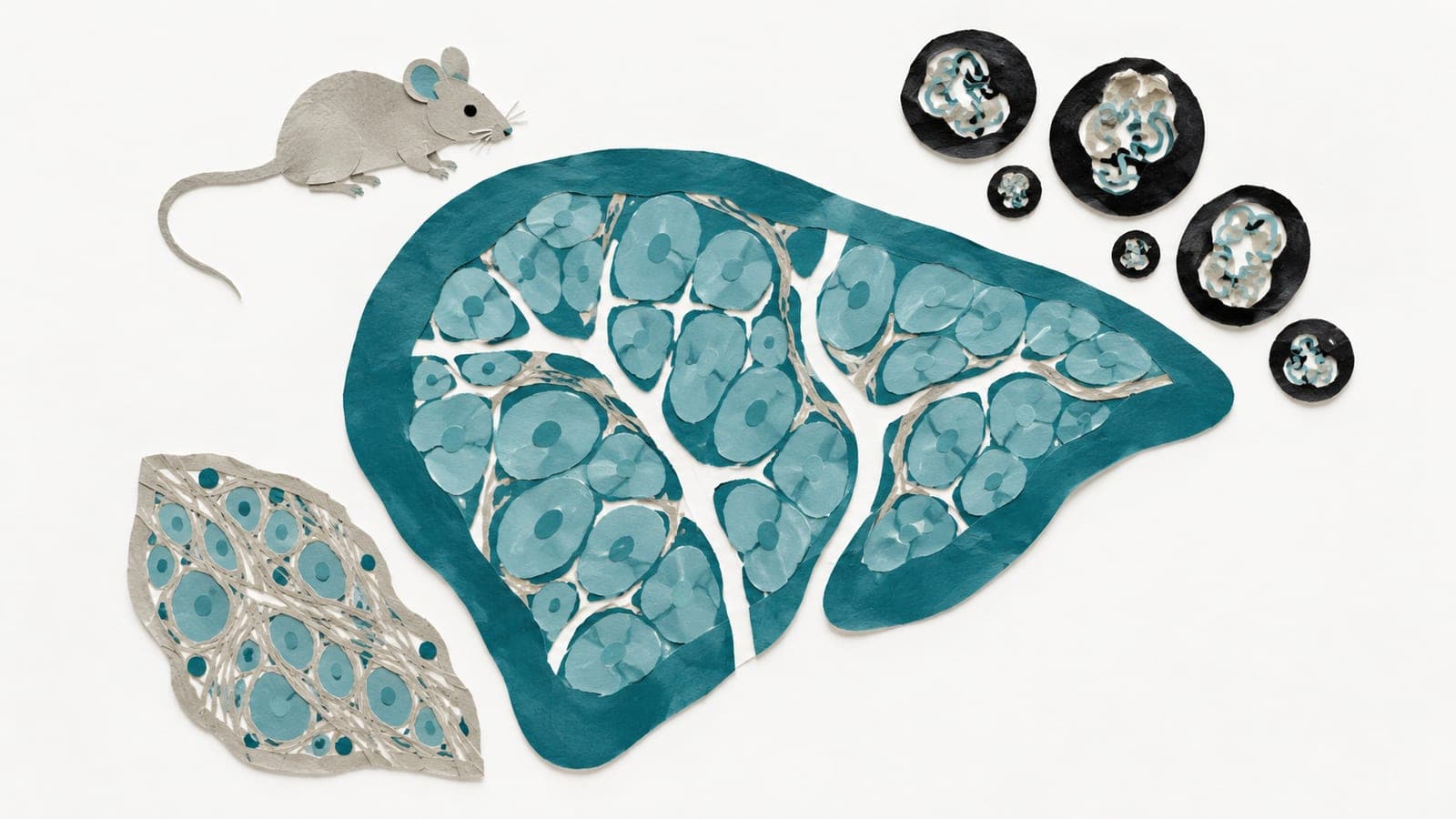
Blocking CD38 reduces lung transplant injury in mice
Targeting the enzyme preserved NAD+ levels, lowered signs of cellular senescence, and improved lung function after blood flow was stopped and restored.
Limit: Mice underwent hilar clamping; actual lung transplantation and graft survival were not measured
Edited by Boris Djordjevic · AgingResearch.News
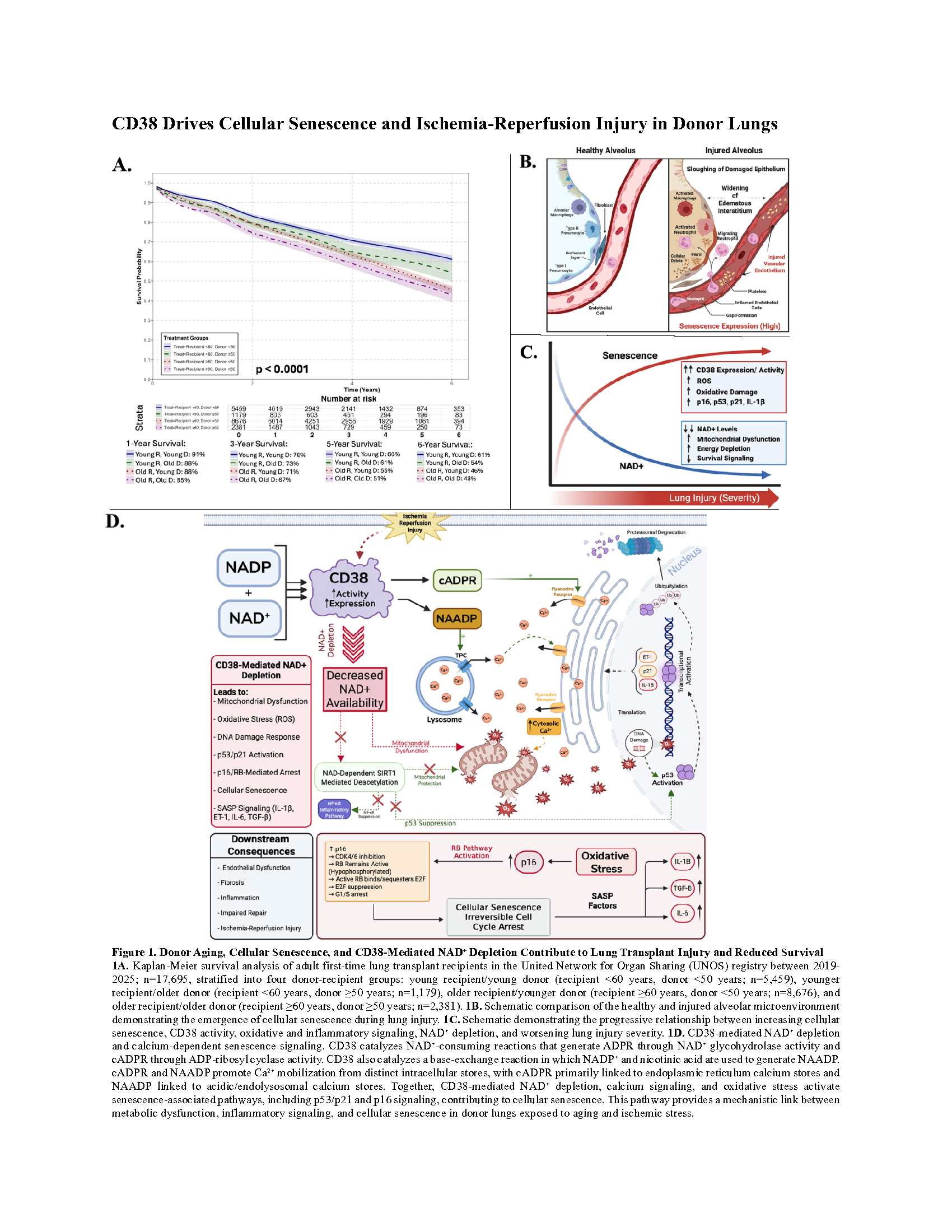
In lungs from human organ donors, mice, and human blood-vessel cells grown in the lab, researchers examined how the enzyme CD38 affects lung injury. In human donor lungs, CD38 levels rose with donor age and oxygen deprivation, and tracked with inflammatory signals linked to cellular senescence, a state where damaged cells stop dividing. In mice subjected to temporary lung blood-flow blockage, deleting the gene for CD38 or blocking the protein with a drug preserved levels of NAD+, a molecule vital for cell energy. This treatment reduced lung tissue damage, lowered inflammatory molecules in lung fluid and blood, and improved lung mechanics. In cultured human umbilical vein endothelial cells exposed to oxidative stress, lowering CD38 levels also reduced markers of senescence and cell injury.
Why it matters
Older donor organs often suffer worse damage from the stress of transplantation. Understanding how aging processes like cellular senescence and NAD+ loss contribute to organ injury could help researchers find ways to protect older donor tissues.
Caveats
This work is a preprint that has not yet been peer-reviewed. The interventional findings come from mice and cultured human cells, which may not match what happens in human lung transplant recipients.
The paper
CD38 Drives Cellular Senescence and Ischemia-Reperfusion Injury in Donor Lungs
The Ohio State University; The Ohio State University Wexner Medical Center
Research Square, Oct 21, 2026, Open access, Preprint, not peer-reviewed