Frailty links to distinct muscle and protein changes by sex
In 208 older adults, frailty was linked to muscle and bone loss in females, while males showed lower leg strength and altered muscle protein breakdown.
Limit: Lower protein intake and age track with protein breakdown and may confound the results
Edited by Boris Djordjevic · AgingResearch.News
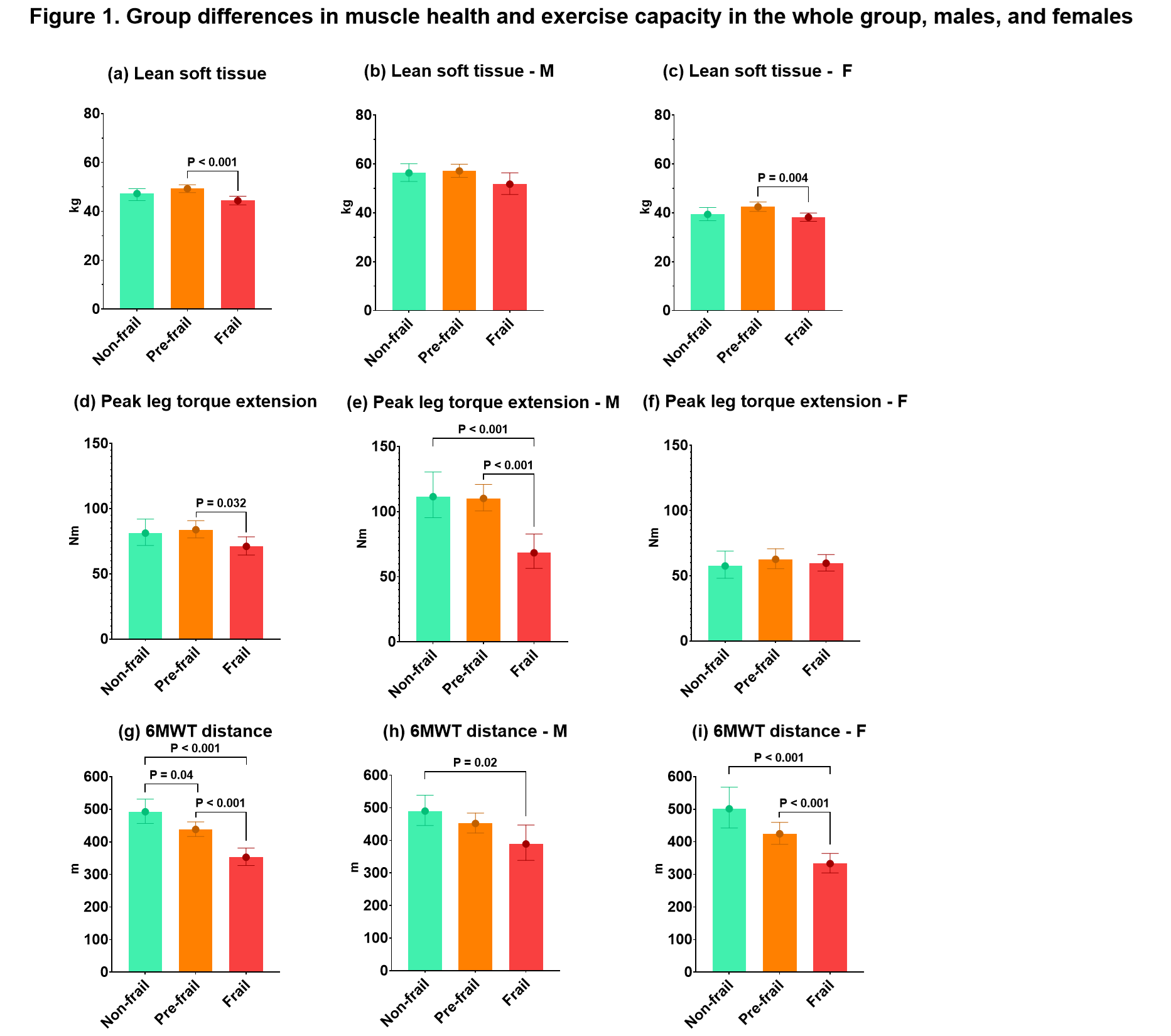
In an observational study of 208 older adults, researchers examined how muscle health and protein metabolism differ across stages of frailty in men and women. The participants were classified as non-frail, pre-frail, or frail. Handgrip strength and six-minute walking distance were lower in pre-frail and frail participants than in non-frail adults. However, other physical and metabolic changes differed by sex. Frail males had lower leg muscle strength, while only females showed loss of muscle and bone density. By tracking labeled amino acids in the blood, the researchers found that frailty severity was linked to lower overall protein breakdown in females. In males, frailty tracked with a trend toward higher breakdown of muscle contractile proteins.
Why it matters
Frailty is a common condition in older age that raises the risk of disability and falls. Understanding how protein metabolism and physical decline differ between men and women could help guide tailored nutritional and medical strategies for aging adults.
Caveats
The findings come from a cross-sectional study that observed participants at a single time point, which cannot establish cause and effect. The study is also a preprint that has not yet been peer-reviewed.
The paper
Texas A&M University
Research Square, Oct 21, 2026, Open access, Preprint, not peer-reviewed