Chest pain during activity aids risk prediction in Chinese adults
Among adults reporting symptoms but classified as low risk, 31.4% developed cardiovascular disease over nine years, versus a median predicted risk of 5.7%.
Dose-response
Limit: Symptomatic participants may receive more diagnoses because they seek care more often
Edited by Boris Djordjevic · AgingResearch.News
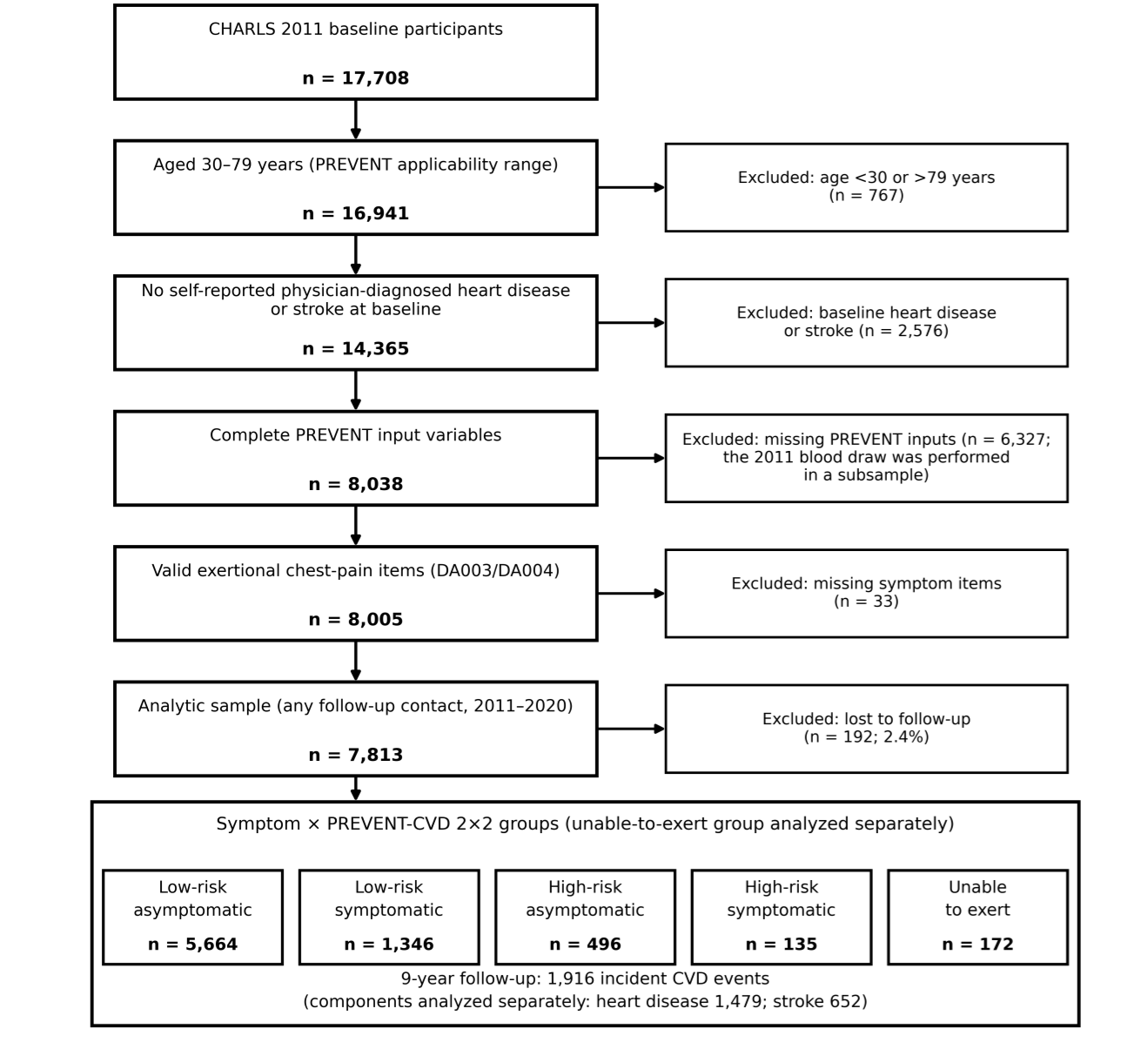
The prospective observational study followed 7,813 Chinese adults aged 30–79 who had no heart disease or stroke at entry. Researchers used two questionnaire items to assess chest pain during activity. They grouped participants by symptoms and whether a cardiovascular risk calculator predicted risk below 20% or at least 20%. Over nine years, 1,916 participants developed cardiovascular disease—conditions affecting the heart or blood vessels.
Reported symptoms were associated with higher disease risk after adjustment for other factors. The association was stronger in women. Adding the symptom questions improved the model’s ability to distinguish people who developed disease from those who did not.
Why it matters
For middle-aged and older adults, the findings support evaluating symptom questions as an additional cardiovascular risk indicator, particularly in settings with limited resources.
Caveats
This observational study cannot establish cause and effect, and the preprint has not been peer-reviewed. The findings do not cover people with existing heart disease or stroke; additional analyses suggested that the association partly reflected a general tendency to report symptoms.
From the paper
- Participants
The China Health and Retirement Longitudinal Study (2011–2020) included 7,813 participants aged 30–79 years without baseline heart disease or stroke and with complete PREVENT inputs and symptom data.
Quoted word for word from the full text on researchsquare.com.
The paper
The People’s Hospital Affiliated to Jiangsu University
Research Square, Oct 20, 2026, Open access, Preprint, not peer-reviewed

