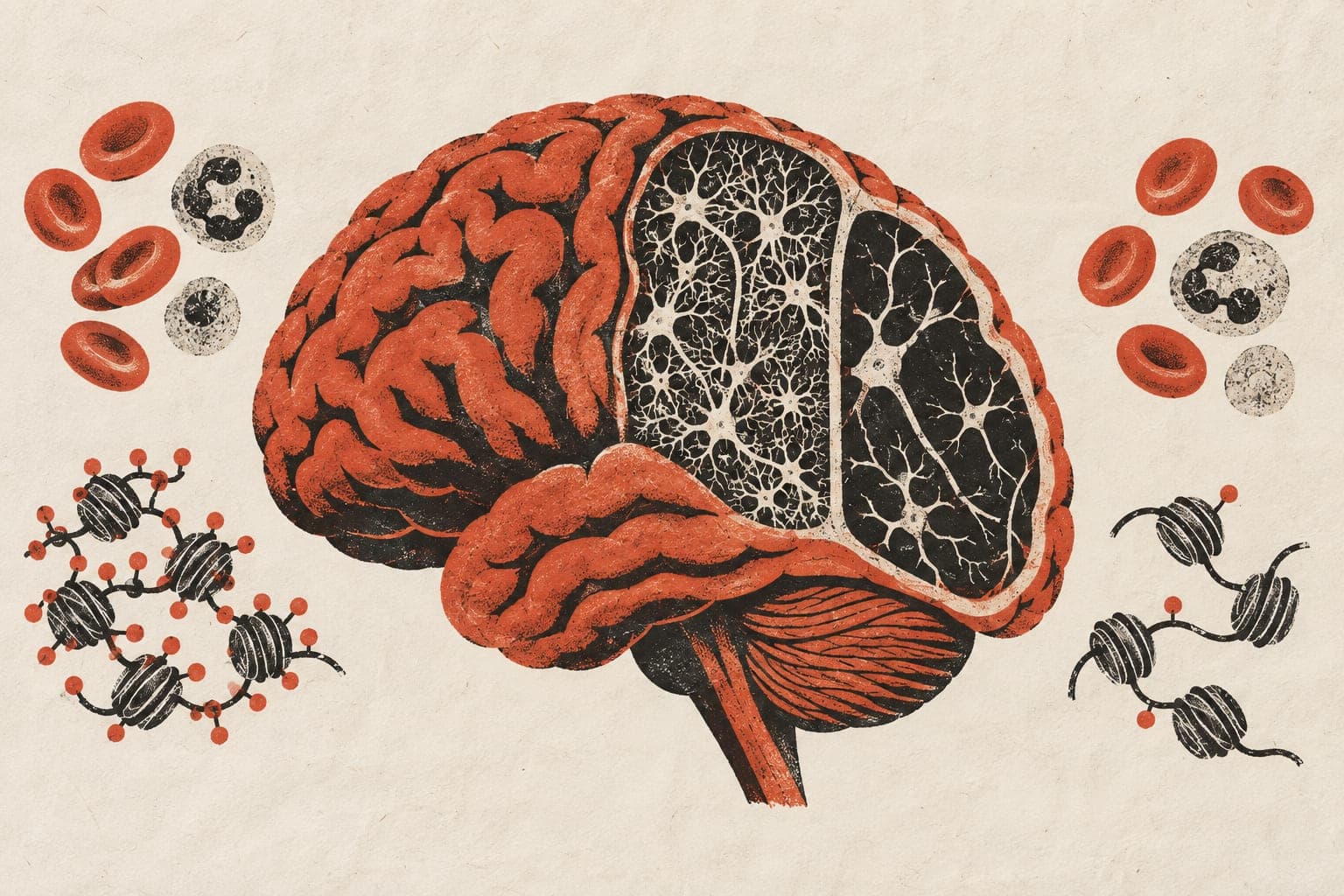
DNA score modestly improves death risk prediction in people
At 10 years, a measure of predictive performance rose from 0.791 for the clinical model to 0.803 when researchers added the DNA score.
medRxiv
In an observational cohort study of 2,282 people, researchers tested whether a DNA-based score added to clinical predictions of death risk. They used DNA methylation, chemical marks on DNA, to build the score. The clinical model used predictors from an existing cardiovascular risk calculator. Researchers repeatedly used separate subsets of the cohort to build and evaluate the models.
During follow-up, 597 deaths occurred by 10 years and 937 by 15 years. Higher DNA scores remained associated with death from any cause after researchers accounted for the clinical predictors. Adding the score modestly improved the model’s ability to distinguish people who died from those who survived. The score also remained associated with cardiovascular deaths after clinical adjustment.
Why it matters
DNA methylation markers may reflect biological aging and accumulated exposures. The study addressed whether that information could complement conventional cardiovascular risk assessment.
Caveats
The score was developed and evaluated within one cohort, and the comparison used a fitted clinical model rather than the original risk equation. This preprint has not been peer-reviewed, and external validation is still needed.
The paper
DNA Methylation Biomarkers Capture Residual Biological Risk Beyond PREVENT
medRxiv · 10 Aug 2026 · Preprint, not peer-reviewed