Targeted metal modulation preserves retinal structure and vision in zebrafish
Telomir-Zn depleted labile iron, lowered oxidative stress, and improved visual behaviors and epigenetic marks in zebrafish and cultured human retinal cells.
International Journal of Molecular Sciences
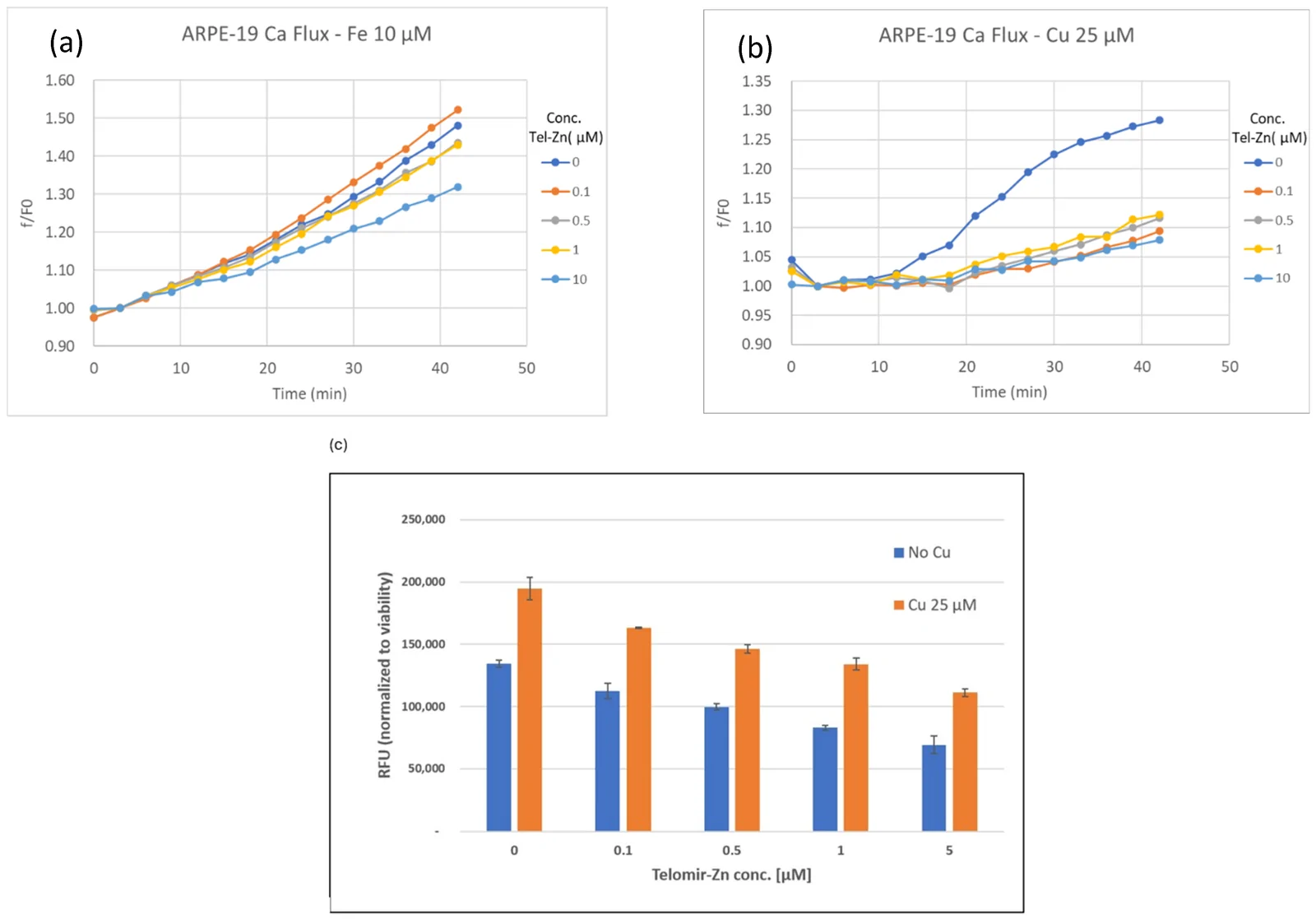
In a zebrafish model combining impaired DNA repair, mitochondrial oxidative stress, and progressive retinal degeneration, researchers tested an intracellular metal modulator called Telomir-Zn. The zinc-based compound depletes labile iron, potently inhibits multiple JmjC histone demethylases, and induces epigenetic reprogramming. In treated zebrafish, Telomir-Zn reduced oxidative stress, preserved retinal architecture, and improved visual behaviors. It also partially normalized both telomeric content and CpG methylation patterns. In complementary tests using cultured human ARPE-19 retinal pigment epithelium cells, the compound reduced reactive oxygen species and calcium dysregulation induced by iron and copper, while driving reciprocal zinc accumulation and labile iron depletion.
Why it matters
Mitochondrial dysfunction, oxidative stress, and disrupted metal homeostasis contribute to age-related macular degeneration. Coordinating metal regulation with epigenetic control may offer a way to protect retinal integrity during aging.
Caveats
The study relies on an engineered zebrafish model and cultured cells, which may not directly translate to human disease. Further investigation is required to evaluate safety and therapeutic efficacy in clinical settings.
- DNA methylation
- Histone modification and chromatin remodelling
- Oxidative stress and ROS signalling
- Telomere length
- Reactive oxygen species
- Zebrafish
The paper
Inc.
International Journal of Molecular Sciences · 16 Sep 2026 · CC BY