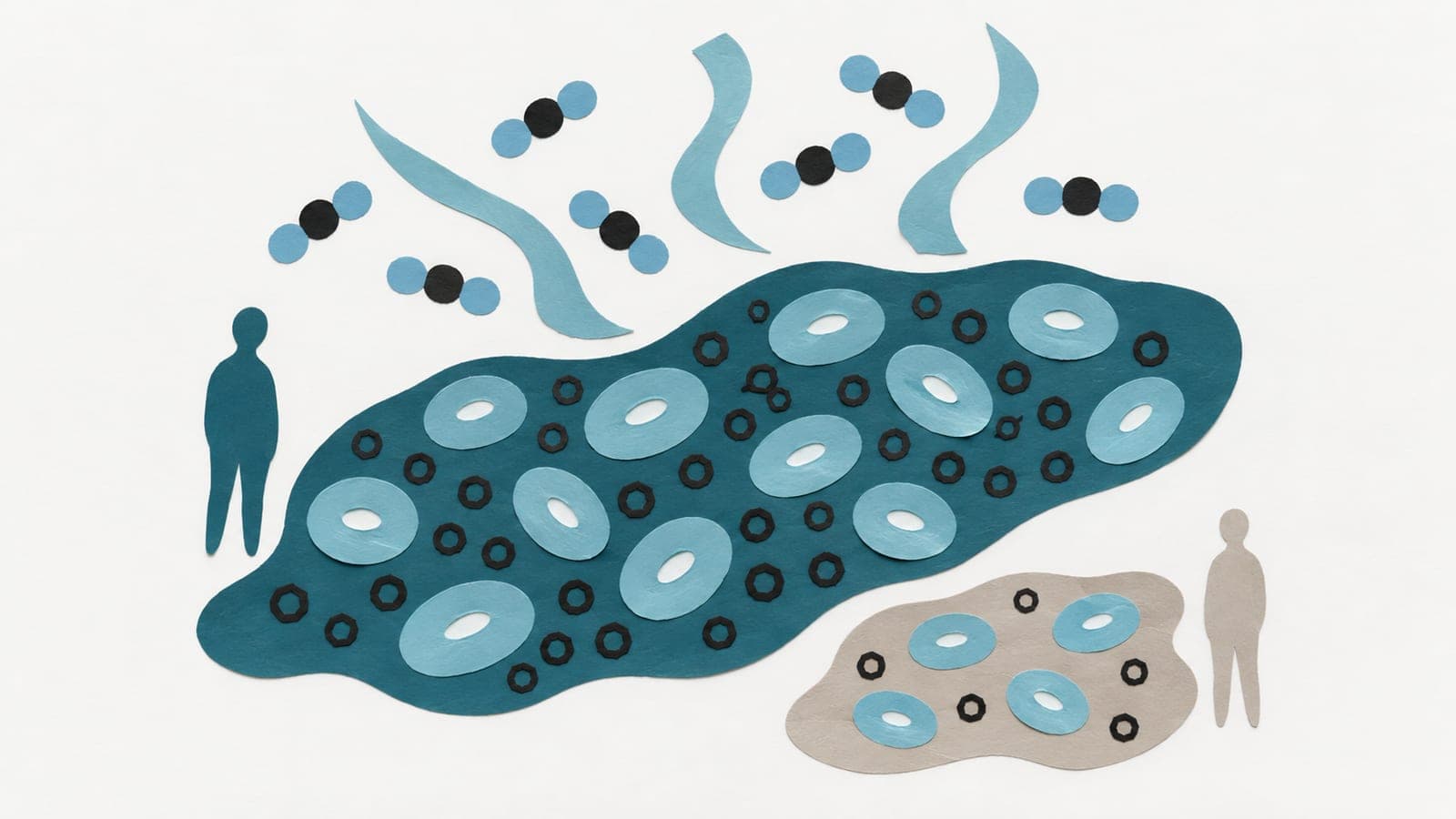
Cumulative residential proximity to toxic hazard sites and chronic disease prevalence in the United States: a nationwide ecological cross-sectional study
Abstract
Background . Residential proximity to toxic hazard sites may contribute to chronic disease burden, but national evidence examining multiple site types and potentially susceptible communities remains limited. To examine associations between residential proximity to toxic hazard sites and chronic disease prevalence across census tracts in the contiguous United States, and variation by social vulnerability and rurality. Methods . We conducted an ecological, cross-sectional study of 71,638 census tracts in the contiguous United States. Toxic hazard proximity used 2022 Environmental Justice Index rankings for National Priorities List, Toxic Release Inventory, Treatment, Storage, and Disposal, and Risk Management Plan sites. Outcomes were 2020 and 2021 CDC PLACES tract-level prevalence estimates for eight chronic diseases. Population-weighted mixed-effects models estimated prevalence-point differences by quartile, adjusting for demographics, poverty, insurance, smoking, checkups, region, and clustering of census tracts within counties. We also evaluated whether associations differed by social vulnerability and rurality. Results . Compared with tracts in the farthest quartile, those in the closest quartile had higher adjusted prevalence of hypertension, heart disease, diabetes, chronic obstructive pulmonary disease, stroke, cancer, and chronic kidney disease; differences ranged from +0.047 to +0.224 prevalence points. Asthma prevalence was lower (−0.016 prevalence points). Proximity gradients were generally largest for hypertension and diabetes in highly socially vulnerable tracts. Although disease prevalence was often higher in nonmetropolitan areas, proximity gradients were not consistently stronger in nonmetropolitan than metropolitan tracts. Sensitivity analyses accounting for tract size, alternative rurality definitions, and spatial dependence produced generally directionally consistent results. Conclusions . Greater toxic hazard proximity was associated with higher tract-level prevalence of several chronic diseases, although associations varied by outcome and community characteristics. Because this ecological, cross-sectional study cannot establish temporality or individual-level risk, the findings should be interpreted as evidence of community-level environmental health patterning. The results support the need for longitudinal and individual-level studies to inform monitoring, cleanup prioritization, and chronic disease prevention. Trial registration Clinical trial number: not applicable.
The paper
University of Alabama at Birmingham
Research Square, 5 Oct 2026, Open access, Preprint, not peer-reviewed