Air pollution linked to chronic disease risk in UK cohort
PM2.5 showed the strongest association, with a hazard ratio of 1.22 per 5 µg/m³ higher exposure in 313,534 UK Biobank participants.
Human Genetics
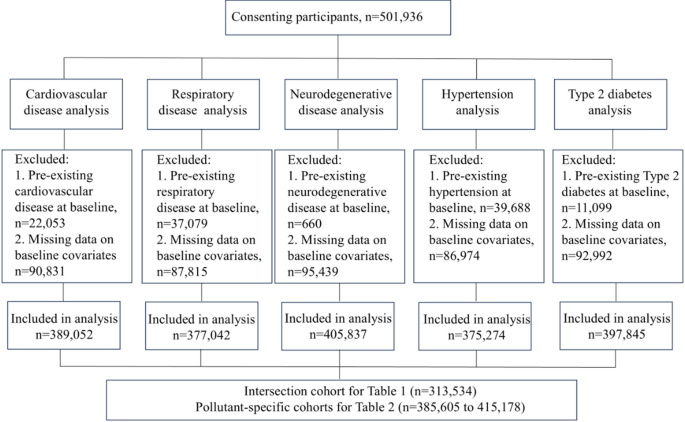
In 313,534 UK Biobank participants, researchers examined associations between annual average air pollution exposure, genetic susceptibility and chronic disease incidence. They estimated pollution concentrations at residential addresses using land use regression models. Diagnostic codes identified cardiovascular, respiratory and neurodegenerative diseases, hypertension and diabetes.
Exposure to PM2.5, PM10, NO2 and NOx was associated with higher chronic disease risk. PM2.5 showed the strongest association: a hazard ratio of 1.22 per 5 µg/m³ (95% confidence interval, 1.19–1.26). Genetic risk was independently associated with disease incidence; for diabetes, the hazard ratio was 1.77 per standard deviation increase in the polygenic risk score. Researchers also found significant additive interactions between high genetic risk and high PM2.5 exposure for neurodegenerative disease and diabetes. Participants with both high genetic risk and high pollution exposure had the highest disease burden.
Why it matters
The findings link air pollution to several conditions relevant to aging and suggest that genetic susceptibility may modify these associations.
Caveats
This observational study cannot establish that air pollution caused the diseases. Exposure estimates came from models of pollution at residential addresses.
- Air pollution
- Fine particulate matter
- Inhalable particulate matter
- Cardiovascular disease
- Respiratory disease
- Humans
The paper
The Second Affiliated Hospital of Harbin Medical University
Human Genetics · 5 Oct 2026