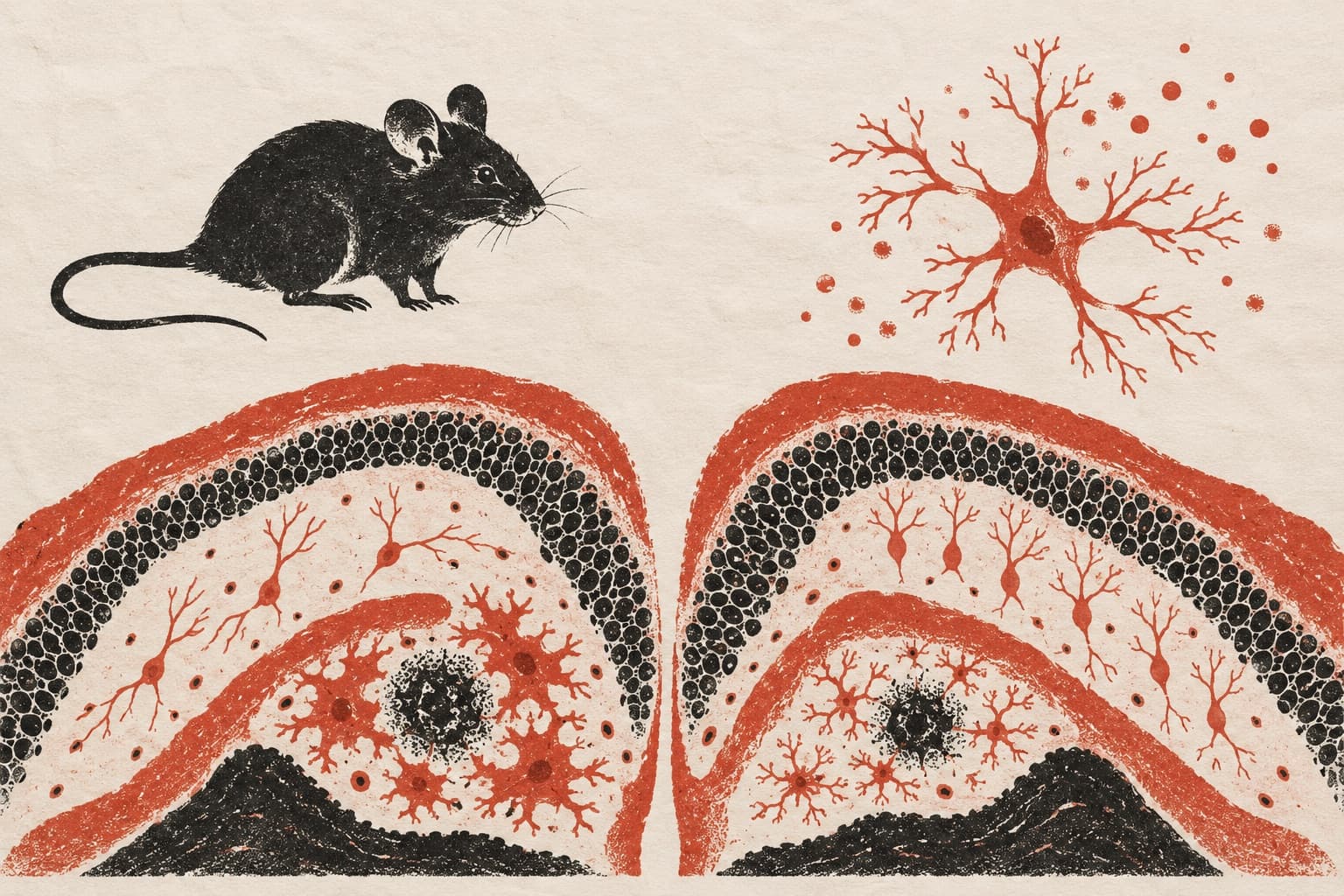
CAR T cells targeting inflammatory bone marrow progenitors restore cognition in aged mice
Clearing these peripheral myeloid cells remodeled brain macrophages and improved cognitive performance without requiring the engineered immune cells to enter the brain.
bioRxiv
In aged mice and mouse models of Alzheimer's disease, researchers tested CAR T cell therapies targeting inflammatory border-associated macrophages and their bone marrow progenitors. Eliminating border-associated macrophages intrathecally restored cognitive performance. The authors discovered that aged bone marrow myeloid progenitors carry an inflammatory transcriptional state that passes to brain border-associated macrophages to drive neuroinflammation. Targeting these inflammatory progenitors using intravenous CAR T cells reduced neuroinflammation and cognitive impairment, even though the CAR T cells did not infiltrate the brain. Transplanting CAR T-treated progenitors conferred similar benefits. The team found that this proinflammatory progenitor profile is characterized by distinct cell-surface proteins and is conserved in human aging.
Why it matters
The findings show that age-related neuroinflammation and cognitive decline can be modulated remotely by targeting myeloid precursors in the bone marrow. This reveals a peripheral therapeutic target for managing brain aging without needing drugs or cells to enter the brain.
Caveats
The functional experiments were conducted exclusively in mouse models, and the paper is a preprint that has not yet completed peer review.
The paper
Show 11 more authors
Inés Fernández-Maestre, Sujay Pal, Brian Oh, Shuxuan Li, Wen Yi See, Arianna Anderson, Joseph Gewolb, Matthew Soethout, Jill Habel, Rad Utama, Christopher R. Vakoc,Cold Spring Harbor Laboratory · Howard Hughes Medical Institute
bioRxiv · 28 Sep 2026 · Preprint, not peer-reviewed