Brain immune cells react more strongly in female mice
Experiments examining aging and amyloid-beta pathology found a greater share of disease-associated brain immune cells and stronger inflammatory signaling in female mice.

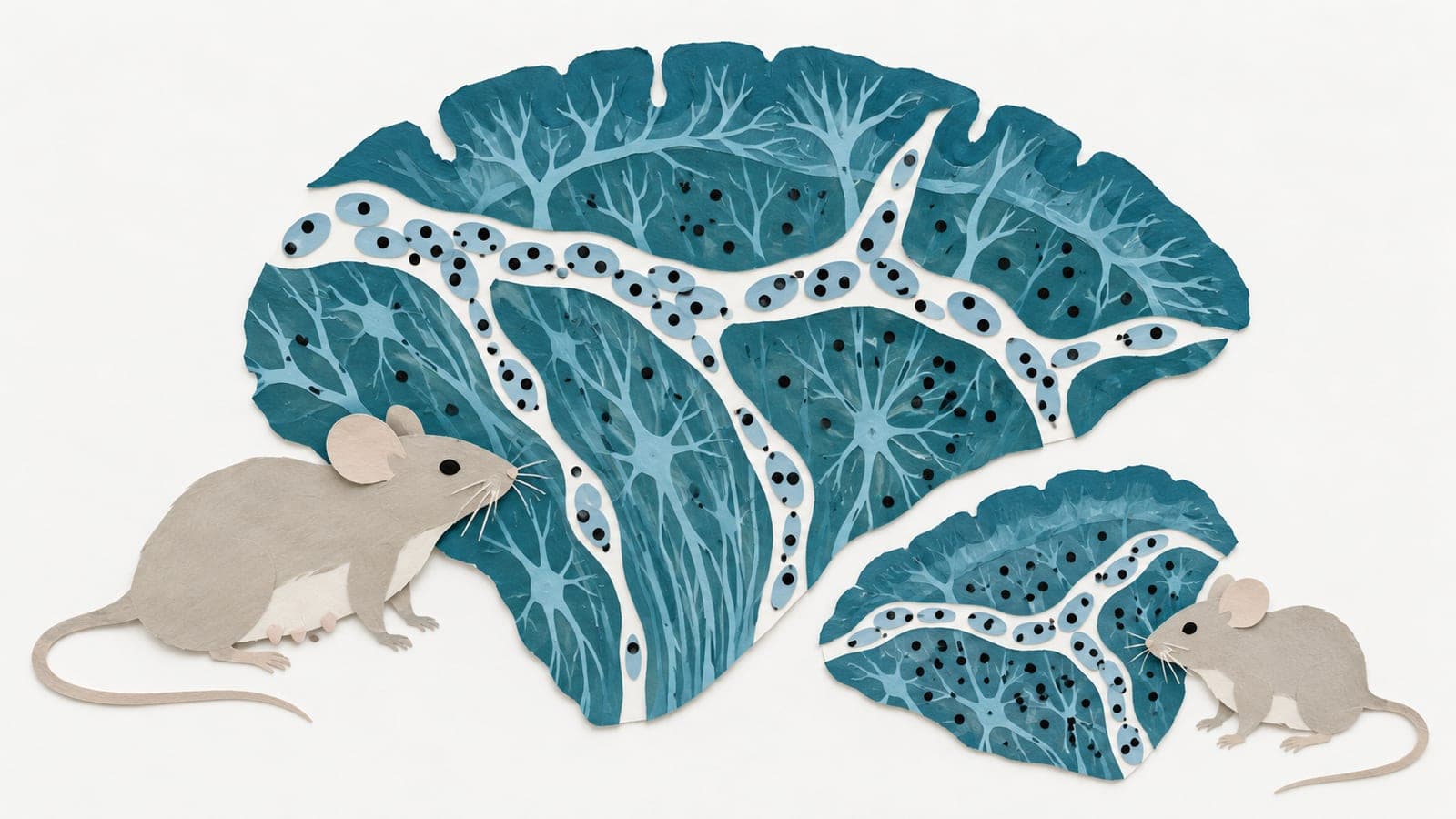
In experiments in mice, researchers examined how brain cells responded to aging and amyloid-beta pathology, a feature of Alzheimer’s disease. They measured gene activity and proteins, and used cell analysis and microscopy. Microglia, the brain’s immune cells, stood out as a major source of sex differences. Female mice had a greater share of microglia in disease-associated states, greater reactivity and stronger inflammation-related signaling.
The researchers also compared the mouse findings with gene activity data from human microglia. They found substantial overlap in sex-related patterns, including reactive cell states and networks that regulate gene activity. Amyloid precursor protein, the protein from which amyloid-beta is made, emerged as a central component of a shared network.
Why it matters
Understanding sex differences in brain immune responses may help researchers investigate why Alzheimer’s disease affects women and men differently and identify potential therapeutic targets.
Caveats
The human comparison examined gene activity rather than experimentally testing the proposed networks. The work is a preprint and has not been peer-reviewed.
The paper
Female microglia show heightened responses to aging and amyloid pathology in mice and humans
Oklahoma Medical Research Foundation
bioRxiv, Oct 19, 2026, Open access, CC BY, Preprint, not peer-reviewed