Reducing brain immune cells restores sleep in mice
Mice with amyloid plaques gained more than 2 hours of sleep per day over pretreatment levels, without a change in plaque burden.
Edited by Boris Djordjevic · AgingResearch.News
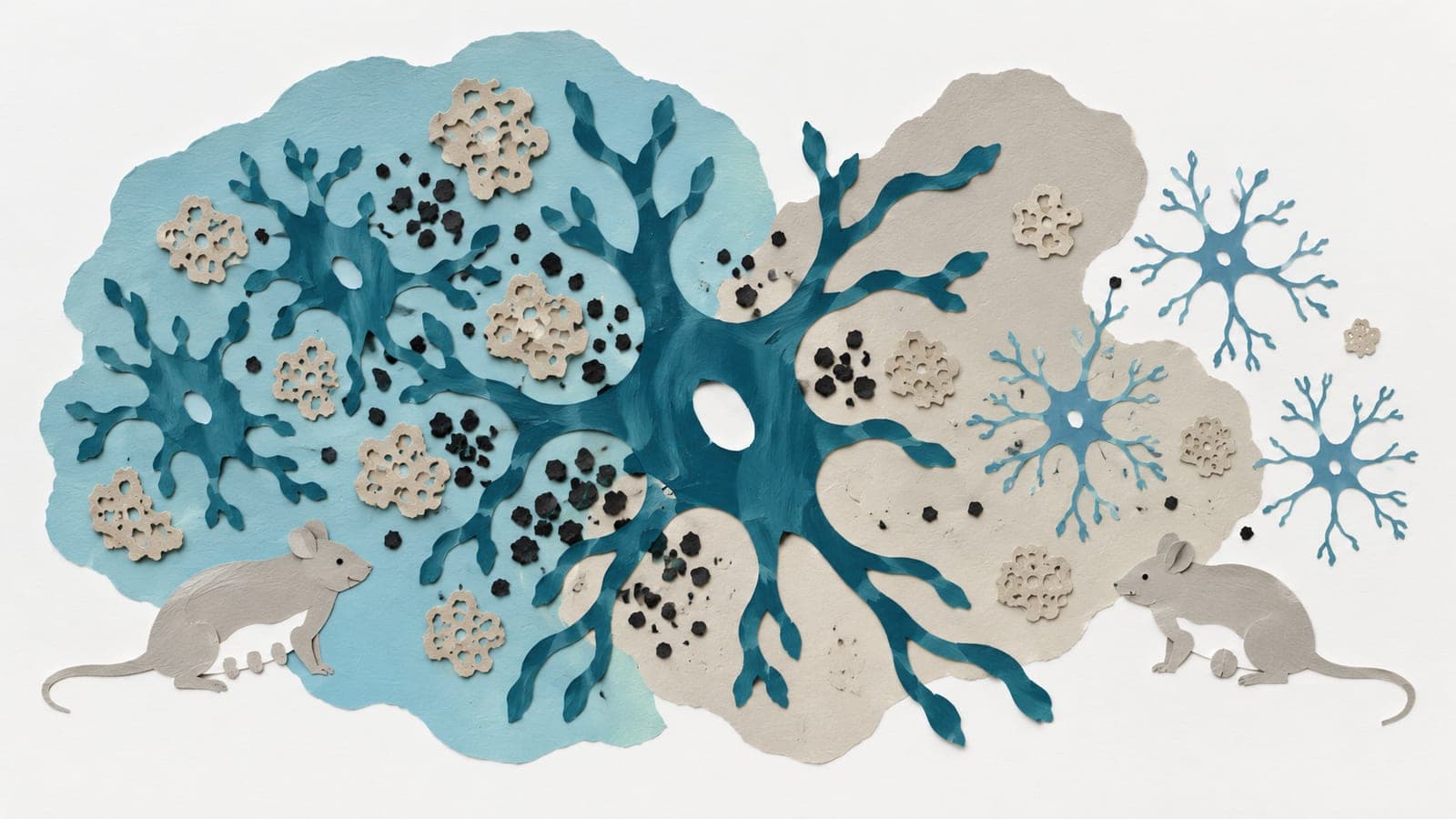
Researchers studied female mice that develop Alzheimer’s-related amyloid plaques, or protein deposits, and normal littermates at 6 and 18 months in an animal experiment. Brain and muscle recordings measured sleep. Mice with plaques spent less time in non-rapid eye movement sleep, a phase that includes deep sleep. This loss did not worsen as plaques accumulated.
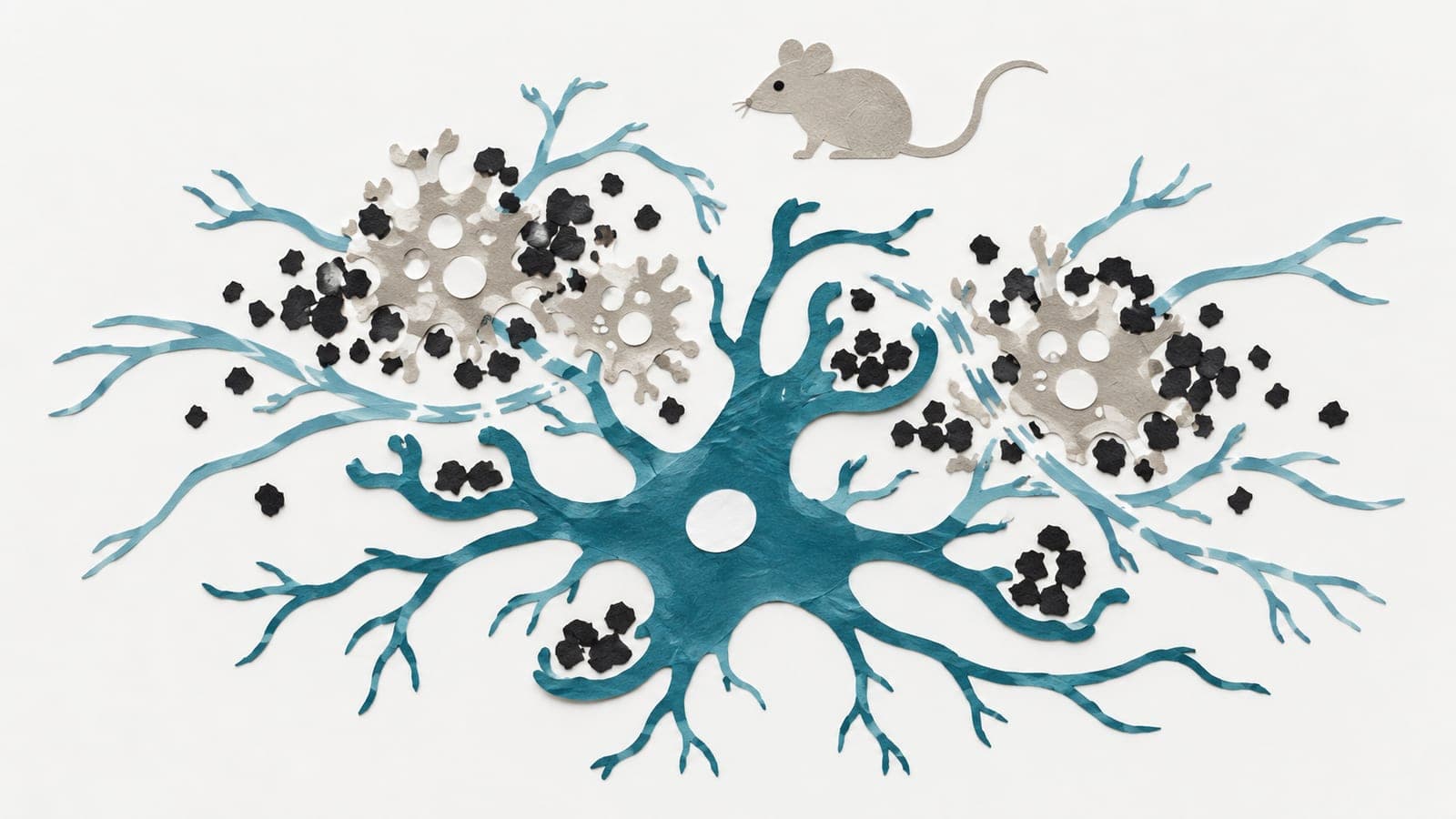
In 6-month-old plaque-bearing mice, researchers reduced microglia, immune cells in the brain, using pexidartinib in food at 1,200 parts per million for 14 days, with 4–8 mice per group. Sleep increased without a change in plaque burden. The drug did not change sleep in normal mice.
Why it matters
Sleep disruption is an early feature of Alzheimer’s disease. The authors propose sleep and brain-wave measurements as sensitive markers of the disease before symptoms appear.
Caveats
These findings came from an animal model, not people with Alzheimer’s disease. The cell-depletion experiments used only 6-month-old female mice.
The paper
Early microglial response to amyloid plaques drives sleep loss in Alzheimer's disease
University of Kentucky
Alzheimer's & Dementia, Jun 2026, Open access
Comments
Be the first to comment.