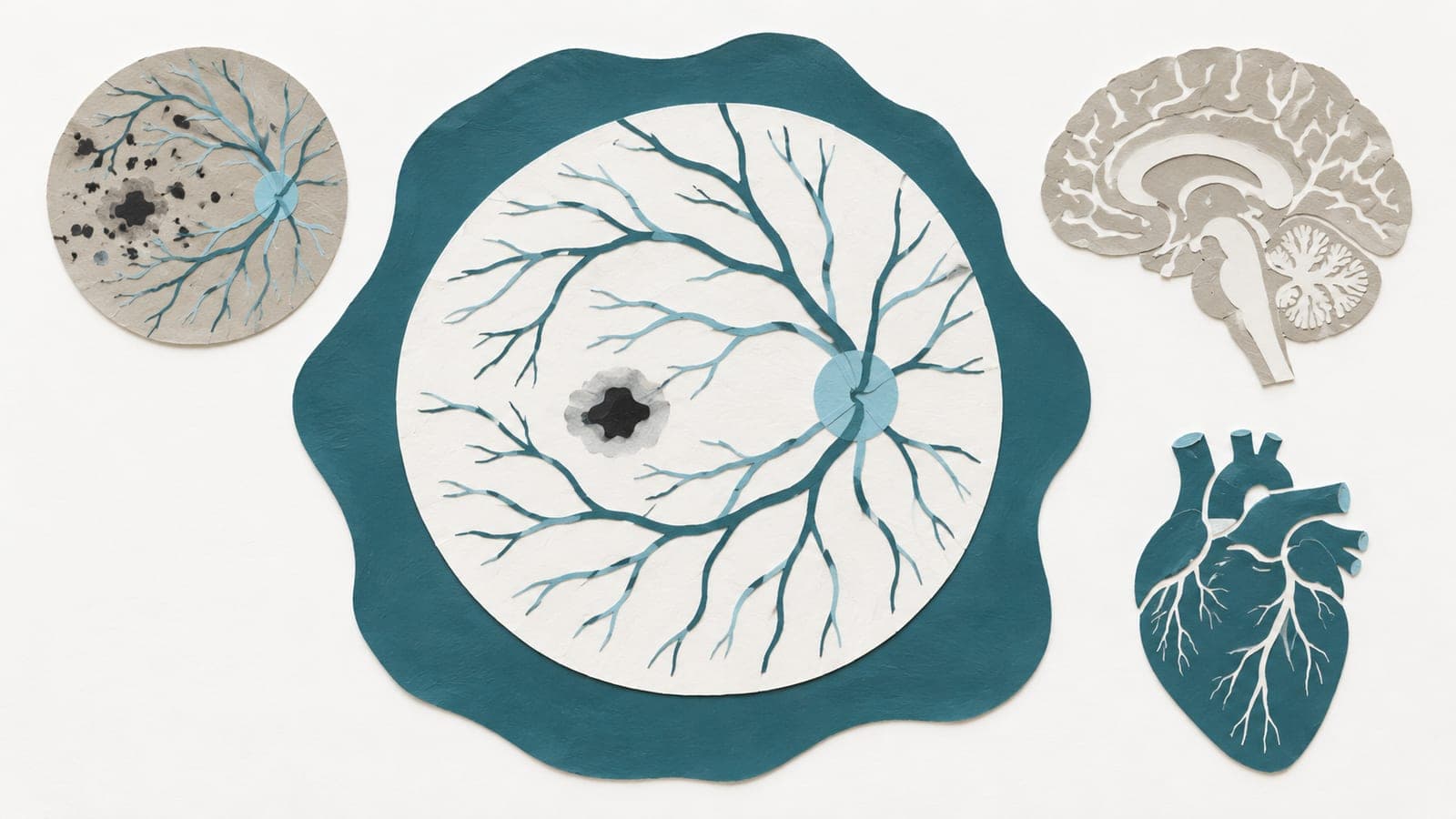
Artificial Intelligence-Assisted Community Eye Screening in Primary Healthcare: A Prospective Multicentre Diagnostic Accuracy and Implementation Study
Multicentre
Abstract
Background: Artificial intelligence (AI)-assisted retinal screening may extend access to eye care in primary healthcare, but prospective evidence on diagnostic performance and implementation under routine community conditions remains limited. Methods We conducted a prospective multicentre diagnostic accuracy and implementation study across 12 urban and rural community eye-screening centres in India from 1 January to 30 June 2025. Adults aged ≥18 years underwent AI-assisted retinal-image analysis followed by masked comprehensive ophthalmic examination. The primary outcome was participant-level diagnostic accuracy of the AI-generated referral classification for the composite reference-standard outcome of any referable ocular disease. Implementation outcomes included image-acquisition success, workflow completion, referral compliance, screening time, and questionnaire-based acceptance and satisfaction. Results Among 1,732 participants, 610 (35.2%) had referable ocular disease. The AI system produced 566 true-positive, 1,017 true-negative, 105 false-positive, and 44 false-negative classifications. Sensitivity was 92.8% (95% CI 90.4%–94.7%), specificity 90.6% (88.8%–92.3%), positive predictive value 84.4% (81.4%–87.0%), negative predictive value 95.9% (94.5%–97.0%), and overall accuracy 91.4% (90.0%–92.7%). The F1 score was 0.884, Cohen’s kappa was 0.816, and the AUC based on the three-level AI risk classification was 0.925 (bootstrap 95% CI 0.912–0.937). Image acquisition succeeded in 1,668 participants (96.3%), workflow completion was 98.7%, and referral compliance was 550/671 (82.0%). Mean community-acceptance, healthcare-provider-satisfaction, and participant-satisfaction scores were 4.56, 4.44, and 4.49, respectively. Conclusions AI-assisted community eye screening showed high sensitivity and good overall diagnostic performance with strong operational feasibility. The false-positive burden, particularly among participants with diabetes, supports continued clinical oversight, image-quality assurance, and subgroup-specific validation before wider health-system adoption.
From the paper
- Participants
The final analytical cohort comprised 1,732 participants, with a mean age of 50.2 years (SD 17.9), and 894 (51.6%) were male.
- Result
The F1 score was 0.884 (95% CI, 0.864–0.901), the positive likelihood ratio was 9.91 (95% CI, 8.25–11.91), the negative likelihood ratio was 0.080 (95% CI, 0.060–0.106), and the diagnostic odds ratio was 124.59 (95% CI, 86.35–179.78).
- Limitation
Second, although multiple ocular diseases were evaluated, retinal imaging alone cannot detect every cause of visual impairment and therefore cannot replace comprehensive ophthalmic examination.
Quoted word for word from the full text on f1000research.com.
The paper
Debapriya Mukhopadhyay Vision Research Institute & Foundation
F1000Res, 3 Sep 2026, CC BY, Preprint, not peer-reviewed