Compact retinal AI spots eye diseases and future heart risks
A 64-million-parameter model trained on 4.3 million eye scans outperformed larger systems on benchmarks for eye conditions and three-year risks of heart attack and stroke.
medRxiv
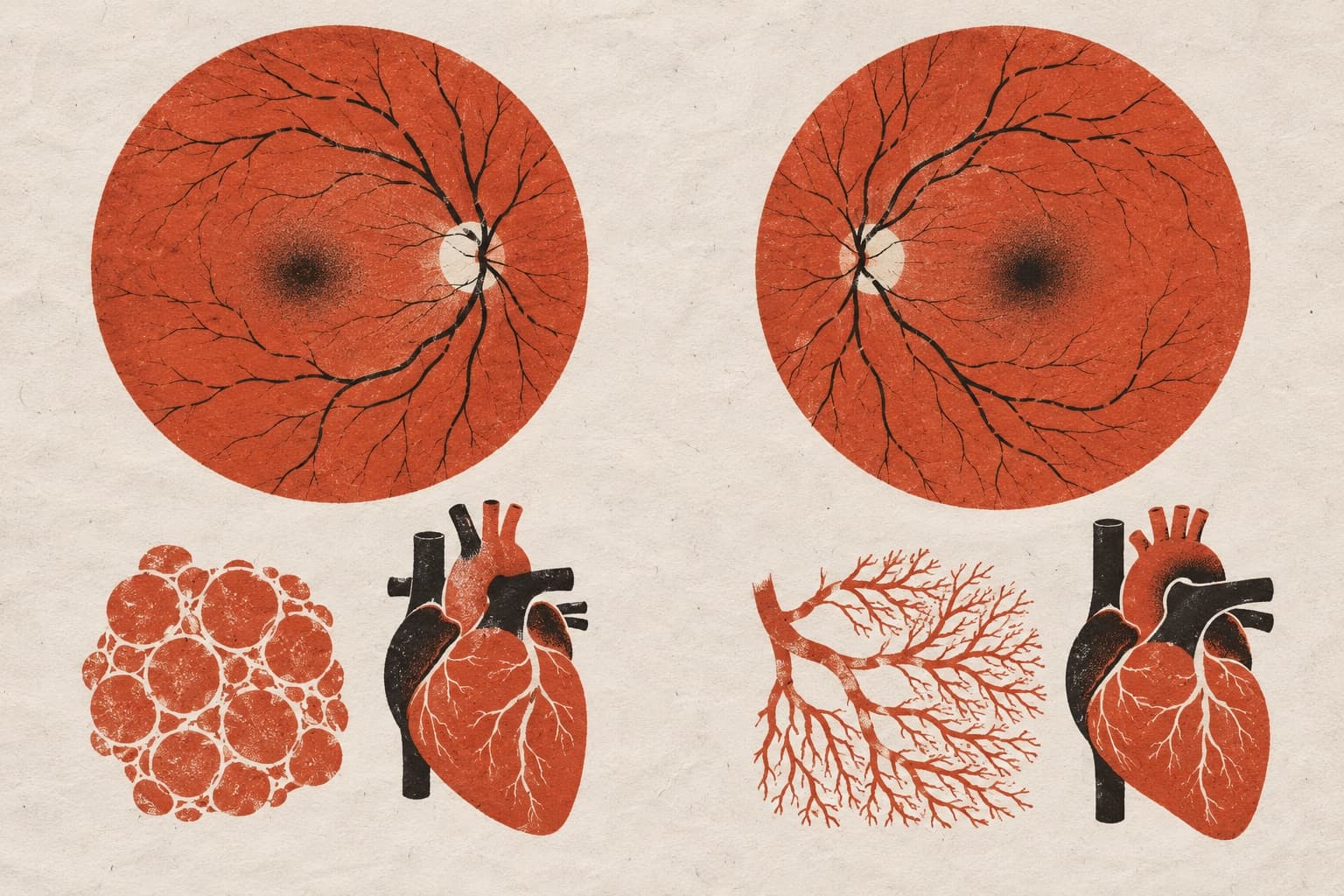
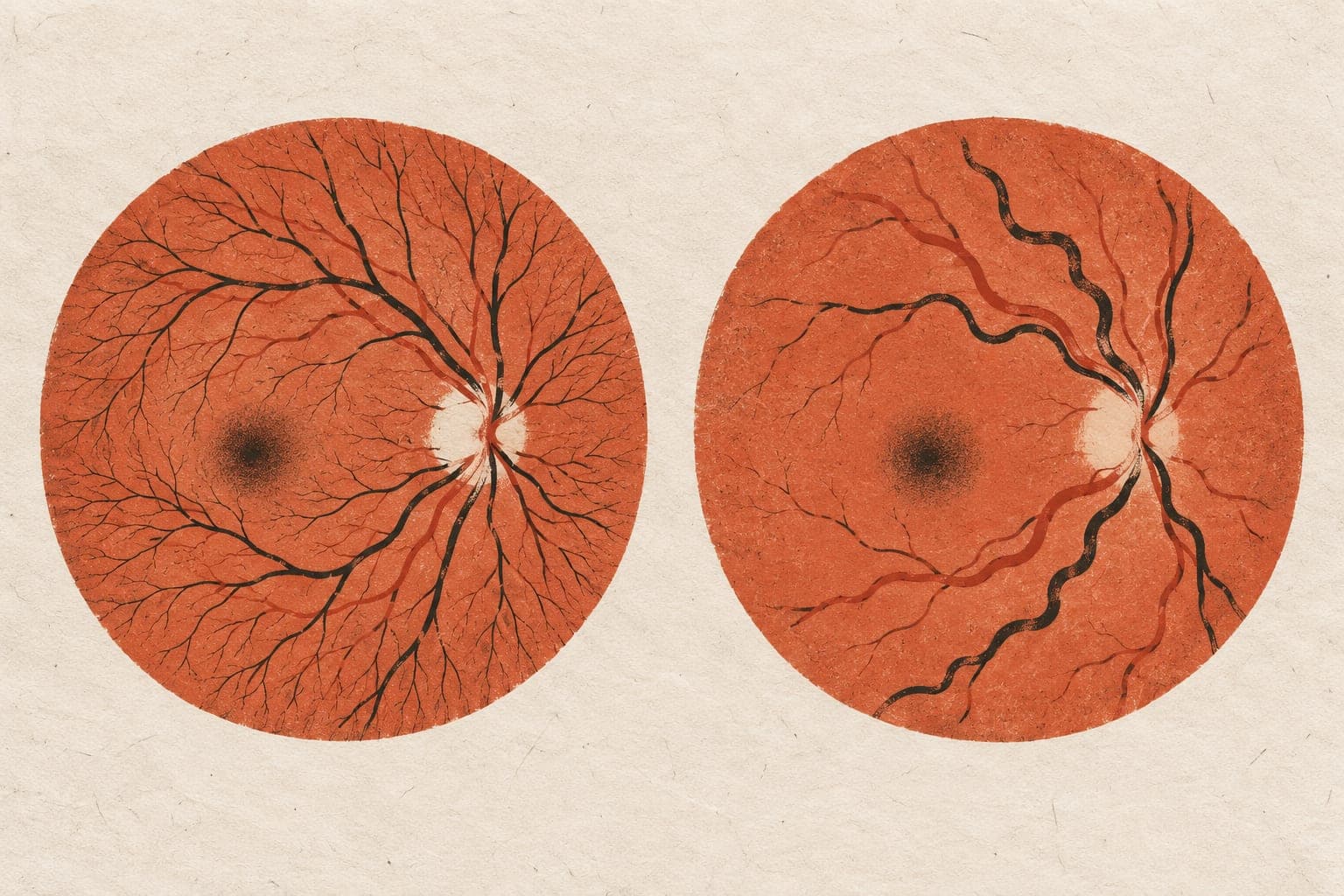
In a computational study, researchers evaluated an artificial intelligence model trained on 4.3 million colour retinal photographs from an eye-screening programme in North East London. The model, called RFM, uses 64 million parameters, making it 4.8 times smaller than existing leading retinal foundation models. Researchers tested RFM with its core visual network kept frozen across six external datasets, including data from the UK Biobank. RFM attained the lowest average error of any frozen model across seven biological measures and outperformed comparable models on eight disease classification tasks. It achieved the highest score on four of five eye-disease benchmarks, including diabetic retinopathy and glaucoma. Applied to the UK Biobank without retraining, the model also exceeded previous retinal models at predicting heart attacks and ischaemic strokes over three years.
Why it matters
Heart attacks and strokes are leading age-related vascular diseases. Testing whether standard eye photographs can predict their incidence bears on whether routine, non-invasive imaging can help screen for age-related health risks.
Caveats
The findings come from a preprint that has not yet undergone peer review. In addition, the evaluation for predicting Parkinson's disease included only 11 cases and was inconclusive.
The paper
RFM: A Lightweight Retinal Foundation Model for Generalised Oculomics
Show 13 more authors
R. Chambers, L. Bolter, J. Anderson, P. Remagnino, A. P. Menon, G. Johnson, F. Rahman, A. Olvera-Barrios, A. Warwick, C. Egan, A. Tufail, C. G. Owen, A. R. Rudnicka,School of Computer Science and Mathematics, Kingston University, London, UK
medRxiv · 7 Oct 2026 · CC BY-NC-ND · Preprint, not peer-reviewed