Combined lifestyle program was feasible in a small trial
Retention was 100% in both groups in an eight-week randomized trial of 30 people with mild cognitive impairment.
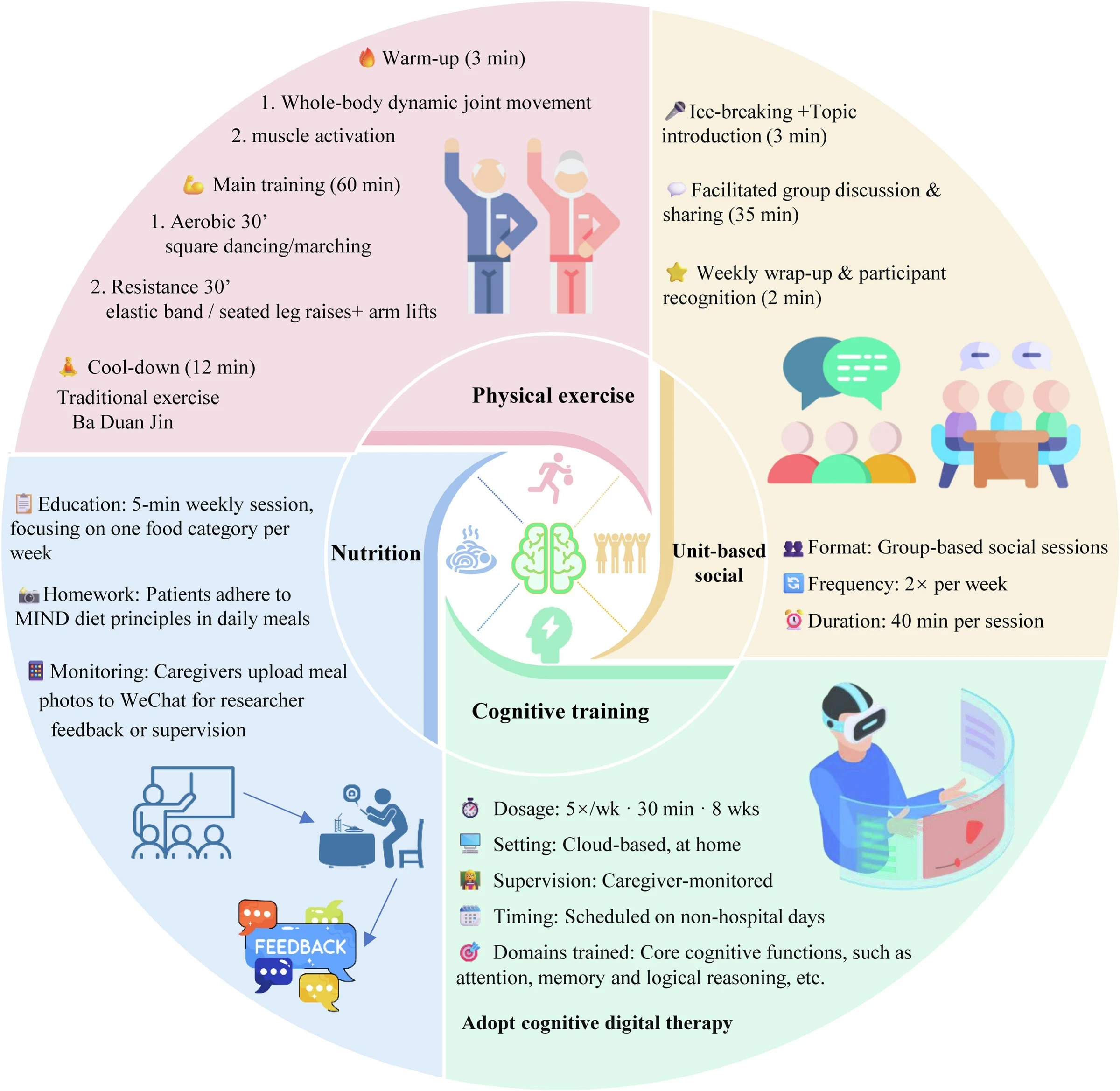
8 weeks, registered NCT06942780
Limit: Only 30 participants took part in the feasibility trial
Edited by Boris Djordjevic · AgingResearch.News
Thirty people with mild cognitive impairment—problems with memory or thinking—took part in an eight-week pilot randomized controlled trial. Researchers assigned participants to a combined lifestyle program or health education. The program combined dietary changes, structured exercise, thinking-skills training and social engagement. Everyone completed the study, and adherence to the program’s components was high.
Cognitive function did not change significantly within the intervention group, but the groups differed at eight weeks, favoring the intervention. Compared with controls, the intervention group also showed greater improvements in social support and health-related quality of life. Depressive symptoms remained stable rather than worsening. The authors described the program as feasible and well tolerated, while calling for a larger trial to confirm the preliminary results.
Why it matters
For research on maintaining thinking abilities with age, feasibility is a first step toward testing whether combined lifestyle changes provide lasting benefits.
Caveats
This small, eight-week pilot assessed feasibility; its preliminary effects need confirmation in a larger trial with longer follow-up. The abstract did not provide effect sizes or adverse-event counts.
Where the evidence stands
Exercise
- 1,328 independent labs in 84 countries
- 724 findings against
- Funders: National Institutes of Health and others
- 347 of 7,262 findings with company ties
Social engagement
- 80 independent labs in 25 countries
- 10 findings against
- Funders: National Institute on Aging and others
- 3 of 111 findings with company ties
Exercise is part of Bryan Johnson's Blueprint
Comments
Be the first to comment.