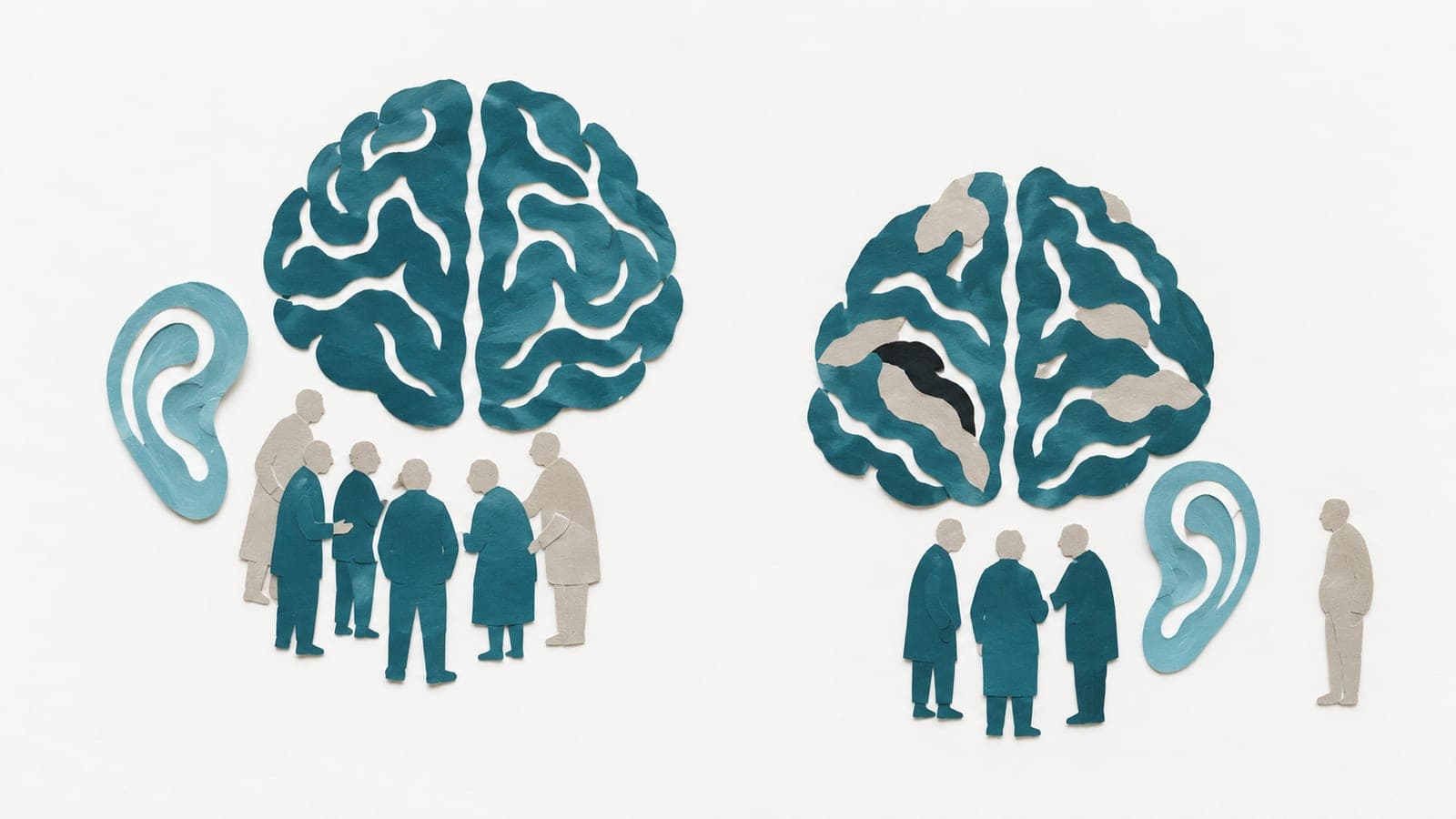
Older adults show stronger brain tracking of speech
A listening experiment with 83 younger and older adults found greater noise-related reductions in brain tracking among older listeners.
Limit: Hearing loss accounted for most age-related differences in brain tracking
Edited by Boris Djordjevic · AgingResearch.News
In a listening experiment, 83 younger and older adults listened to a continuous stream of syllables in quiet and noise while researchers recorded their brains’ electrical activity. The researchers measured how closely the timing of brain activity matched changes in speech sound levels.
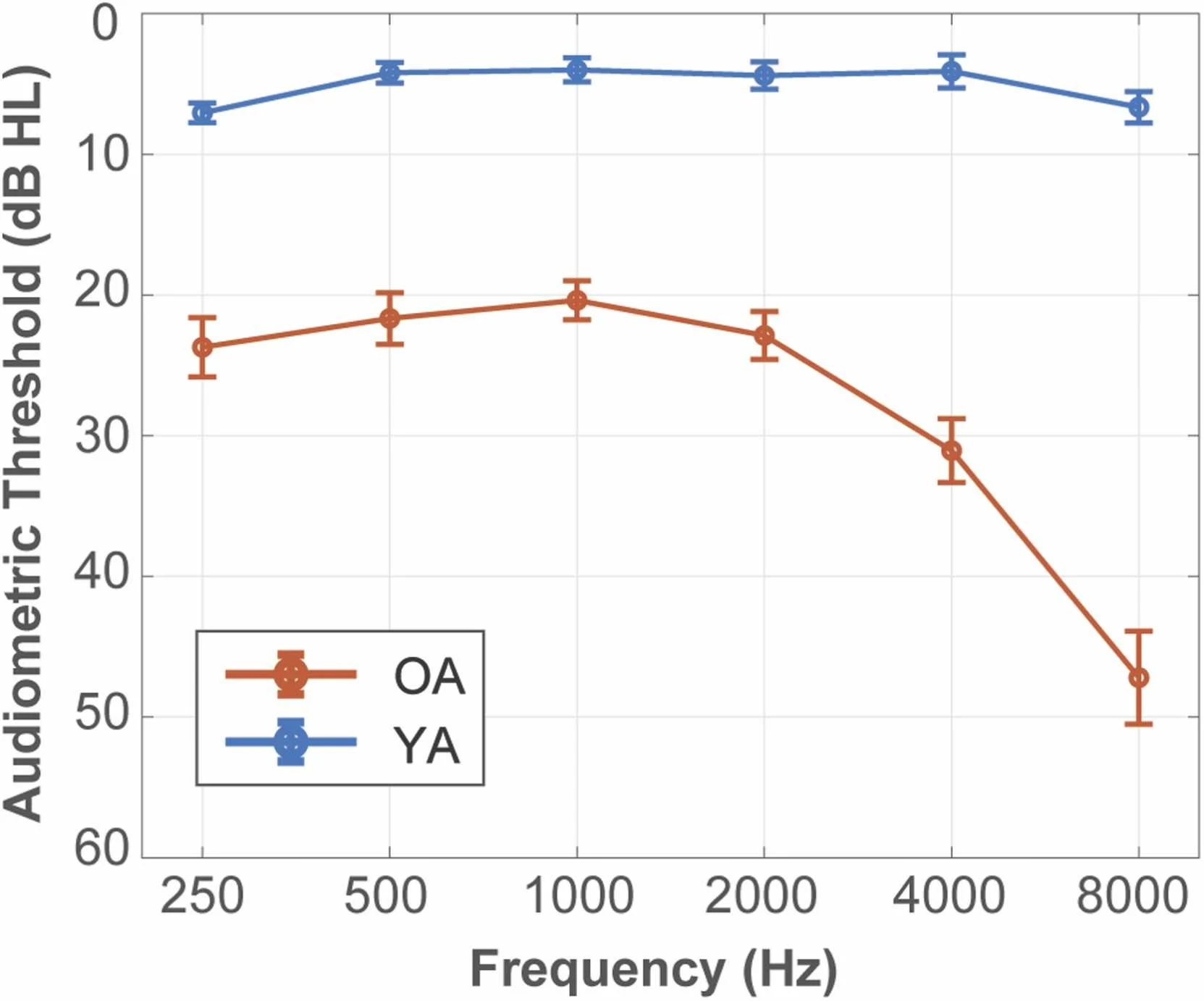
Older adults showed stronger brain tracking of speech overall, including in quiet, but greater reductions in tracking with noise than younger adults. Their task performance, however, was less sensitive to noise than younger adults’ performance. Age remained strongly associated with behavioral responses to speech after researchers accounted for hearing loss. Accounting for hearing loss removed most age-related differences in brain tracking.
Why it matters
Understanding speech in noise becomes harder with age. The findings suggest that stronger synchronization between brain activity and speech is not always helpful for speech perception.
Caveats
The age-group comparison cannot establish that age caused the differences. Its results came from 83 adults listening to syllable streams, rather than everyday conversation.
The paper
Age- and noise-related differences in neural entrainment to speech sounds
Indiana University Bloomington
Neurobiology of Aging, Oct 22, 2026