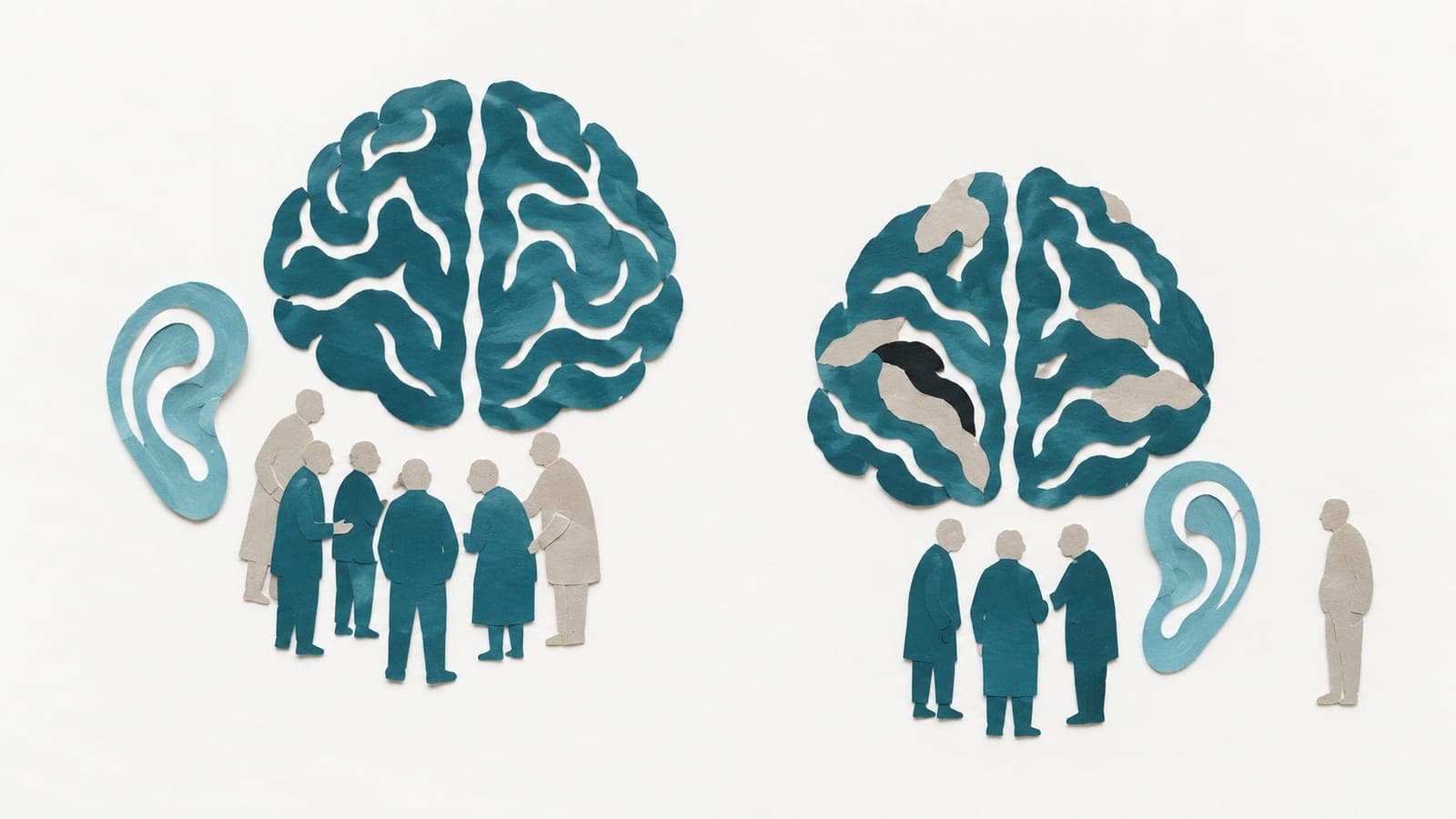
Five risk factors linked to cognitive scores, not decline
An observational study followed 1,396 generally healthy adults aged 36–108 for an average of 5.0 years, separating cognitive performance from subsequent decline.

Limit: Mean follow-up was 5.0 years, too short to detect cognitive decline
Stake: An author holds patents with Meso Scale Technologies.
Edited by Boris Djordjevic · AgingResearch.News
In 1,396 generally healthy adults aged 36–108, an observational cohort study examined dementia risk factors and cognitive aging. Researchers analyzed 2,878 visits, testing 18 risk factors against three measures of cognitive ability. They separated performance at a given age from the rate of later decline.
Education, diabetes, low motor function, hearing loss and low vision were associated with performance. None of these five modifiable factors was associated with the rate of decline. Blood markers of Alzheimer’s disease and related dementias were associated with cognition from age 65 onward, but not before, and with faster decline. The decline association was most consistent for a positive test for pTau217, a blood marker of Alzheimer’s-related changes. The modifiable-factor pattern remained unchanged among participants who tested negative for this marker.
Why it matters
Understanding normal cognitive aging requires distinguishing differences in ability at a given age from changes over time. This distinction matters when interpreting how dementia risk factors relate to aging.
Caveats
This observational study could not establish that the factors or blood markers caused cognitive differences. The findings came from generally healthy adults, and the preprint had not been peer-reviewed.
The paper
Massachusetts General Hospital
medRxiv, Oct 28, 2026, Open access, CC BY, Preprint, not peer-reviewed