Oral microbes linked to brain structure in adults
The genetic analysis found 87 associations linking 51 types of oral microbes to 79 brain scan measures in adults.
51 participants, independent replication
Limit: Household diet and medication may alter genetic–microbe relationships in the autism-ascertained source cohort
Edited by Boris Djordjevic · AgingResearch.News
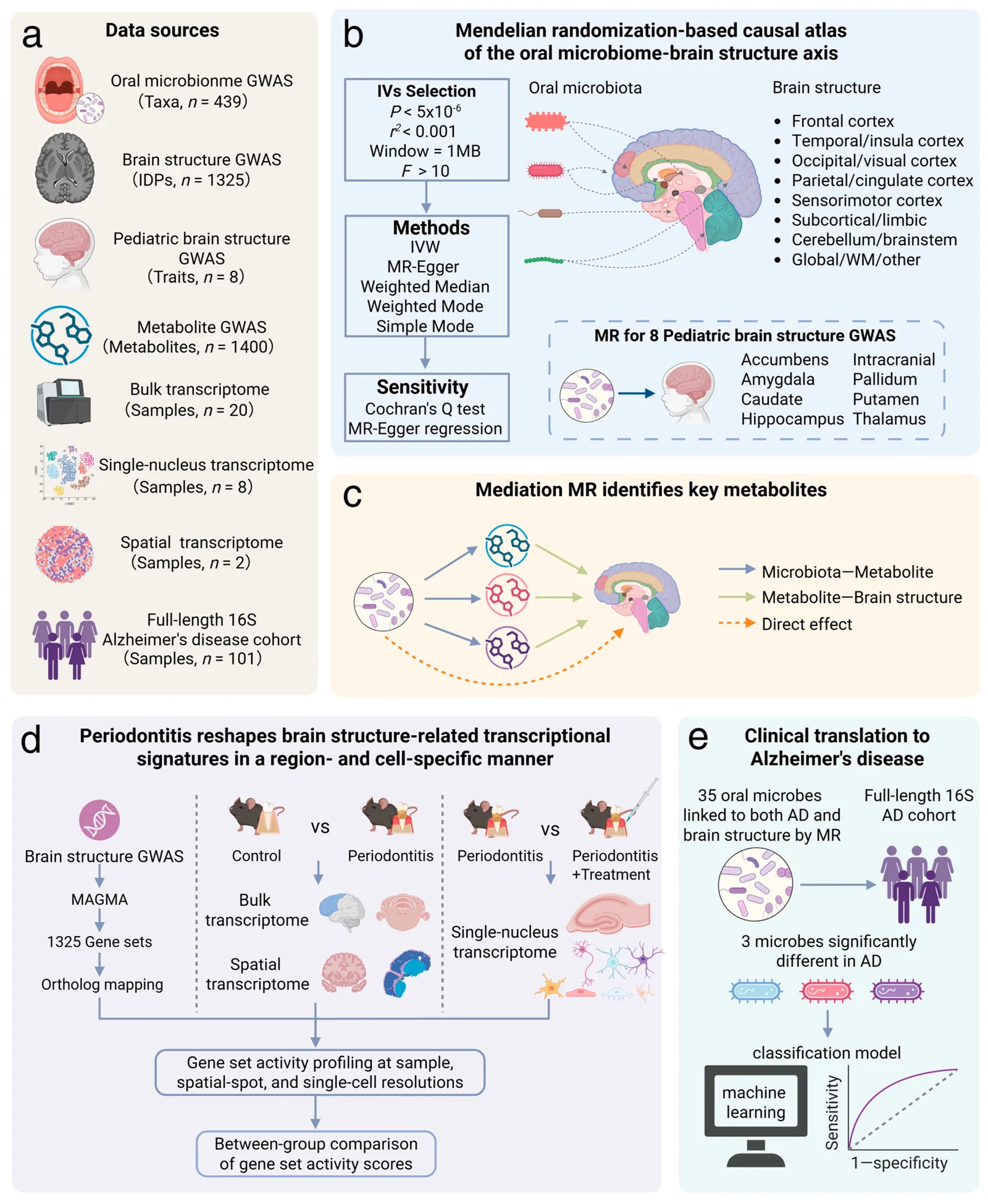
Researchers used human genetic data to examine links between 438 species of oral microbes and 1,325 measures from adult brain scans. They used two-sample Mendelian randomization, a method that uses genetic differences in separate datasets to assess relationships between traits. They identified 87 associations involving 51 microbial groups and 79 brain measures after adjusting for multiple comparisons.
The analysis also reported preliminary genetic associations between 35 microbial groups and Alzheimer's disease. Combining these findings with genetic sequencing of oral bacteria from a 51-person case-control study prioritized three bacterial species for further investigation.
Why it matters
The work offers candidates for experiments investigating Alzheimer's disease and for research into noninvasive markers of neurodegenerative disease risk.
Caveats
These genetic associations do not prove that oral microbes change brain structure or cause Alzheimer's disease. Statistical correction covered microbial groups within each brain measure, not all brain measures together.
From the paper
- Participants
The source study analyzed saliva-derived whole-genome sequencing data from 12,519 participants in the Simons Foundation Powering Autism Research for Knowledge (SPARK) family cohort.
- Result
… β = −0.297, 95% confidence interval (CI) −0.416 to −0.177, p = 1.20 × 10⁻⁶, BH-adjusted p = 5.24 × 10⁻⁴; Figure 2a,c).
Quoted word for word from the full text on mdpi.com.
- Capnocytophaga granulosa
- Dialister pneumosintes
- Microbiome composition
- Alzheimer's disease
- Brain imaging‐derived phenotypes
- Humans
The paper
Chongqing Medical University; Chongqing Municipal Health Commission
Microorganisms, Sep 24, 2026, Open access


