Blocking a fat-derived signal dampened inflammation in cells
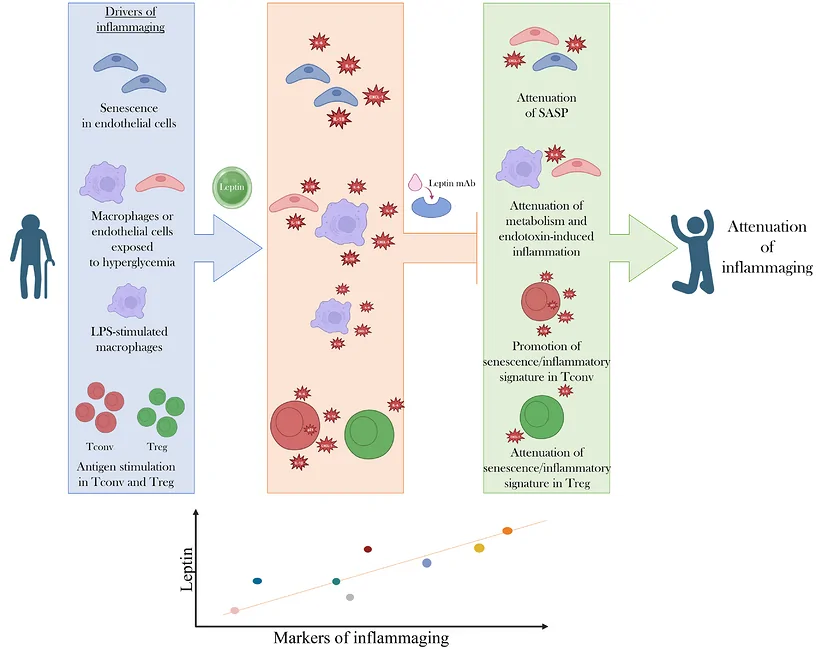
Experiments in five cell models tested leptin blockade, which reduced inflammatory responses in blood-vessel cells and some immune cells.
Limit: Inflammation was assessed through cytokine expression rather than functional immune responses
Edited by Boris Djordjevic · AgingResearch.News
Experiments in endothelial cells, which line blood vessels, and immune cells grown in the lab tested blocking leptin, an inflammatory protein released by fat tissue. Researchers used five models of age-related inflammation.
In endothelial cells, leptin enhanced senescence, a state in which cells stop dividing. Blocking it reduced inflammatory secretions from these senescent cells. It also blunted inflammation triggered by high sugar levels in endothelial cells and immune cells called macrophages. In T cells, another type of immune cell, blocking leptin reduced inflammatory and senescence markers in conventional cells but not regulatory cells, which help control immune responses. Separately, observational analyses of blood samples from 121 healthy people and 93 people with type 2 diabetes linked higher leptin to higher inflammatory markers after accounting for body mass index, a measure of weight relative to height.
Why it matters
Chronic, low-grade inflammation is one aspect of aging. The authors suggest leptin might help fuel this process.
Caveats
The anti-inflammatory effects came from cells grown in the lab, not from tests in people. The human blood-sample analyses were observational and cannot establish cause and effect.
From the paper
- Participants
Seven individuals were excluded due to hemolytic samples (n = 2) or for having hs-CRP > 10 mg/L (n = 5), yielding a final cohort of 93 subjects.
Quoted word for word from the full text on onlinelibrary.wiley.com.