Extra DNA-organizing protein makes the gut leakier in flies
In fruit fly experiments, excess DNA-organizing protein pushed gut stem cells into a nondividing state and led to cell death.
Limit: General stress from protein overexpression could explain the increased gut leakage
Edited by Boris Djordjevic · AgingResearch.News
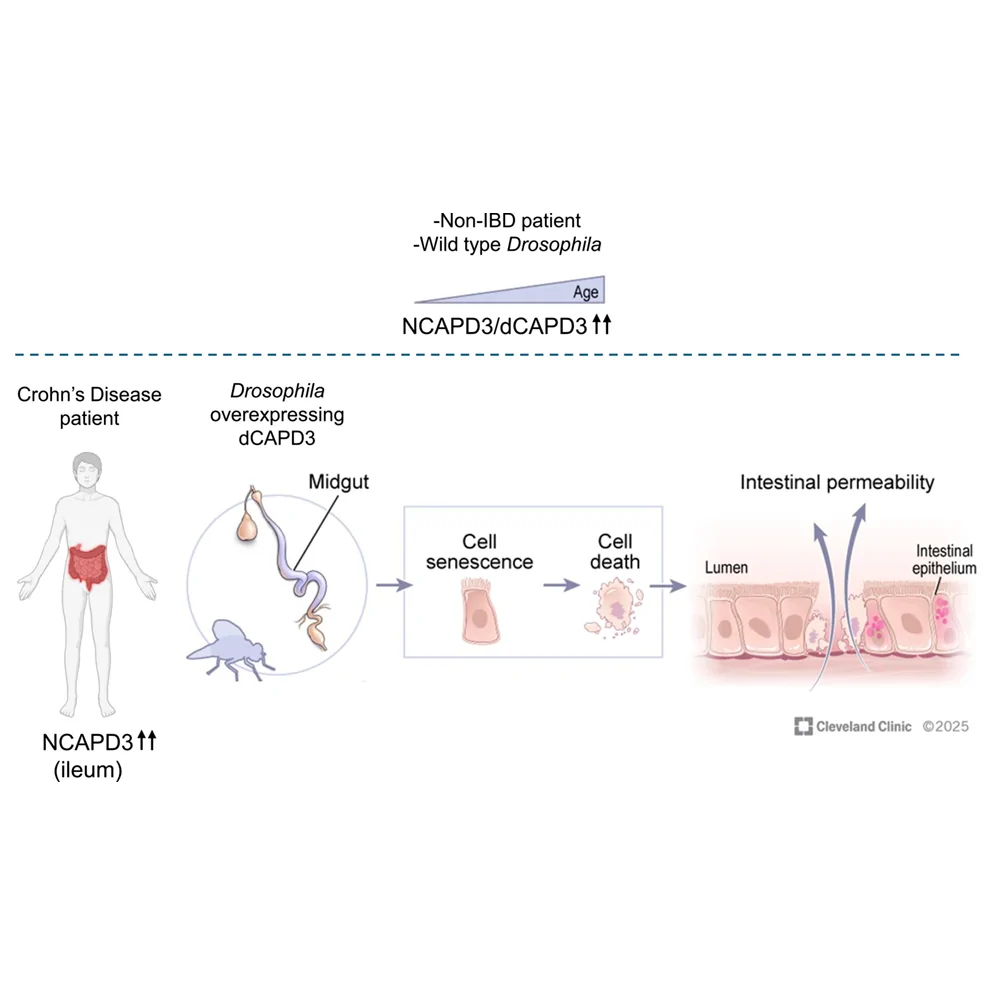
Experiments in fruit flies (Drosophila melanogaster) tested how raising levels of a condensin protein in intestinal stem and precursor cells affected the gut. Condensins are protein complexes that organize DNA. Stem cells replenish the intestinal lining.
The extra protein triggered senescence, a state in which cells stop dividing, and led to death of both stem cells and neighboring cells. The flies’ intestines became more permeable. In separate experiments, raising levels of a condensin protein reorganized tightly packed DNA in human colon cancer cells grown in the lab. It increased signs of senescence in those cells and in lab-grown rat intestinal cells. Researchers also found higher levels of condensin components in intestinal lining cells from patients with Crohn’s disease, an inflammatory bowel disease. Those samples came from the ileum, the final part of the small intestine.
Why it matters
The intestinal barrier became more permeable with age in control flies. The work raises questions about how regulation of DNA-organizing proteins helps maintain intestinal stem cells as the gut ages.
Caveats
The causal experiments used flies and cells grown in the lab, including a human cancer cell line. The patient findings did not establish that higher condensin levels caused Crohn’s disease.
From the paper
- Limitation
First, elevated NCAPD3 levels were observed in ileal epithelial cells isolated from CD patients.
Quoted word for word from the full text on PubMed Central.