Excess cell size drives senescence by altering RNA in cells
Experiments in cultured cells show that cell enlargement reorganizes DNA and alters RNA splicing, while restoring a single protein variant resumes cell division.
Limit: Cell size and senescence interactions were not measured in living animals
Edited by Boris Djordjevic · AgingResearch.News
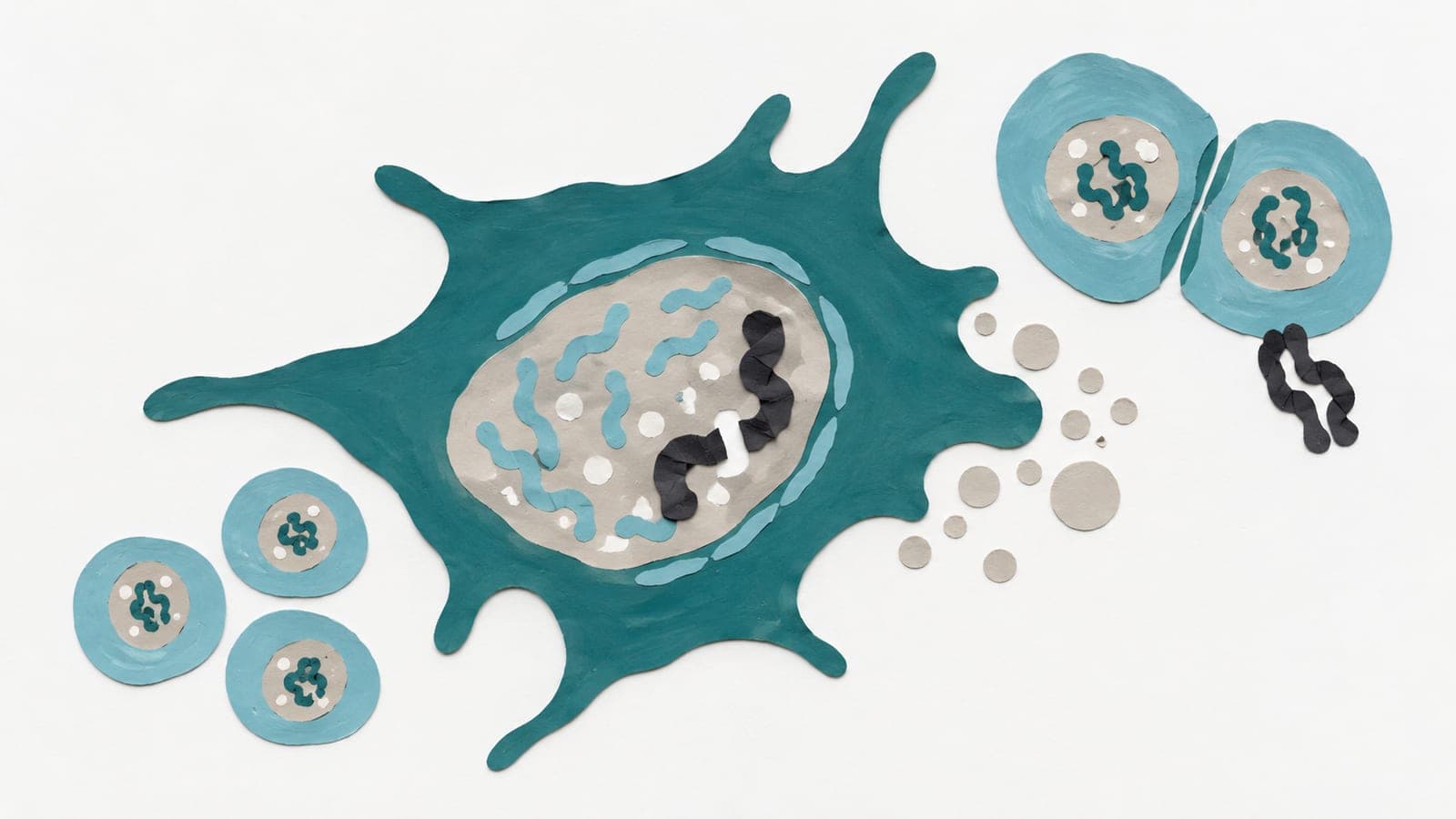
In experiments on cells grown in the lab, researchers investigated how cell enlargement prompts cellular senescence, a state where cells permanently stop dividing. Using genome-wide mapping, the team found that abnormally large cell size shifted the physical organization of DNA inside the nucleus. This structural shift activated genes that are normally silenced, including those responsible for the harmful chemical signals that senescent cells release. The increase in size also disrupted RNA splicing, the process cells use to edit genetic messages before building proteins. Specifically, enlarged cells produced a faulty version of MDM4, a protein that normally keeps division-halting signals in check. When the researchers introduced properly spliced MDM4 back into the enlarged cells, the cells restarted their division cycle and lost their senescent traits.
Why it matters
Senescent cells accumulate with age and contribute to tissue damage by releasing inflammatory molecules. Clarifying how enlarged cell size triggers this arrest helps map the basic molecular pathways that halt cell division during aging.
Caveats
The experiments were conducted solely in lab-grown cells, which may not capture how cell size and senescence interact in living animals or people. In addition, the paper is a preprint that has not yet been peer-reviewed.
The paper
Rewired mRNA homeostasis enforces cell-size associated senescence
Department for Molecular Mechanisms of Disease, University of Zurich
bioRxiv, Oct 22, 2026, Open access, CC BY-NC-ND, Preprint, not peer-reviewed

