Vitamin B3 withdrawal disrupted multiple body systems in mice
Mice dependent on dietary vitamin B3 to make an energy-regulating molecule developed frailty, cataracts and shortened lifespan when researchers removed the vitamin.
Limit: Without niacin-deprived wild-type controls, dietary effects are mixed with effects of engineered NAD depletion
Stake: An author holds patents licensed to Elysium Health.
Edited by Boris Djordjevic · AgingResearch.News
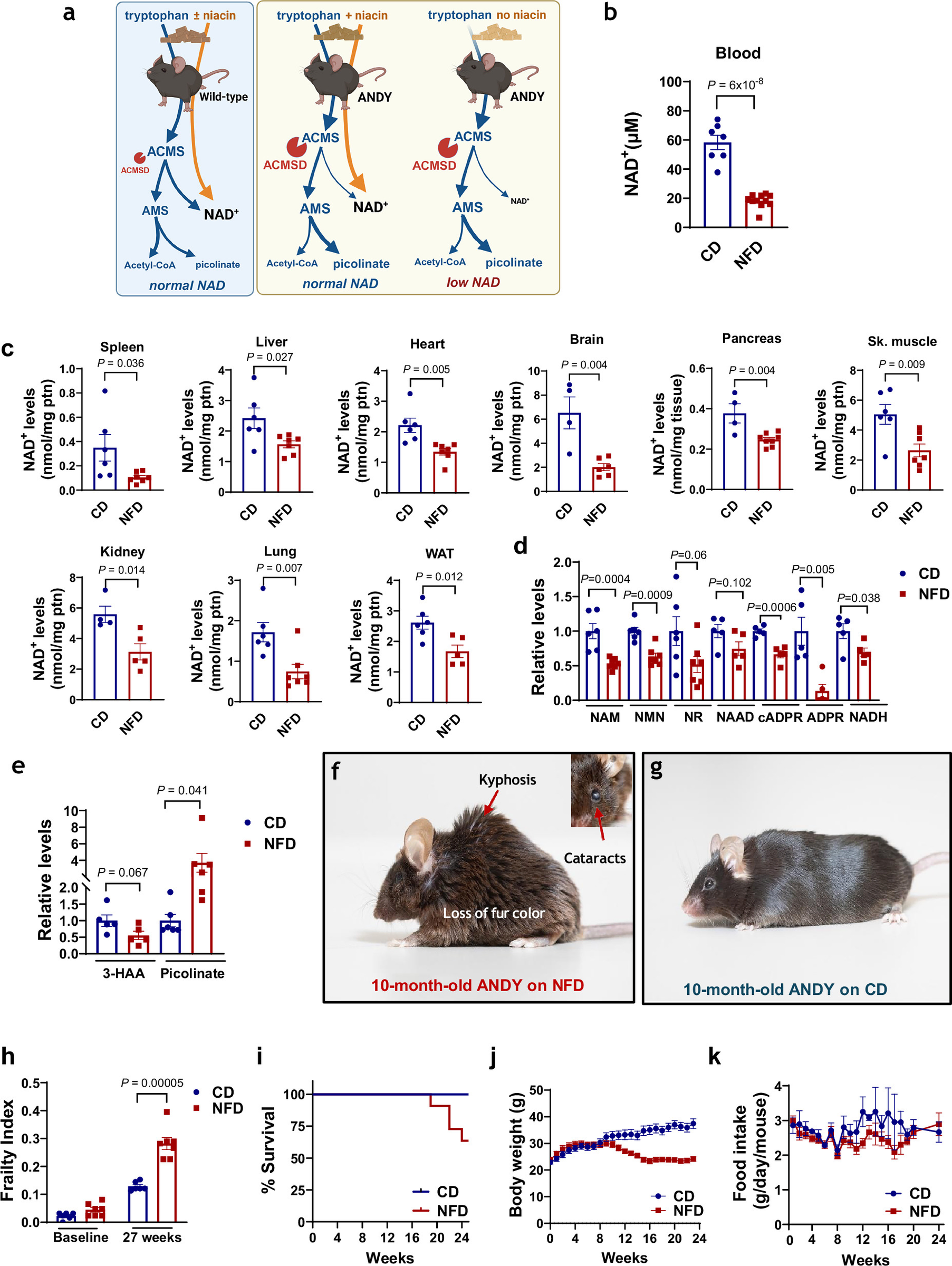
Researchers studied mice whose production of nicotinamide adenine dinucleotide (NAD), a molecule involved in energy use and DNA repair, depended on dietary niacin, a form of vitamin B3. In this animal experiment, a niacin-free diet depleted NAD across tissues and caused abnormalities in both sexes.
The mice developed spinal curvature, reduced bone, lean and fat mass, poorer exercise capacity, frailty and cataracts. Their lifespan shortened. Tissue inflammation and senescence, a state in which cells stop dividing, accompanied NAD depletion. Changes in gene activity overlapped only partly with those of chronological aging. Treatment targeting senescent cells partly improved functional decline without restoring NAD. Restoring dietary niacin reversed physical, biochemical and gene-activity abnormalities, along with changes associated with senescence.
Why it matters
NAD levels decline with aging. This model offers a way to investigate how that decline might relate to age-associated changes across the body.
Caveats
The experiment induced NAD deficiency in specially designed mice rather than studying natural aging. It did not test niacin supplementation in people.
From the paper
- Harms
Supporting this, attempts to perform insulin tolerance tests resulted in nearly 100% mortality in NFD-fed mice due to severe hypoglycemia.
- Limitation
First, wild-type mice maintained on a niacin-deficient diet were not included in the present study.
Quoted word for word from the full text on nature.com.