Longer chains in lipids were linked to aging in humans
An analysis of human lipids, molecules used in cell membranes, linked aging to longer fatty-acid chains and lower levels of shorter lipids.
Nature Aging
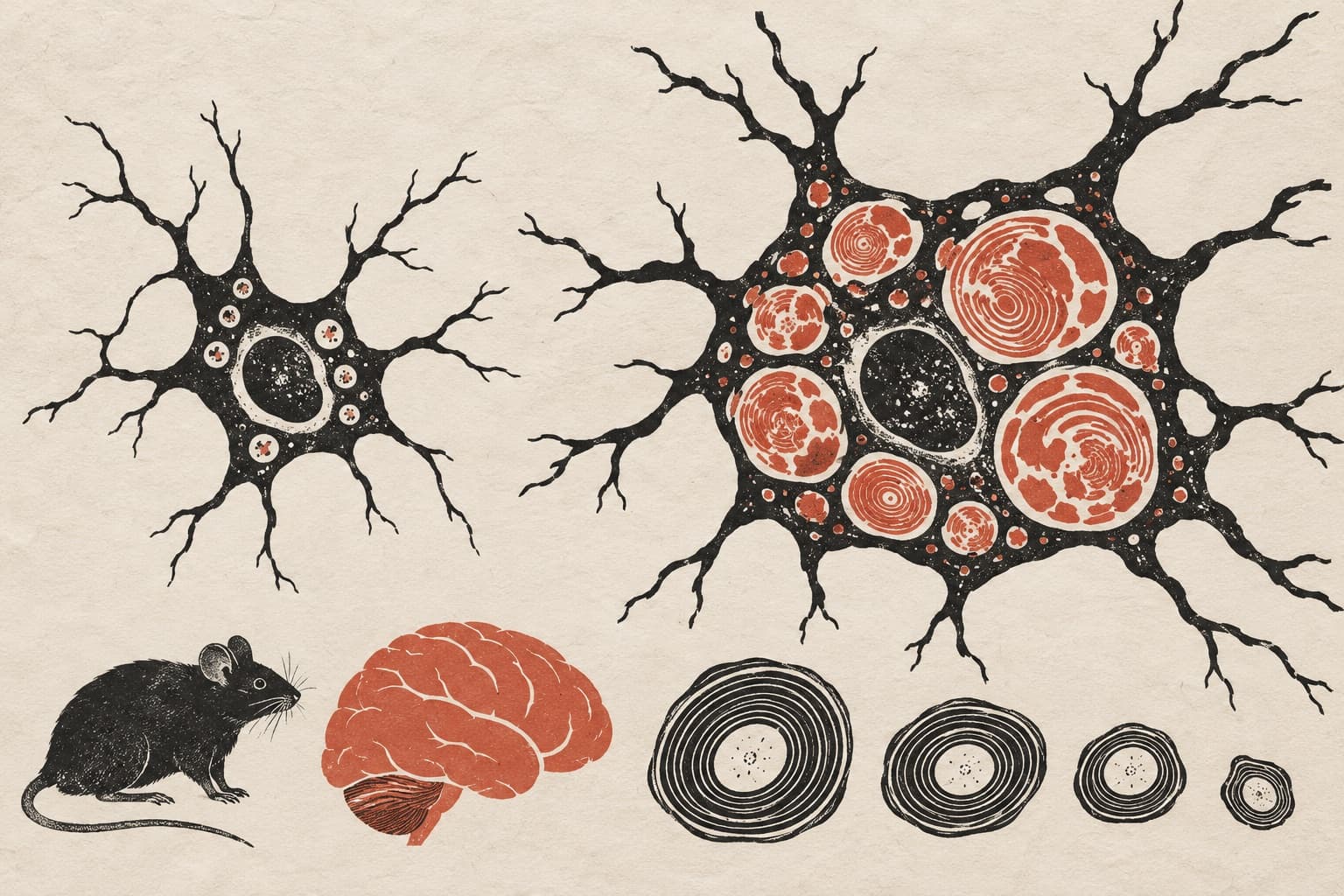
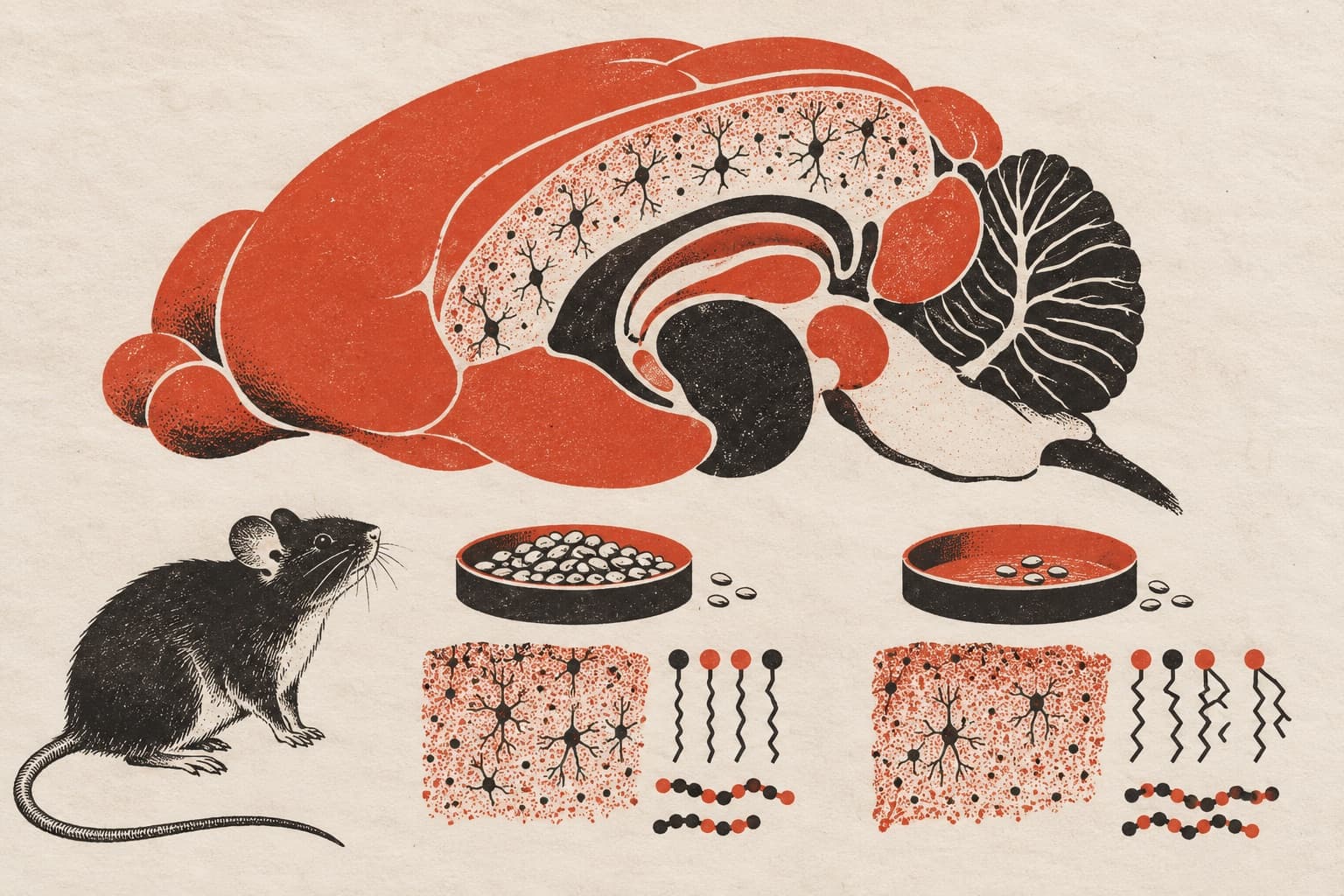
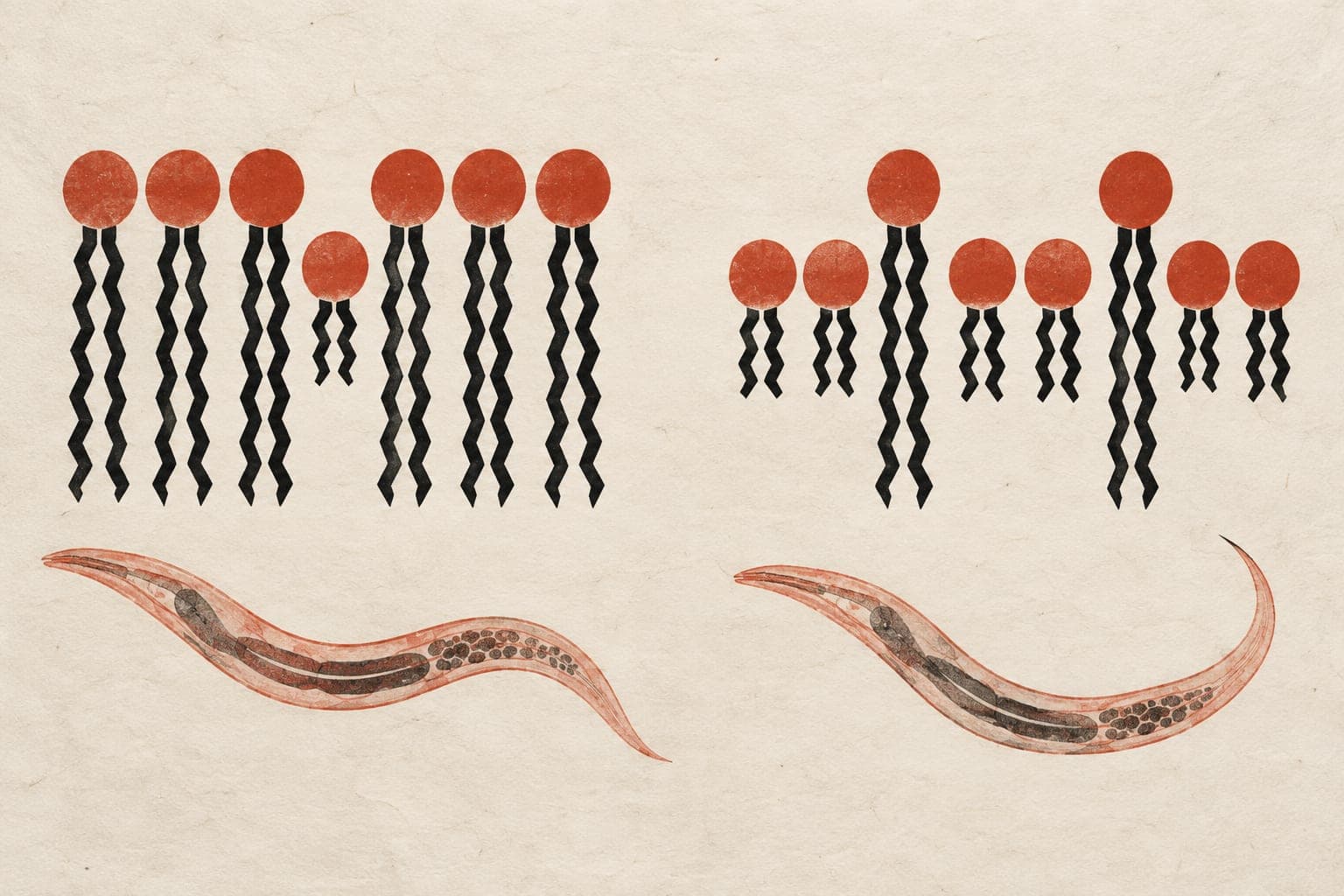
In mice, Caenorhabditis elegans worms, Drosophila flies and humans, researchers analysed lipids across species and tissues. Lipids are molecules used in cell membranes, signalling and energy storage. The comparative analysis identified a shift towards longer fatty-acid chains with aging, alongside a depletion of shorter lipids.
Lipid chains also lengthened as human heart disease progressed. In mice, dietary restriction shortened lipids in the heart. In experiments in worms, reducing Plb1, a regulator of lipid remodelling, reversed lipid-chain lengthening and extended lifespan. The lifespan effect depended on lipid length.
Why it matters
Age-related lipid remodelling may offer a target for research into ways to influence lifespan.
Caveats
The lifespan experiment tested a genetic change in worms, not a treatment in people. The abstract gave no sample sizes or numerical lifespan results.
- Dietary restriction
- plb-1
- Lipid and ceramide metabolism
- Heart disease
- Cardiac lipid acyl chain length
- Humans
The paper
Longer lipids mark aging and constrain lifespan
Show 28 more authors
Laura Hartshorne, Jonathan Sulc, Helgi I Ingólfsson, Tugba N Ozturk, Rob Ofman, Luc Legon, Kasandra Ippel, Michel van Weeghel, Martin A T Vervaart, Eric J M Wever, Simone W Denis, Signe Mosegaard, Adriana S Passadouro, Arwen W Gao, Hans R Waterham, Joris Hoeks, Patrick Schrauwen, Gajja S Salomons, Evan G Wiliams, Paul M L Janssen, Vincent A J Warnaar, Linda Partridge, Johan Auwerx, Sebastian Grönke, Mirre J P Simons, Jolanda van der Velden, Frédéric M Vaz, Riekelt H Houtkooper,Amsterdam UMC Location University of Amsterdam
Nature Aging · 6 Oct 2026