Higher urine protein ratio linked to osteoarthritis risk
Compared with normal readings, moderately and highly elevated urine ratios had osteoarthritis hazard ratios, relative risk measures, of 1.11 and 1.20 over nearly 18 years.
Dose-response
Limit: Medical records can miss osteoarthritis in people who never receive a diagnosis
Edited by Boris Djordjevic · AgingResearch.News
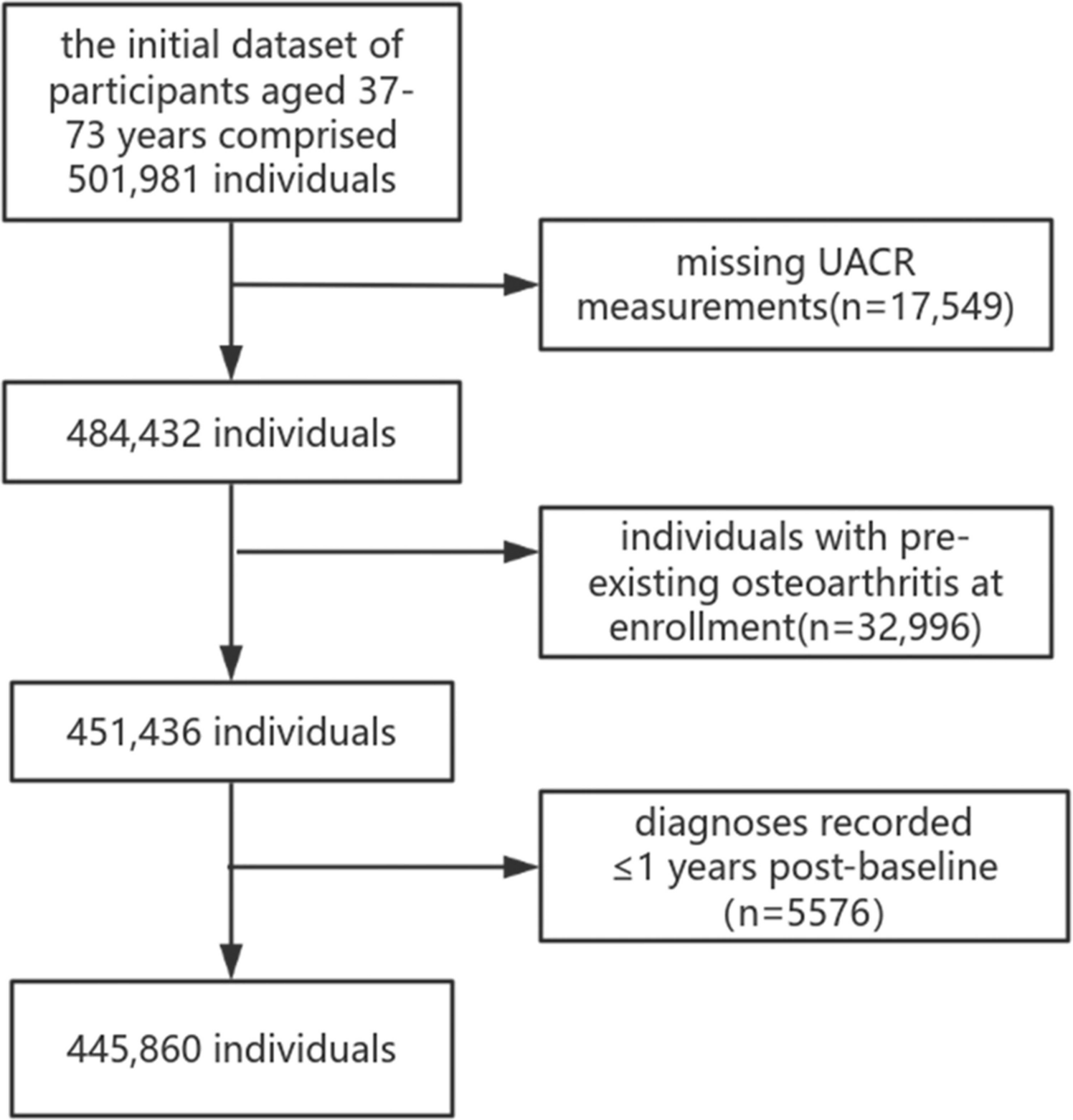
Researchers analyzed data from 445,860 UK Biobank participants without osteoarthritis in a prospective observational study. Osteoarthritis is a joint disorder that causes pain and stiffness. They measured the urine albumin-to-creatinine ratio, a marker of kidney dysfunction and body-wide inflammation, and identified new osteoarthritis diagnoses from medical records.
Over a median follow-up of nearly 18 years, higher ratios were associated with higher osteoarthritis risk. Compared with ratios below 30 milligrams per gram, ratios of 30 to 300 had a hazard ratio of 1.11. Ratios above 300 had a hazard ratio of 1.20. The association remained after adjustment for other factors. The relationship was not a straight-line pattern: risk rose sharply above approximately 25 milligrams per gram.
Why it matters
Osteoarthritis is an age-related joint disease whose current treatments only relieve symptoms. The study suggests that a readily available urine marker could help identify people for earlier, targeted prevention.
Caveats
This observational study cannot show that higher urine ratios caused osteoarthritis or that lowering them would prevent it. Participants had no osteoarthritis at entry, so the findings concern new diagnoses, not progression of existing disease.
- Osteoarthritis
- Incident osteoarthritis
- Macroalbuminuria
- Microalbuminuria
- Urinary albumin-to-creatinine ratio
- Humans
The paper
UACR as a clinical predictor of incident osteoarthritis: prospective evidence from the UK Biobank
Shanghai Eighth People's Hospital; Shanghai Ruijin Hospital
Clinical Rheumatology, Oct 23, 2026