Frontotemporal dementia linked to faster aging on a DNA clock
Patients scored 1.17 higher than controls on a blood DNA measure of accelerated aging in an adjusted analysis of two observational cohorts.
Limit: Smoking-related DNA changes partly explain the higher aging-clock estimates
Edited by Boris Djordjevic · AgingResearch.News
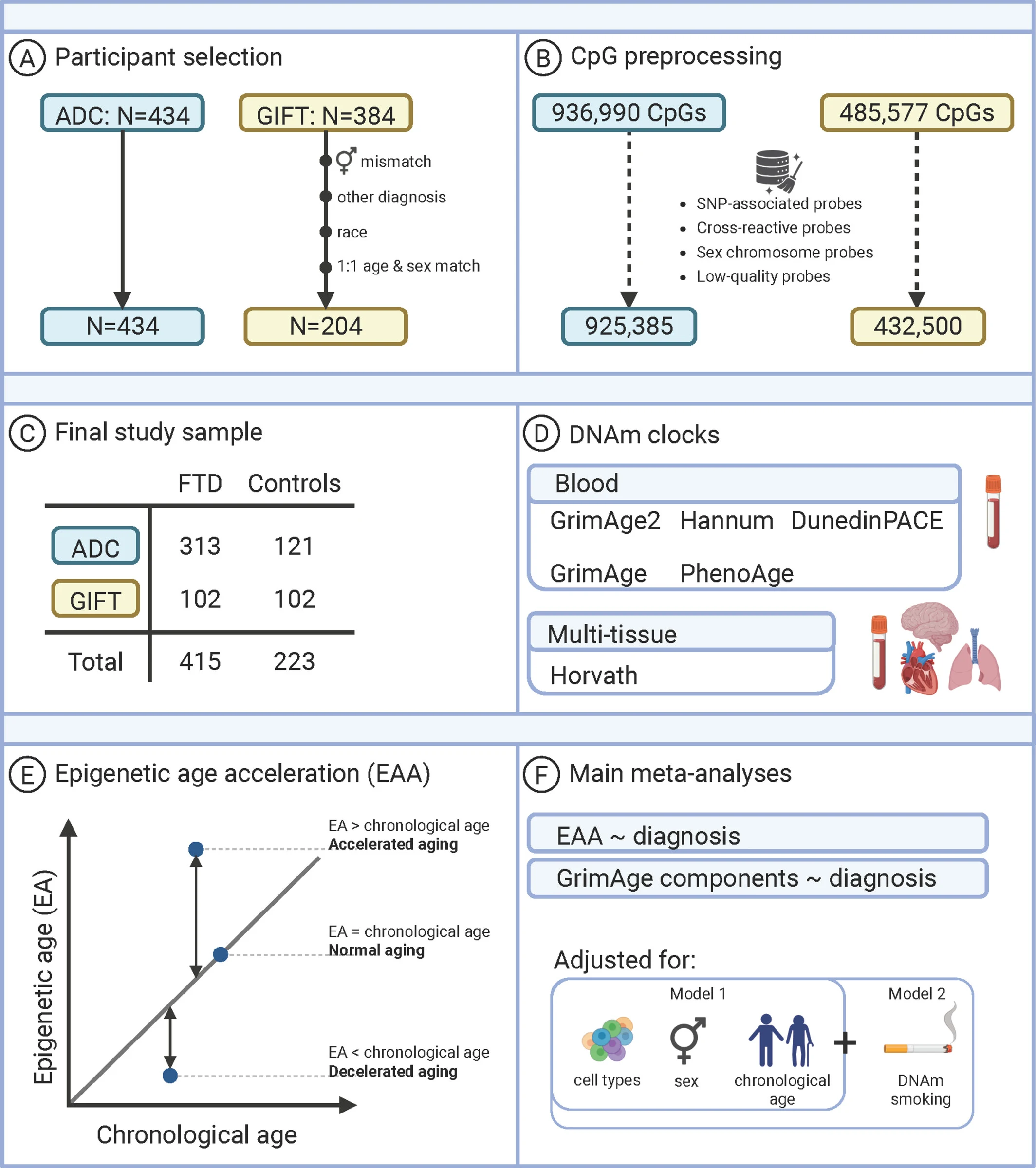
An observational study analyzed blood DNA from people with frontotemporal dementia and controls in two cohorts. The Amsterdam Dementia Cohort included 313 patients and 121 controls. The Genetic Investigation in Frontotemporal Dementia study included 102 patients and 102 controls.
Researchers used GrimAge2, a predictor of mortality based on chemical marks on DNA, to assess accelerated biological aging. Patients had higher age-acceleration scores than controls. Components of the clock showed higher DNA-based signals linked to smoking, inflammation and blood sugar metabolism. Accounting for smoking-related DNA patterns weakened the association by approximately 48%. The remaining estimate’s range of likely values included no difference. The researchers raised the possibility that smoking-related patterns reflected differences in smoking exposure or disease-related behavioral changes.
Why it matters
Biological aging markers offer a way to investigate how neurodegeneration relates to lifestyle and body-wide processes, rather than calendar age alone.
Caveats
This observational analysis cannot determine whether the DNA patterns preceded dementia or followed it. It measured a blood-based aging marker, not aging in the brain.
From the paper
- Participants
The ADC cohort comprised 434 participants, including 313 patients with FTD and 121 age- and sex-matched controls, recruited between December 2000 and April 2022 at the Alzheimer Center of Amsterdam UMC.20, 21 All 434 ADC participants with available epigenetic data were included in the analyses.
- Follow-up
Survival analyses were performed in 313 FTD patients with available follow-up data, of whom 229 (73.2%) died during a mean (SD) follow-up period of 5.8 (3.3) years.
- Result
Patients with frontotemporal dementia showed increased GrimAge2-derived epigenetic age acceleration (β = 1.17 ± 0.36, 95% CI 0.46–1.88, p = 0.001) compared with controls.
Quoted word for word from the full text on onlinelibrary.wiley.com.
The paper
Amsterdam Neuroscience
Annals of Neurology, Oct 21, 2026, Open access