Inflammation linked to stress-related thinking differences
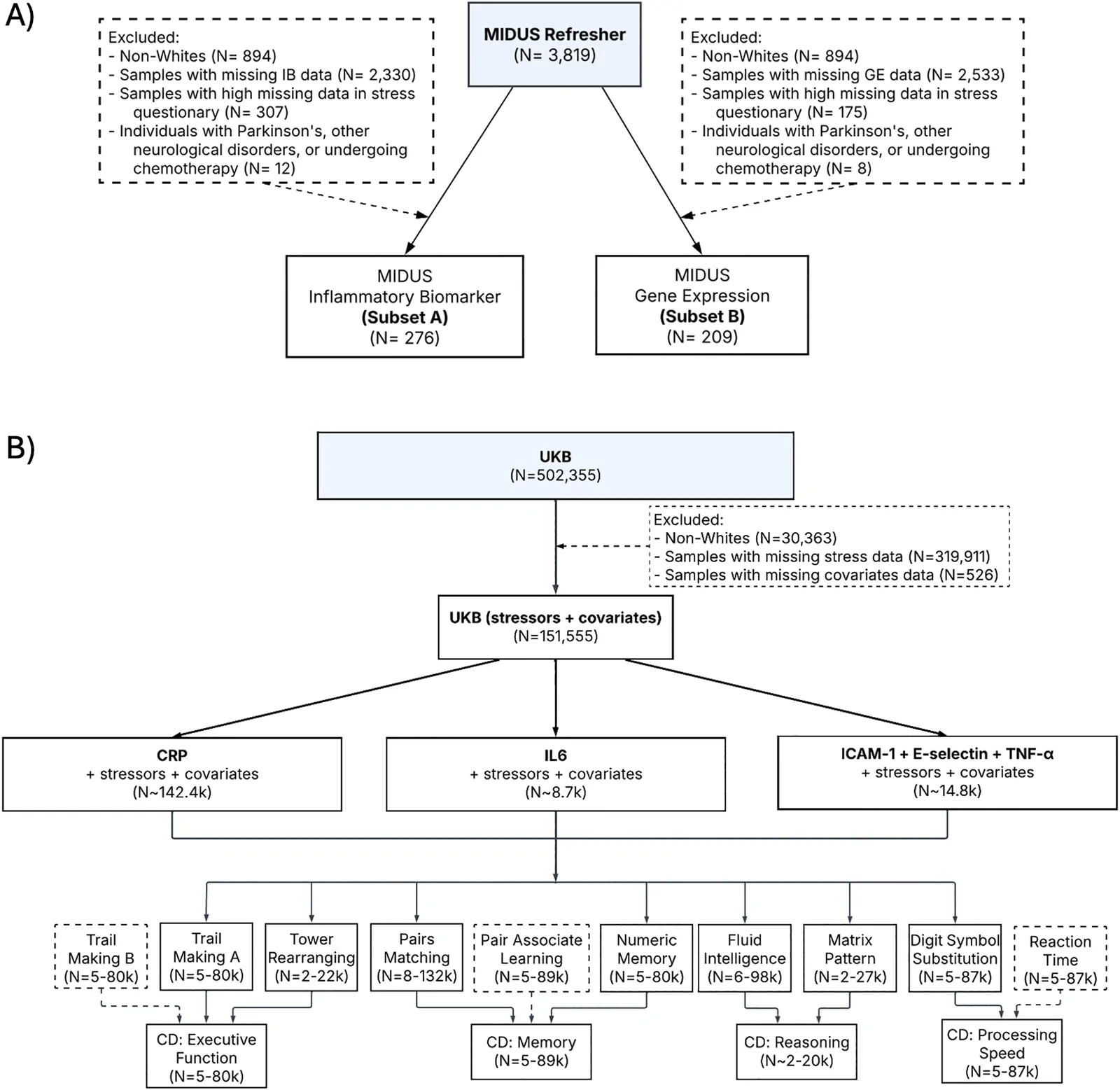
Observational analyses of two adult cohorts, with 209–276 and up to 132,068 participants, found patterns consistent with inflammation partly linking childhood abuse and thinking scores.
132,068 participants, cohort study
Limit: Self-reported childhood adversity is vulnerable to recall bias
Adults in the Midlife in the United States Study (209–276 participants) and UK Biobank (up to 132,068 participants) provided data for this observational analysis. Researchers assessed childhood adversity and adult loneliness or social isolation. They tested whether inflammation and immune-related gene activity could statistically account for links between stress and cognitive performance.
Childhood physical and emotional abuse were the most consistent predictors of poorer performance across cohorts. In UK Biobank, results were consistent with C-reactive protein, an inflammation marker, partly accounting for associations between both types of abuse and fluid intelligence—the ability to solve unfamiliar problems. Another inflammatory marker showed a similar pattern for emotional abuse and processing speed. These links survived correction for multiple testing. Overall, inflammation was associated with, but did not fully account for, stress-related differences in adult cognitive function.
Why it matters
The study addressed how chronic stress relates to cognitive aging, highlighting the need to examine biological and psychosocial pathways together.
Caveats
Observational mediation analyses cannot establish that inflammation caused the cognitive differences. Gene-activity findings in the US cohort did not survive correction for multiple testing.
From the paper
- Participants
The first subset (A) included 276 individuals with complete inflammatory biomarker data, and the second subset (B) compound by 209 participants with complete CTRA gene expression data.
- Result
A positive indirect effect estimate was identified for TNF in the association between childhood physical abuse and processing speed (β = 0.1033, 95% CI [0.0015, 0.2642], p = 0.042), accounting for 17.61% of the total effect.
Results, Mediation analyses using immune-related gene expression as mediators in MIDUS
Quoted word for word from the full text on PubMed Central.
The paper
Pennsylvania State University
Brain, Behavior, & Immunity - Health, Oct 2, 2026, Open access


