Hydrogen delivery reduced testicular deterioration in aged mice
A material injected into the scrotum stuck to tissue around the testes, sustaining local hydrogen delivery and promoting sperm production in aged mice.
Limit: Natural mating, pregnancy, live birth, and offspring health were not measured
Edited by Boris Djordjevic · AgingResearch.News
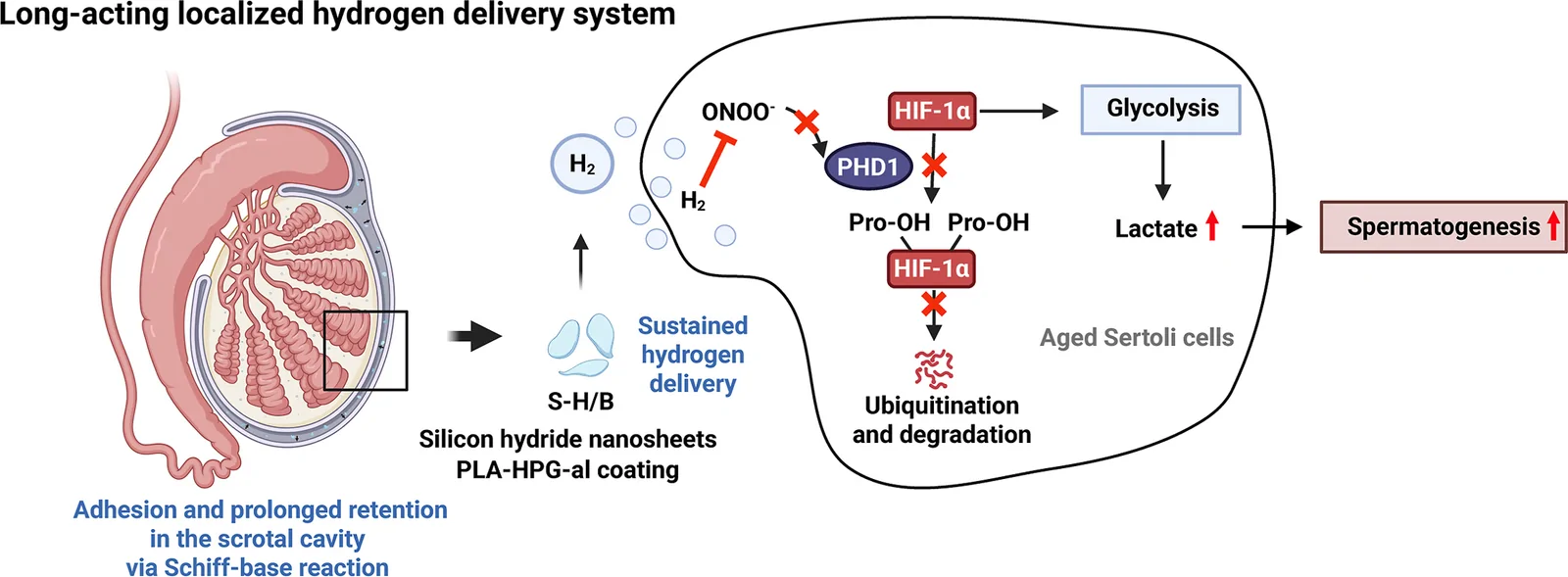
In an animal experiment, aged mice received a hydrogen-releasing material injected into the scrotum. The formulation combined tiny silicon sheets with an adhesive polymer. It stuck to tissue around the testes and showed prolonged local retention. It also released hydrogen over time under conditions like those in the body.
The material reduced age-associated testicular deterioration and promoted sperm production. An analysis of gene activity in individual cells found enhanced programs involved in breaking down glucose in aged Sertoli cells, which support sperm development. The researchers suggested that changes in these cells’ metabolism may have contributed to the beneficial effects.
Why it matters
Sperm production declines as testes age. The work suggests that metabolic support from cells involved in sperm development may be relevant to addressing age-associated reproductive dysfunction.
Caveats
Experiments in aged mice do not establish benefits in people. The abstract did not report sample size, dose, treatment duration or adverse effects.
The paper
Guangzhou University; Tongji University
Materials Today Bio, Oct 7, 2026, Open access


