Biomimetic nanozymes reduce neuroinflammation and cognitive decline in aged mice
Neutrophil-coated nanoparticles crossed the blood-brain barrier, altered microglial metabolism, and improved cognitive performance after surgery in older mice.
Advanced Science
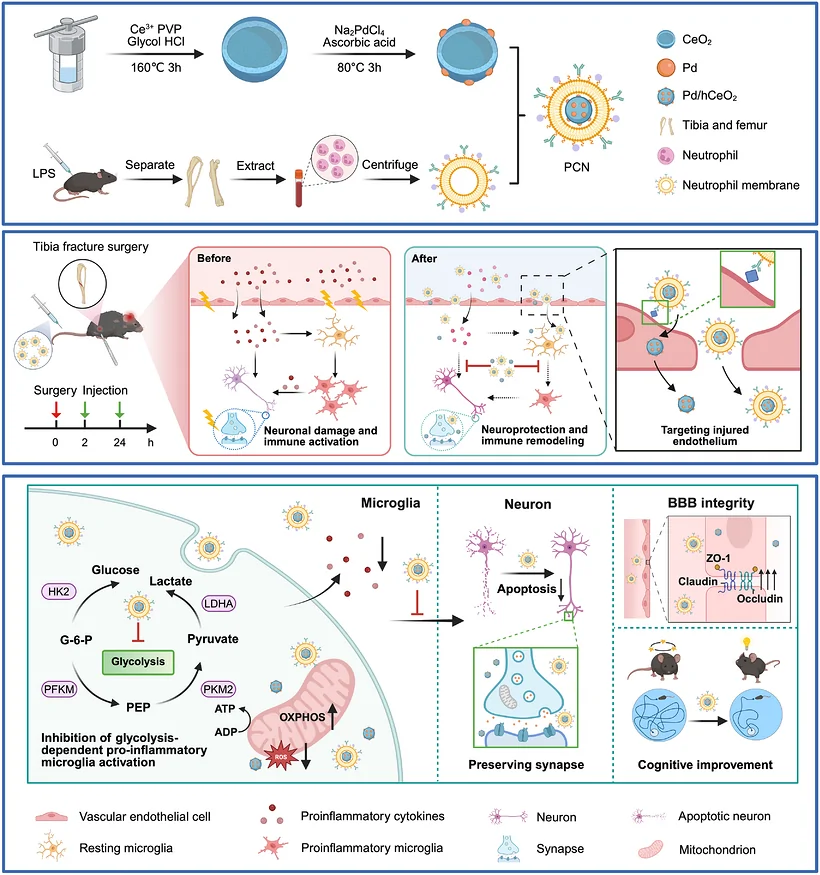
In an aged mouse model of perioperative neurocognitive disorders, researchers tested a biomimetic nanozyme platform designed to target surgery-induced brain inflammation. The formulation, termed PCN, encapsulates palladium and hollow cerium oxide nanoparticles within neutrophil membranes. Leveraging the natural inflammation-homing properties of the cell membranes, the nanozymes crossed the compromised blood-brain barrier and accumulated in inflamed brain regions. The nanoparticles scavenged reactive oxygen species, lessened neuroinflammation, and preserved blood-brain barrier integrity. Within microglia, the treatment suppressed pro-inflammatory activity by inhibiting glycolysis and promoting aerobic respiration. These metabolic shifts protected synaptic function and improved cognitive performance in the aged mice.
Why it matters
Postoperative cognitive dysfunction is a major clinical issue in aging populations linked to heightened neuroinflammation and microglial activation. Interventions that reprogram brain immune metabolism and neutralize oxidative stress offer a targeted strategy to counter age-dependent inflammatory damage.
Caveats
The findings are restricted to aged mice undergoing an experimental model of surgery-induced cognitive disorder. Further research is required to evaluate whether the nanoparticle platform functions safely and effectively in humans.
The paper
Show 14 more authors
Qiang Zhang, Xiao Zhang, Ye Liu, Yizhe Zhang, Wanbing Dai, Zhi Xiong, Lin Guo, Lingling Xu, Wen Wang, Xin Xu, Yan Zhou, Weifeng Yu, Bo Li, Diansan Su,Shanghai Jiao Tong University
Advanced Science · 30 Sep 2026