Age and sex shaped damage to the retina in mutant mice
Experiments in mice carrying a disease-linked mutation found greater declines in retinal function and greater loss of light-sensing cells in females than males.
Limit: The abstract reports no results on whether anti-inflammatory treatment helps
Edited by Boris Djordjevic · AgingResearch.News
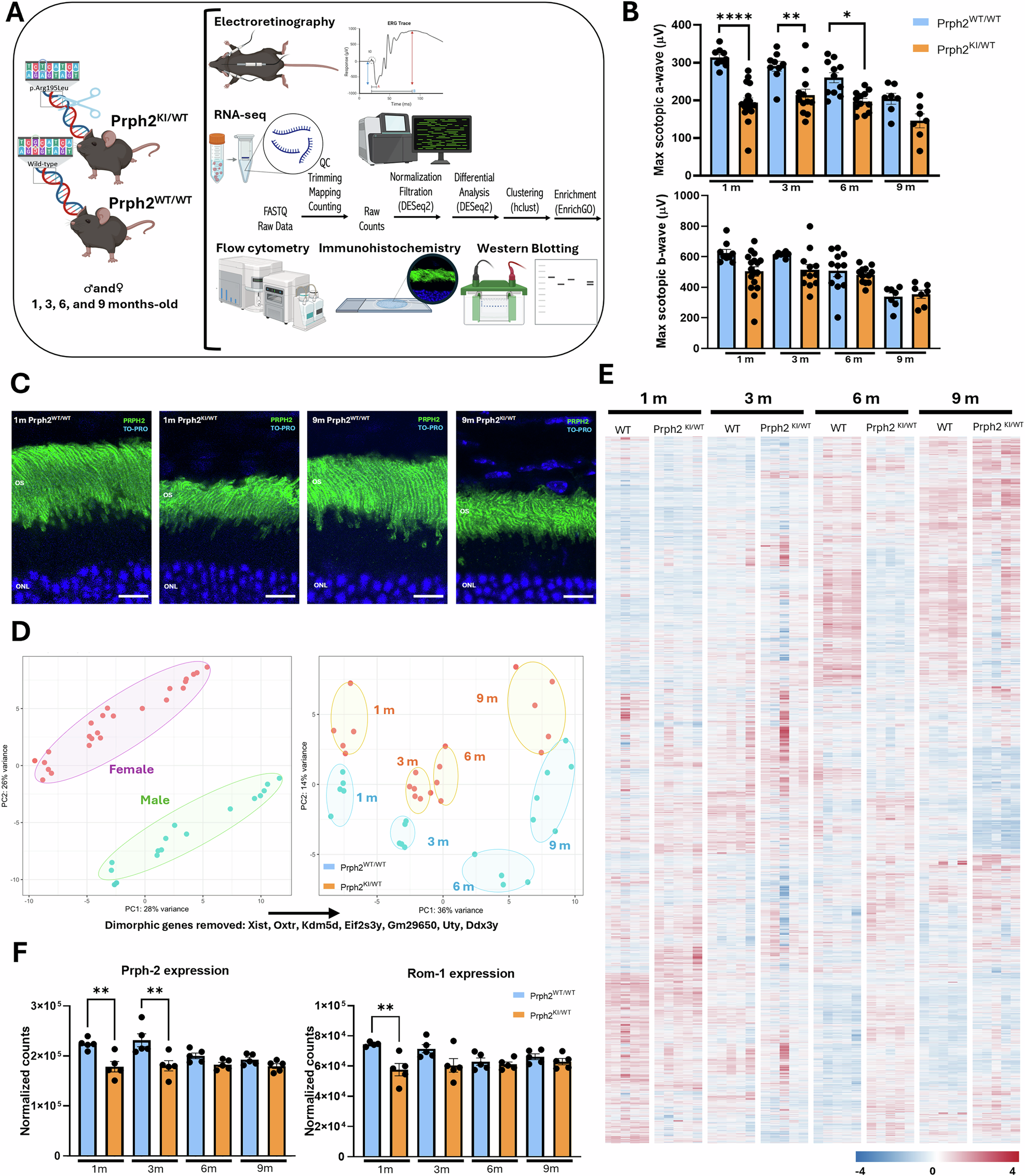
Researchers studied mice carrying a mutation linked to central areolar choroidal dystrophy, a progressive eye disease. In these animal experiments, they measured electrical responses in the retina—the eye’s light-sensing layer—and examined gene activity and cellular changes.
Young mutant mice already had impaired retinal function and disorganized outer parts of light-sensing cells, alongside immune activation. Middle age marked a transition: increased cell death and disruption of a barrier formed by a layer of cells marked the beginning of retinal degeneration. These changes became evident at nine months. Females showed greater, sustained inflammation from the earliest disease stages. They also had greater declines in retinal function and greater loss of light-sensing cells than males.
Why it matters
The study addresses how an inherited eye disease unfolds with age. Its findings could help explain why people carrying the same mutation experience different disease severity.
Caveats
These were experiments in a mouse model, not studies in people. The abstract did not report testing whether anti-inflammatory treatment helped.
- Inflammation
- PRPH2
- Cell killing (cytotoxicity)
- Central areolar choroidal dystrophy
- CD11b immunoreactivity
- Mice
The paper
University of Alicante
Cell Death Discovery, Jul 23, 2026, Open access


