Europe’s temperature-linked cardiovascular death rate may double
Under high emissions, the model projected 62.4 temperature-linked cardiovascular deaths per 100,000 people by late-century, compared with 31.4 at baseline.
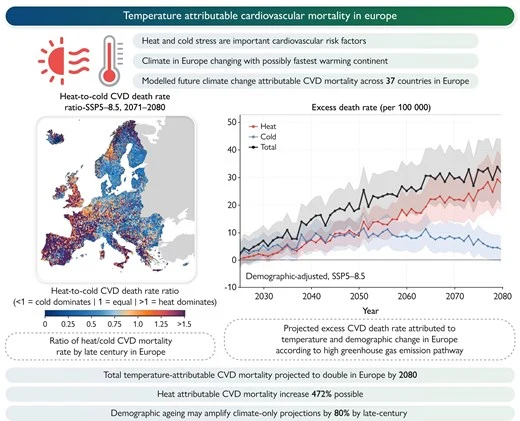
Limit: Local cardiovascular deaths were estimated from national totals rather than measured locally
Edited by Boris Djordjevic · AgingResearch.News
Researchers used a computational model of populations across 37 European countries to project heat- and cold-linked deaths from cardiovascular disease—disease of the heart and blood vessels. They combined national death estimates for 2016–2023, temperature-related risk estimates from a 27-country pooled study, five climate models and national population-aging projections.
The model estimated 168,586 temperature-attributable deaths annually at baseline. Under high emissions, it projected 441,772 such deaths annually by late-century and a 472% rise in heat-attributable death rates. Population aging may amplify projected temperature-attributable mortality by over 80% beyond climate change alone by late-century. With the population’s age structure held at 2020 levels, cold-attributable death rates may decline rather than rise over the century.
Why it matters
Heat and cold stress are established cardiovascular risks. The projections support integrating temperature-related risks into clinical care and public health planning as Europe’s population ages.
Caveats
These are model projections, not observed future deaths. The model used national death estimates and applied temperature-related risk estimates from a 27-country pooled study across 37 countries.
The paper
Cardiovascular Research Institute
European Journal of Preventive Cardiology, Oct 19, 2026


