Rising health vulnerability linked to heart and blood vessel disease
Rising vulnerability was associated with higher cardiovascular disease risk than consistently low vulnerability, with a hazard ratio of 2.14 comparing event rates over time.
Frontiers in Public Health
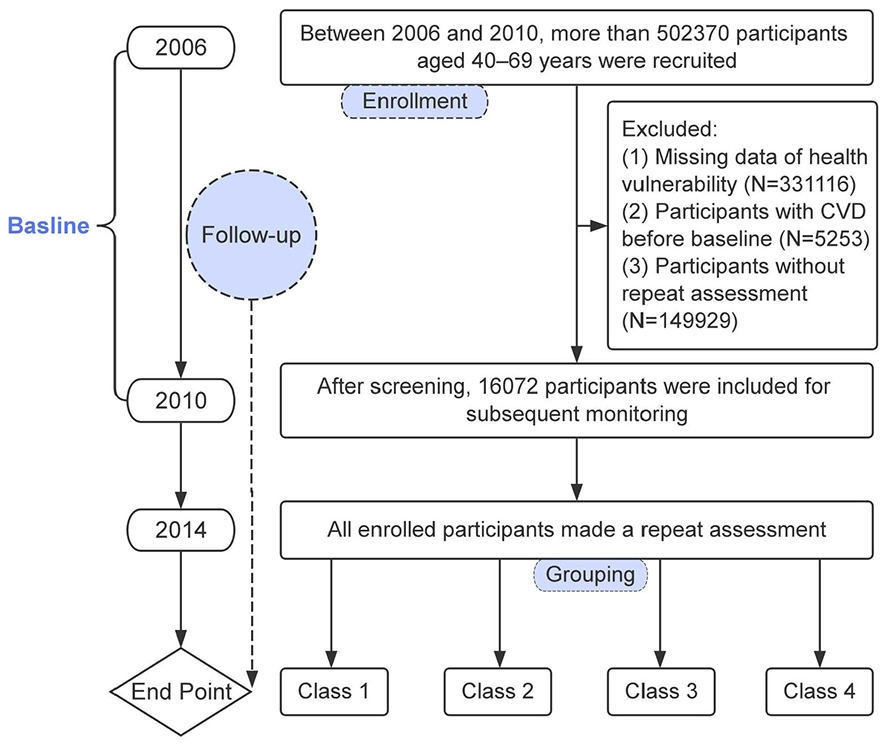
In 16,072 UK Biobank participants, researchers examined health vulnerability and cardiovascular disease, which affects the heart and blood vessels. This observational cohort study assessed vulnerability, a measure combining physical, psychological and social factors, in 2006–2010 and again in 2014. Follow-up began at the first assessment.
Researchers identified 3,033 new cardiovascular disease events over a median 8.9 years. After adjusting for other factors, they linked rising vulnerability to higher disease risk than consistently low vulnerability. Consistently elevated vulnerability was also associated with higher risk, with a hazard ratio of 1.18. The strength of the associations differed by age and smoking status. The main findings remained consistent in additional analyses.
Why it matters
The study bears on whether tracking physical, psychological and social health could help assess cardiovascular risk at different ages.
Caveats
This observational study cannot show that changing vulnerability caused cardiovascular disease. Follow-up began at baseline, before the repeat assessment used to identify changes in vulnerability.
The paper
Ningxia Medical University
Frontiers in Public Health · 22 Sep 2026