Diet linked to gut microbes and disease progression in sleep disorder
An observational study followed 287 people with a sleep disorder for a median 4.2 years and linked dietary patterns to later brain disease.
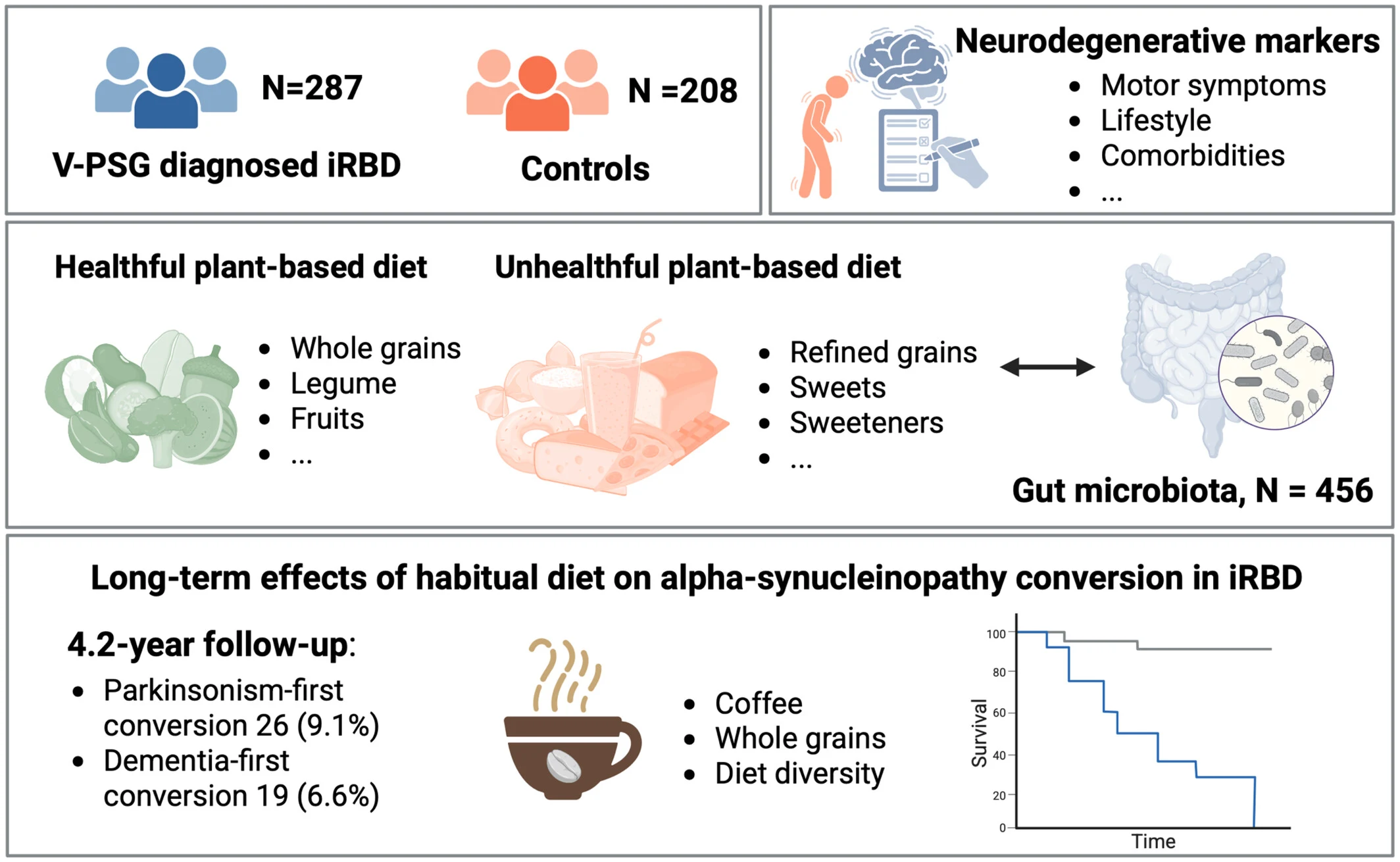
456 participants
Limit: Early cognitive and autonomic symptoms may change diet, rather than diet influencing progression
Researchers recruited 287 people with isolated rapid eye movement sleep behaviour disorder and 208 age- and sex-matched controls for an observational study. This disorder involves acting out dreams. They assessed diet using food questionnaires and analysed gut microbes in 456 participants.
People with the disorder had lower scores for healthful plant-based diets and ate more refined grains, sweets and sweeteners. Diet was associated with 84.3% of the gut microbes linked to the disorder. Over a median 4.2 years, 45 people with the disorder (15.7%) developed alpha-synucleinopathies, neurodegenerative diseases involving abnormal accumulation of the protein alpha-synuclein. Four dietary factors and five gut microbes were associated with progression. Higher coffee consumption was linked to a lower risk of progression.
Why it matters
For age-related neurodegenerative diseases, the work raises the question of whether diet–microbe interactions could offer targets for intervention before disease develops.
Caveats
This observational study cannot establish cause and effect, and participants reported their diets through questionnaires. The progression findings do not establish effects in people without this sleep disorder.
From the paper
- Participants
This study included 287 iRBD patients and 208 controls matched for age (iRBD: 66.9 ± 7.1 years; controls: 66.6 ± 7.3 years) and sex (74.6 vs. 68.3% male).
- Follow-up
After a median follow-up of 4.2 years, 45 (15.7%) iRBD patients converted to α-synucleinopathies.
- Result
We found that iRBD patients exhibited lower healthful PDIs (adjusted odds ratio [aOR] 95% confidence interval [95% CI]: 0.48 [0.29–0.80], P = 0.005) but higher consumption of unhealthful plant-based foods (refined grains, sweets, and sweeteners).
- Limitation
First, because iRBD patients exhibit varying degrees of neurodegeneration at baseline, we cannot definitively rule out reverse causality, wherein early prodromal symptoms (eg, subtle cognitive and autonomic dysfunction) may alter dietary choices.
Quoted word for word from the full text on movementdisorders.onlinelibrary.wiley.com.
- Refined grains
- Sweets
- Microbiome composition
- Gut microbiome dysbiosis
- Isolated REM sleep behavior disorder
- Humans
The paper
The Chinese University of Hong Kong
Movement Disorders, 16 Oct 2026