The endocannabinoid system and the ageing brain
Abstract
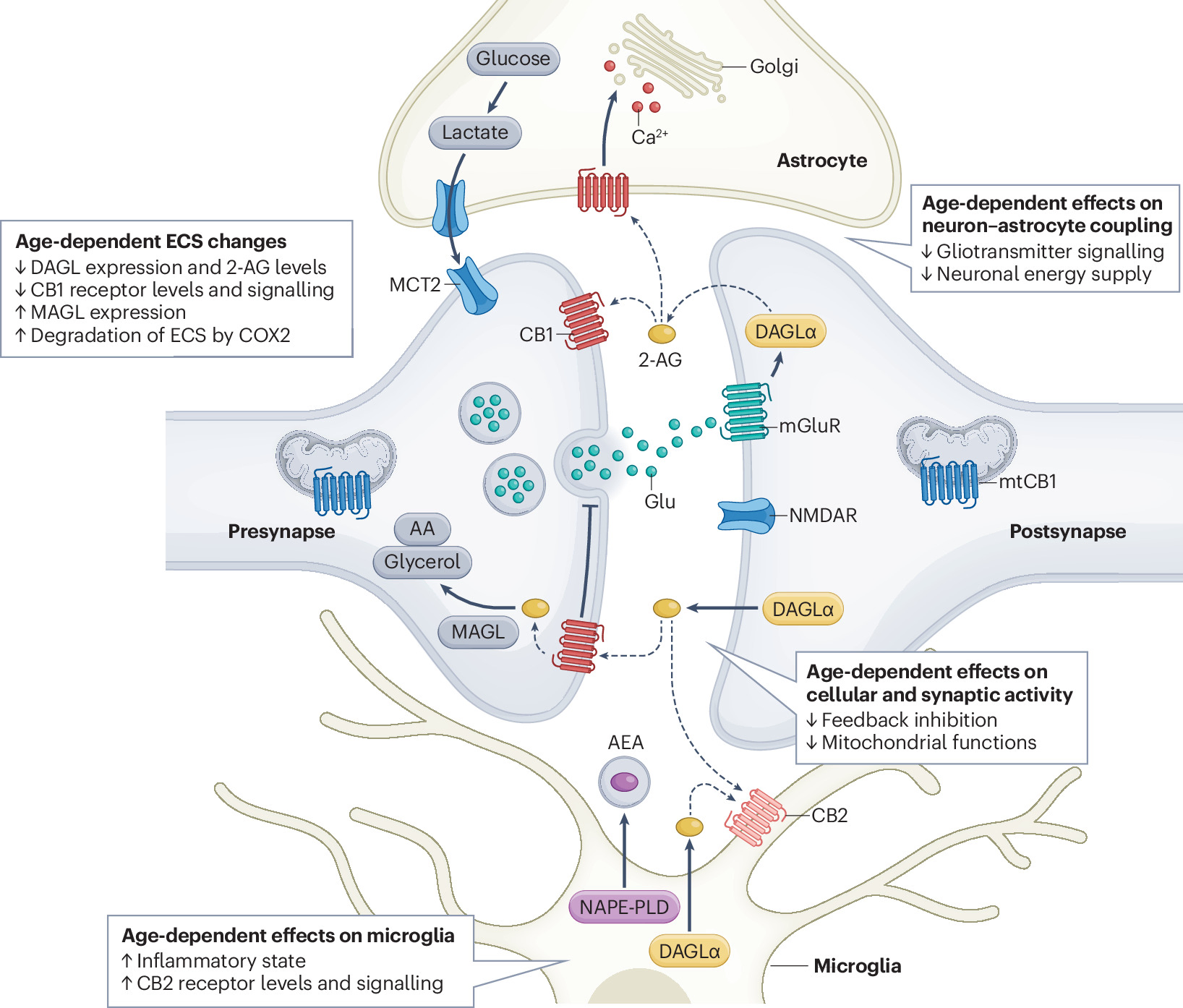
Ageing is accompanied by a progressive decline in homeostatic resilience that increases vulnerability to chronic disease, disability and cognitive impairment. Although unhealthy brain ageing can often be prevented by managing the underlying risk factors, the molecular, cellular and physiological mechanisms that connect risk factors to late-life brain dysfunction remain incompletely understood. This review examines the role of the endocannabinoid system in brain ageing. The endocannabinoid system is a short-range lipid signalling network that helps to maintain neuronal, glial, metabolic and inflammatory homeostasis. Endocannabinoid signalling follows a dynamic lifespan trajectory, with relatively high activity during early adulthood and functional decline during ageing. Genetic or pharmacological disruption of endocannabinoid system activity impairs several processes linked to hallmarks of brain ageing, including neuroinflammatory control, adult neurogenesis, synaptic plasticity, cognitive performance, metabolic regulation and epigenetic stability. Conversely, low-dose Δ9-tetrahydrocannabinol (THC) treatment can ameliorate several ageing-related brain phenotypes in old animals. However, clinical evidence in older humans remains limited, and the therapeutic potential of cannabinoid-based interventions requires further evaluation.
- Dronabinol
- Cellular homeostasis
- Epigenetic regulation of gene expression
- Inflammation
- Stem cell differentiation
- animals
The paper
University of Bonn
Nature Reviews Neuroscience, Oct 16, 2026