RP-UHPLC/MS/MS reveals statin-induced alterations in profiles of free monohydroxy sterols and tocopherols in human plasma
Abstract
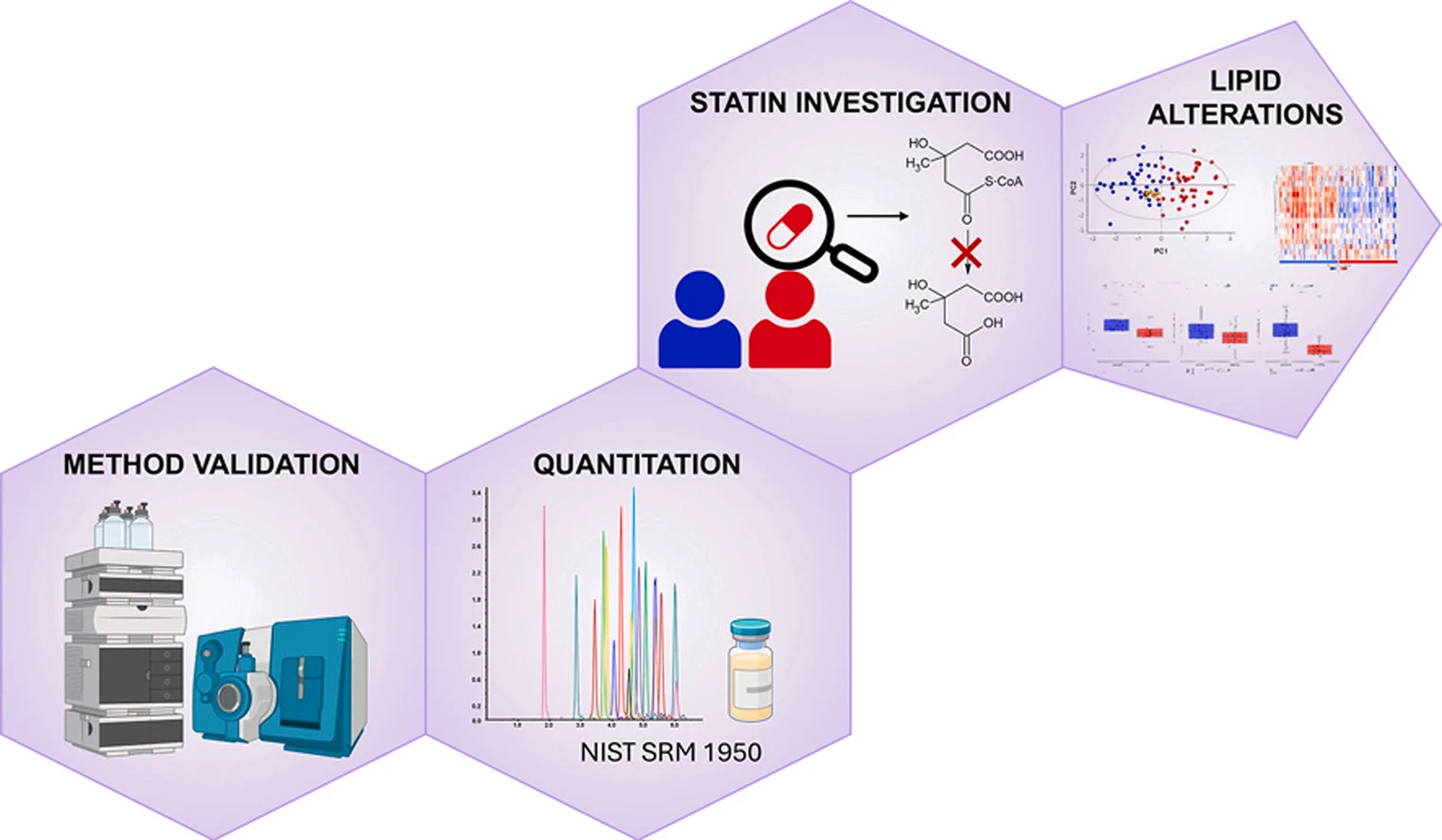
BACKGROUND: Statins are the most prescribed cholesterol-lowering drugs in the world. Reversed-phase ultrahigh-performance liquid chromatography coupled with tandem mass spectrometry (RP-UHPLC/MS/MS) enables the analysis of isomeric lipid species, and the chemical derivatization enhances ionization efficiency. Here, we address the need for a validated quantitative method for sterols and tocopherols in human plasma and its application for the characterization of statin-induced alterations in lipid composition at the level of isomeric species. RESULTS: We developed a high-throughput RP-UHPLC/MS/MS method using multiple reaction monitoring (MRM) in the negative ion mode, which is based on the chemical derivatization with 3-(chlorosulfonyl)benzoic acid. The optimized and validated method using eight internal standards (IS) was applied to NIST SRM 1950, which enabled the quantification of 18 sterol species and two tocopherols (α- and γ-tocopherols). The lipidomic profiling of human plasma samples obtained from 41 statin-treated and 41 statin-naïve subjects provided a broad overview of cholesterol-related lipids. The separation of sterol isomers was an essential aspect due to the varying statistical importance of individual isomeric species. SIGNIFICANCE: This methodology provides a highly sensitive and selective quantitative analysis of free sterol species and tocopherols with isomeric structural resolution, which is critical for biological interpretation. Univariate and multivariate statistical analyses demonstrated statistically significant alterations in the statin-treated cohort among endogenous free sterol species and α-tocopherol, while exogenous free sterols showed no statistically significant changes.
The paper
University of Pardubice
Analytica Chimica Acta, 6 Sep 2026

