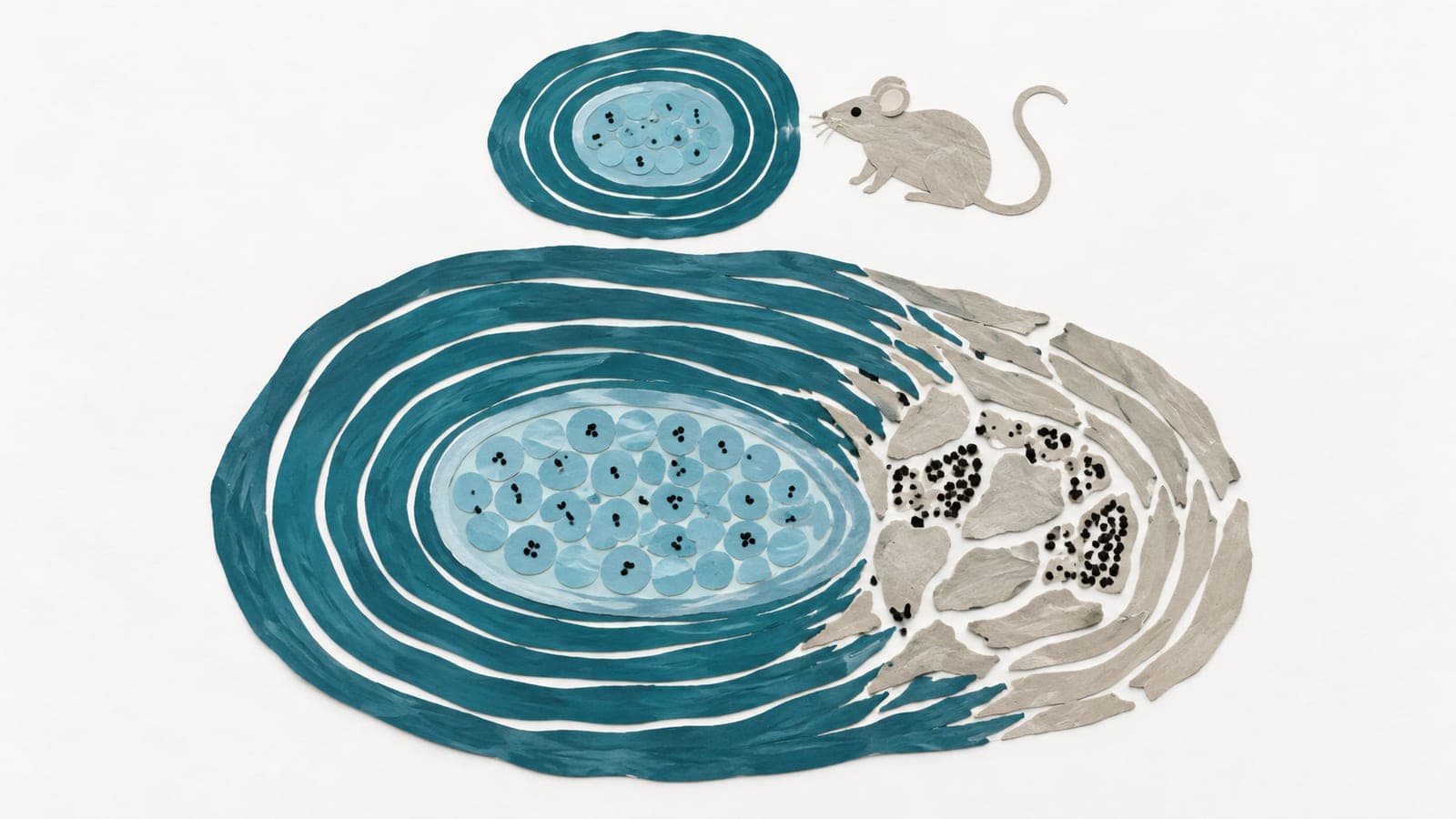
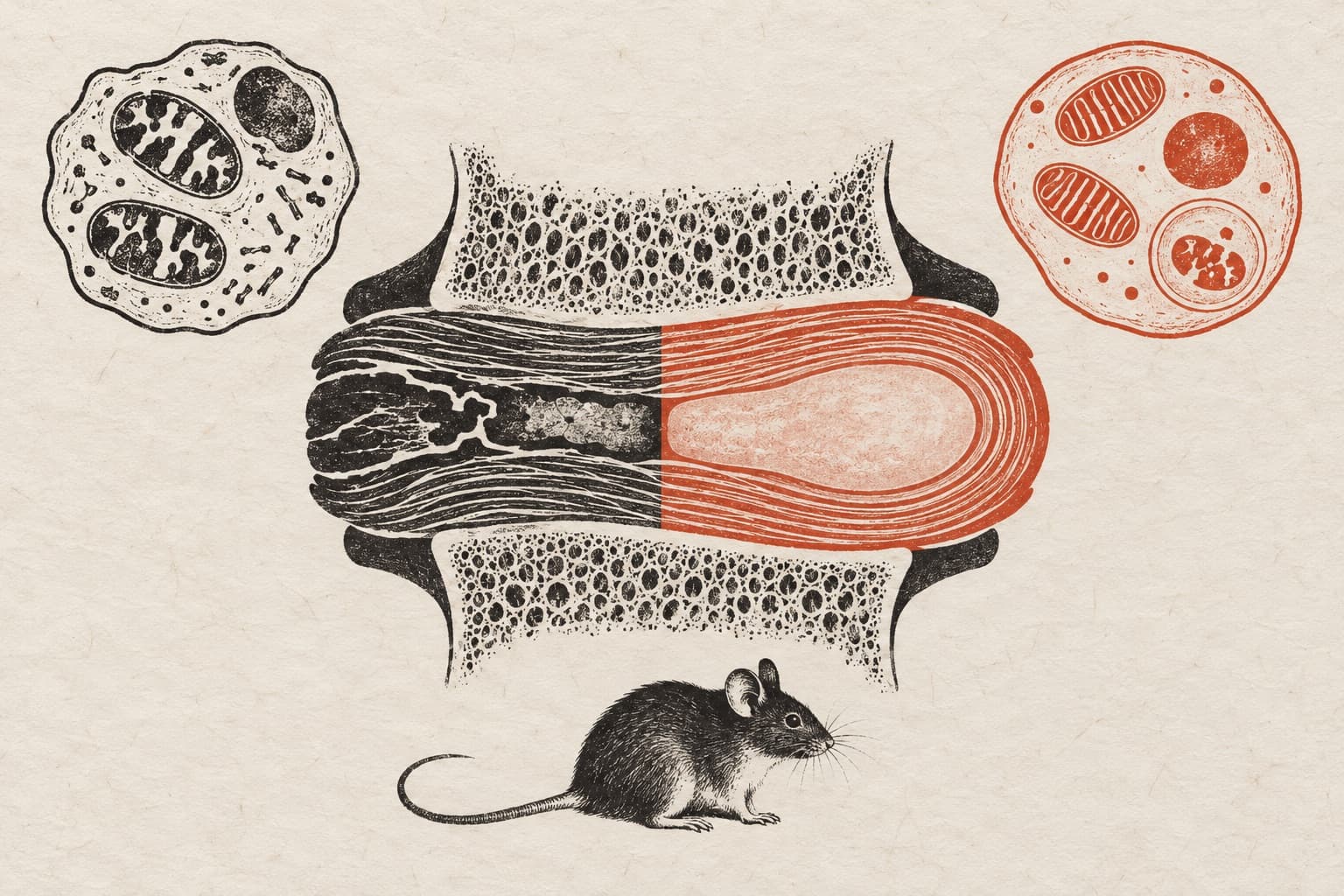
Genetic study links protein to spinal narrowing in people
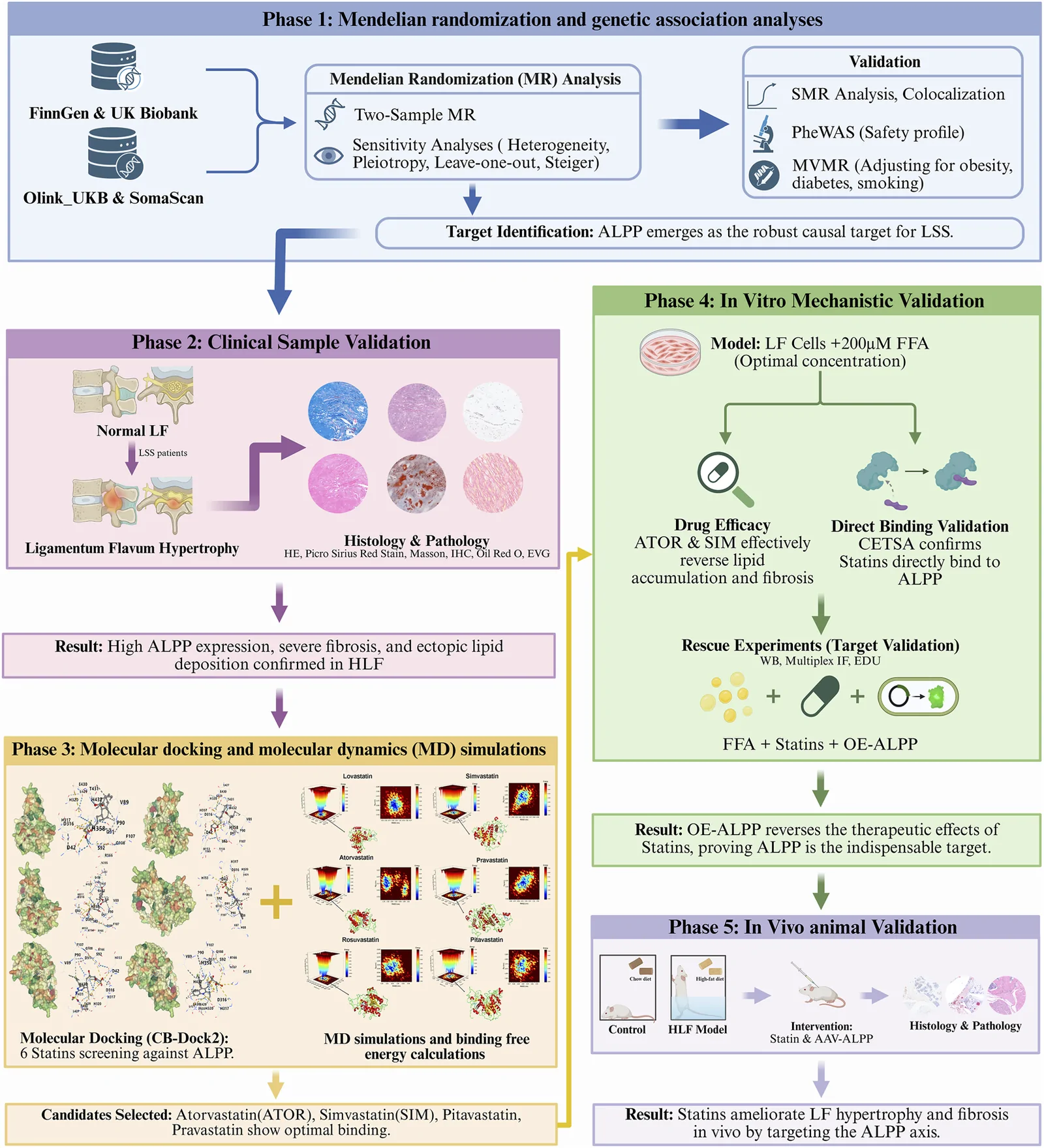
Genetic analyses using two European-ancestry datasets linked higher genetically predicted levels of placental alkaline phosphatase, a protein, to greater risk of spinal canal narrowing.
Limit: Possible overlap between protein and UK Biobank samples could bias the genetic association
Researchers used genetic data from European-ancestry men and women to study spinal stenosis, a narrowing of the spinal canal. Their Mendelian randomisation analysis used inherited genetic differences to examine associations between proteins and disease risk. The datasets included 9,169 cases and 164,682 people without the condition, and 1,910 cases and 359,284 people without it. Higher genetically predicted levels of placental alkaline phosphatase, a protein, were consistently linked to higher risk across datasets.
In patient spinal ligament samples, higher protein levels coincided with fat accumulation and fibrosis, or tissue scarring. In ligament cells grown in the lab, statins—cholesterol-lowering drugs—reduced fat accumulation and markers of scarring. Increasing the protein counteracted these effects. Computer simulations and cell tests supported possible binding of atorvastatin and simvastatin to the protein.
Why it matters
The work addresses whether existing cholesterol-lowering drugs might act on tissue changes involved in a degenerative spinal disorder, providing a rationale for further investigation.
Caveats
The genetic associations do not establish that lowering this protein would treat spinal stenosis; the study was not a statin trial in patients. The genetic datasets covered European-ancestry participants, with limited age information.
From the paper
- Participants
The FinnGen dataset (GWAS ID: finn-b-M13_SPINSTENOSIS), for which the phenotype was labeled as spinal stenosis, included 9,169 cases and 164,682 controls.
Quoted word for word from the full text on PubMed Central.
The paper
Zhujiang Hospital
Frontiers in Pharmacology, 29 Sep 2026, Open access