Associations of Angiotensin-Converting Enzyme 2 Activity With Markers of Endothelial Dysfunction and Oxidative Stress in Young Healthy Adults: The African-PREDICT Study
Registered NCT03292094
Abstract
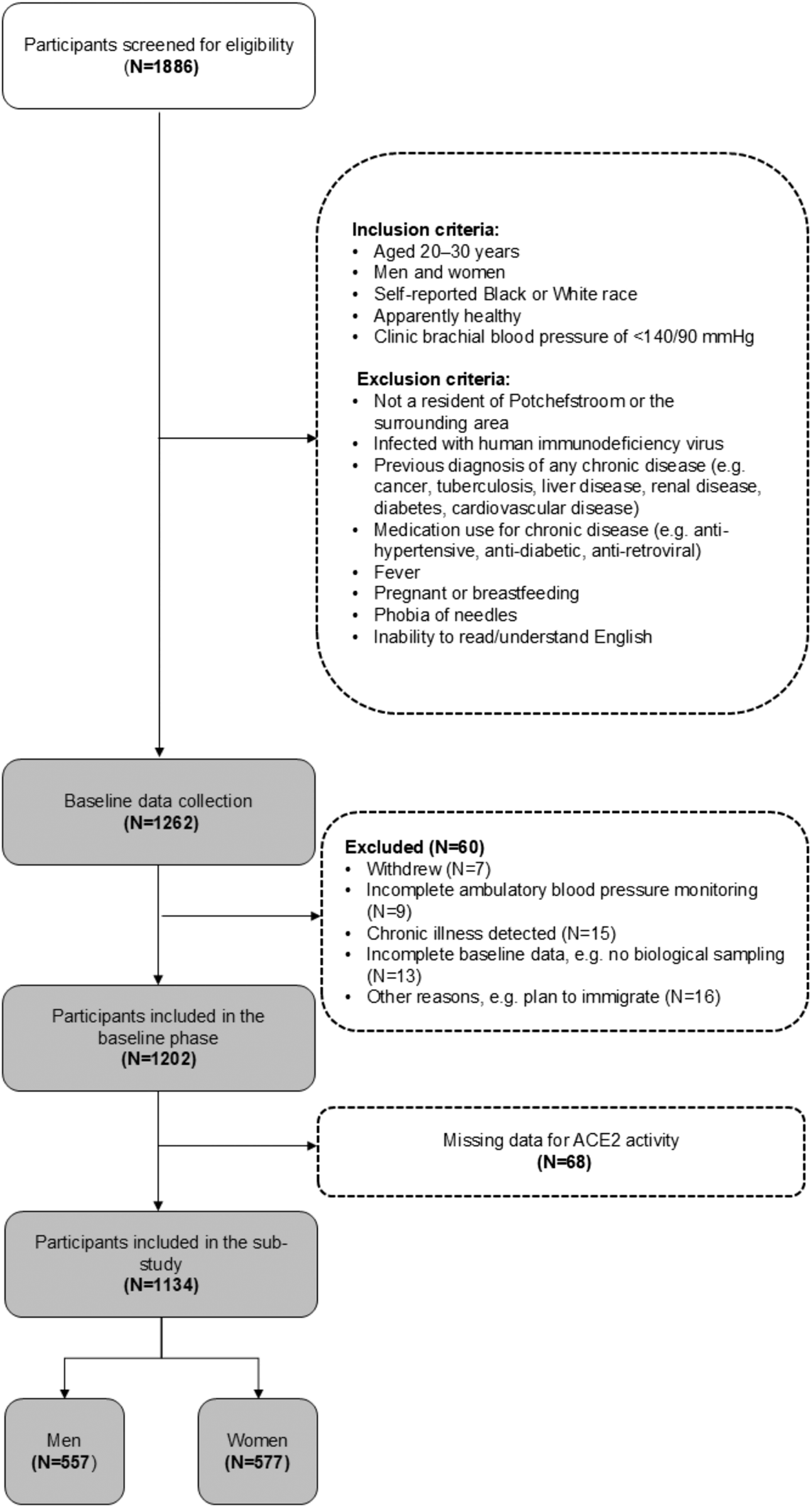
BACKGROUND: Activation of the renin-angiotensin-aldosterone-system plays a major role in the pathogenesis of cardiovascular disease through, among others, endothelial dysfunction and oxidative stress. Circulating ACE2 (angiotensin-converting enzyme 2) is emerging as a biomarker of cardiovascular disease risk; however, its role in younger populations is not well-established. This study aimed to investigate sex differences in serum ACE2 activity and associations with endothelial dysfunction and oxidative stress-related markers in young, apparently healthy men and women. METHODS: In this cross-sectional study, we included 1134 young (aged 20-30 years) men (n=557) and women (n=577). Serum ACE2 activity was measured using a validated fluorometric assay. We analyzed markers of endothelial dysfunction, oxidative stress, and antioxidant capacity. We performed a 2-sample t test and Mann-Whitney U test. We applied multivariable-adjusted Tobit regression analysis to account for left truncation. RESULTS: Men had higher ACE2 activity than women (P<0.001). After multiple adjustments for covariates, ACE2 activity was positively associated with von Willebrand factor (P=0.006), and a disintegrin-like metalloproteinase with thrombospondin motif type 1 member 13 (P=0.019) in men. Among women, ACE2 activity was negatively associated with asymmetric dimethylarginine (P=0.043) and superoxide dismutase (P=0.004). CONCLUSIONS: Serum ACE2 activity was higher in men than women and showed sex-specific associations with endothelial dysfunction and oxidative stress-related markers. Our results suggest an association between ACE2 shedding and pathophysiological processes associated with alterations in endothelial integrity and early endothelial dysfunction, which may be influenced by sex. This highlights the role of circulating ACE2 as a potential early biomarker of cardiovascular disease risk in young adults. REGISTRATION: URL: https://clinicaltrials.gov; Unique identifier: NCT03292094.
- Oxidative stress and ROS signalling
- Endothelial dysfunction
- ACE2
- ADAMTS13 activity
- Antioxidant capacity
- Humans
The paper
Hypertension in Africa Research Team (HART) North-West University Potchefstroom South Africa
Journal of the American Heart Association, 16 Oct 2026


