Epitalon and Epithalamin: A Narrative Review of Mechanistic, Preclinical, and Clinical Evidence
Abstract
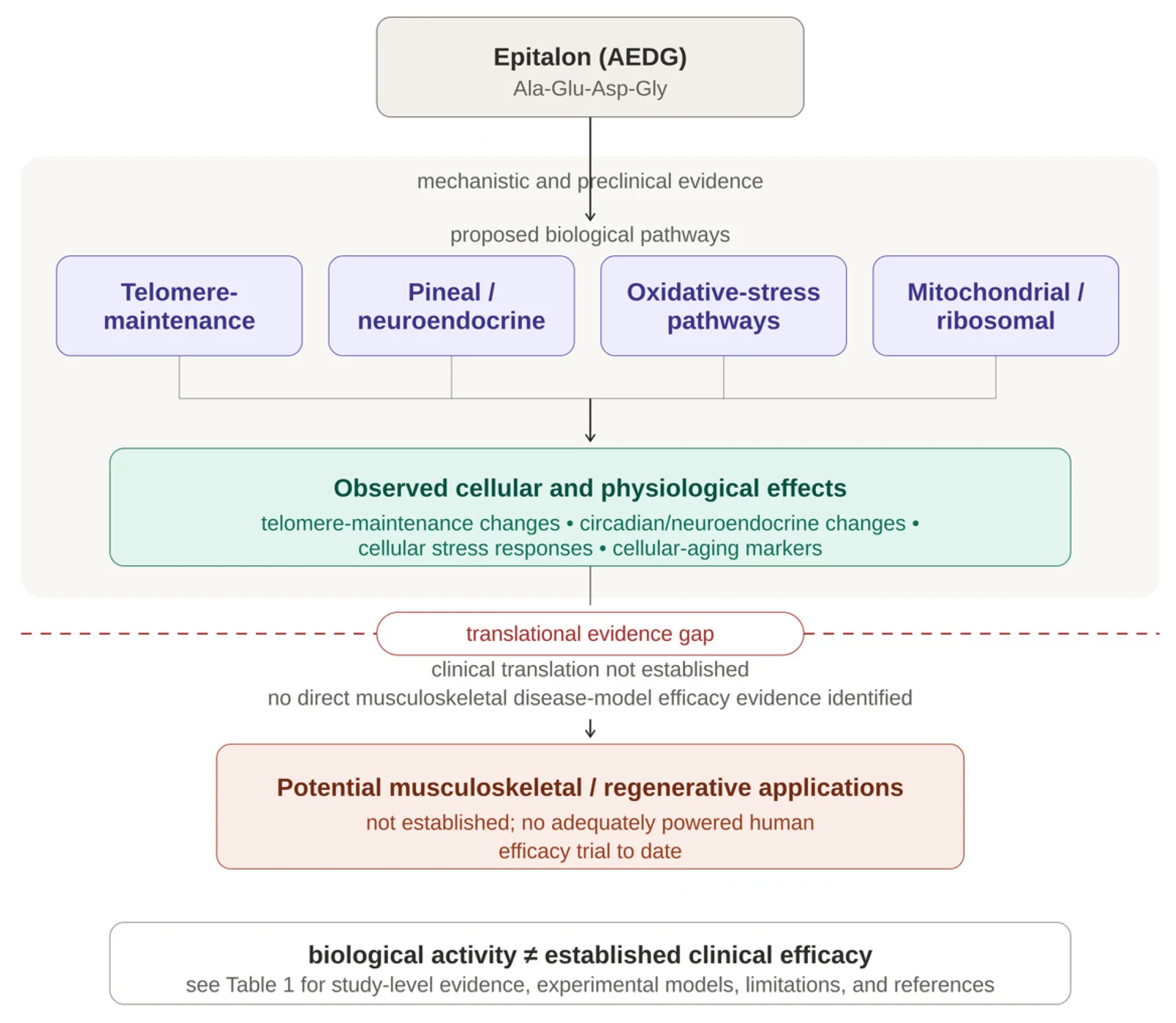
Epitalon (Ala-Glu-Asp-Gly) is a synthetic tetrapeptide developed from the amino-acid composition of epithalamin, a chemically distinct pineal-derived polypeptide preparation. This narrative review evaluates the mechanistic, preclinical, and human evidence for synthetic epitalon in the context of regenerative and longevity medicine, while considering epithalamin studies separately as historical context. PubMed and Google Scholar were searched through 22 September 2026, with primary experimental and clinical studies prioritized and evidence appraised by study design, model, sample size, intervention, outcomes, safety reporting, and independent replication. Epitalon has been reported to modulate telomere-maintenance pathways, circadian and neuroendocrine function, oxidative stress, and cellular aging markers. Preclinical studies suggest biological activity, but direct evidence in musculoskeletal disease models is lacking. Human evidence is limited to small physiological or biomarker studies and an older controlled study in retinitis pigmentosa; no adequately powered randomized trial has established therapeutic efficacy. Pharmacokinetic, dose-ranging, and long-term safety data remain inadequate, while oncologic, immunogenicity, product-quality, and regulatory uncertainties following a 2026 FDA advisory review remain unresolved. Epitalon is therefore biologically active but clinically unproven, and further standardized pharmacologic, safety, and disease-specific studies are needed before clinical translation.
The paper
International Journal of Molecular Sciences, 8 Oct 2026, Open access

