Clinic software modestly reduced recorded falls in older adults
Rates of patients with recorded falls were 19.3 versus 21.2 per 100 patient-years in intervention and control practices, respectively, over 12–23 months.
Registered NCT04993781
Limit: Diagnostic codes can miss falls that never enter health records
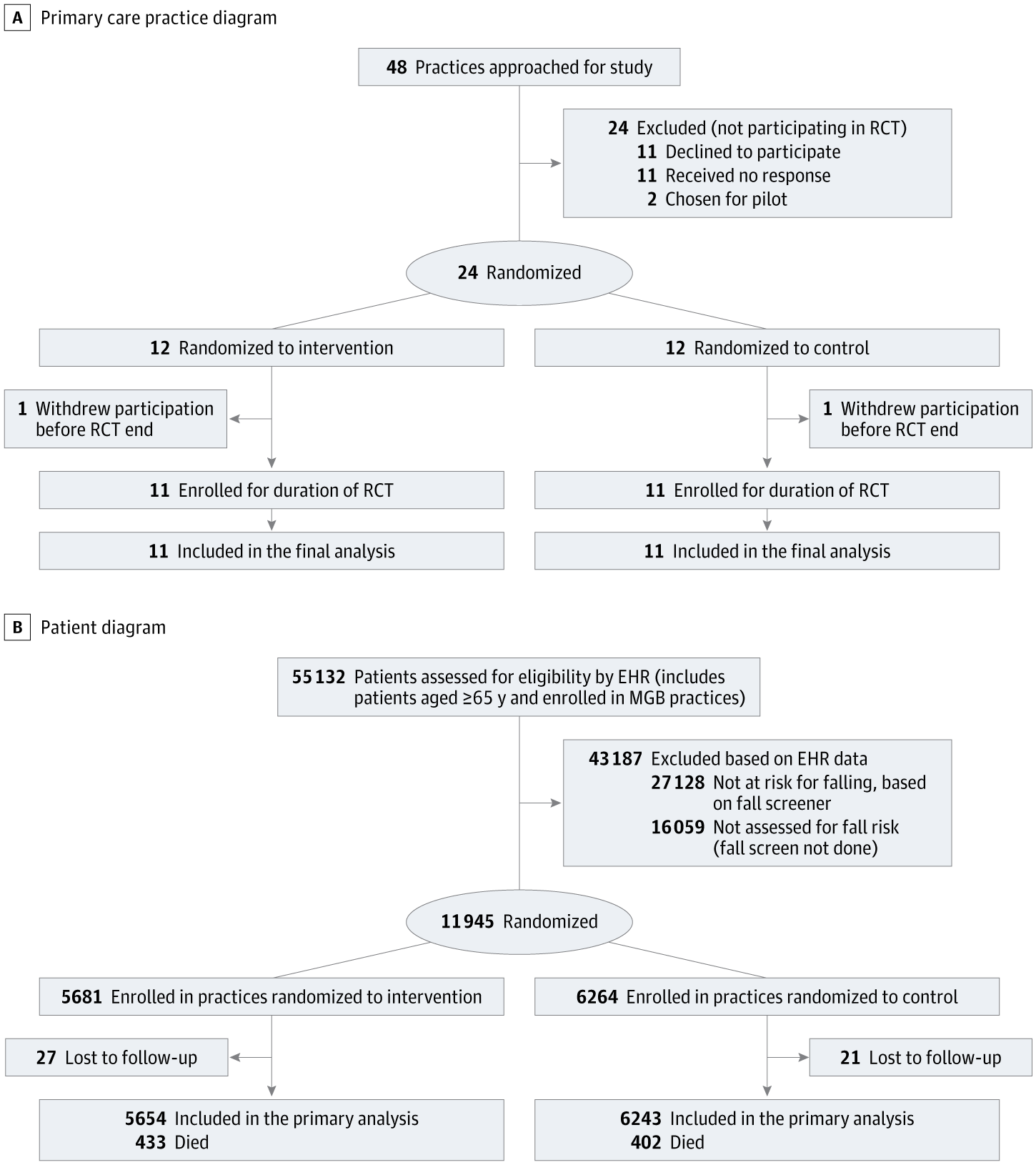
A cluster randomised trial enrolled 11,945 adults aged 65 or older with positive fall-risk screens at 22 US primary care practices. Their average age was 77.05 years, and 67.3% were female. Researchers assigned practices to a control group or electronic health record software offering tailored exercise recommendations, optional physiotherapy referrals and patient materials.
Follow-up lasted 12–23 months. Rates of patients with recorded falls were modestly lower with the software. Rates used patient-years, a measure combining participants’ follow-up time. For recorded fall-related injuries, rates were 15.7 patients per 100 patient-years with the software versus 16.7 in controls. Mortality did not differ. Clinicians issued exercise prescriptions to 1,255 intervention patients (22.1%).
Why it matters
Falls are a leading cause of injury among older adults. The trial examined a way to make exercise-based prevention part of routine primary care.
Caveats
The trial measured falls and injuries through diagnostic codes in health records. It studied older adults at increased fall risk within one US health system, not younger or lower-risk people.
The paper
Brigham and Women's Hospital
JAMA Network Open, 1 Oct 2026