Biological Activity of 3-Hydroxypyridine Derivatives with Natural Components
5 days
Abstract
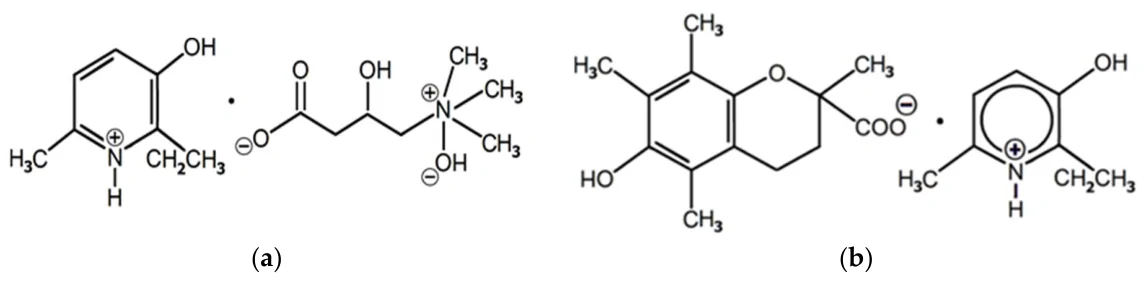
We investigated the antiradical properties of antioxidants: carnitinate 2-ethyl-6-methyl-3-hydroxypyridine (CAR-3-HP) and carboxychromate-2-ethyl-6-methyl-3-hydroxypyridine (CCR-3-HP), and also assessed the mitochondrial response to stress (hypoxia) by analyzing the intensity of lipid peroxidation, membrane fatty acid composition, and activation of autophagy markers LC3 and Beclin-1 using spectrofluorimetry, chromatography, and immunoblotting, respectively. The studied antioxidants exhibited high antiradical activity, which was reflected in their ability to inhibit lipid peroxidation. Five-day administration of antioxidants to mice at a dose of 2 × 10⁻⁹ mol/kg prevented the activation of lipid peroxidation in liver mitochondrial membranes under conditions of acute hypobaric hypoxia. The drugs also prevented a decrease in C₁₈ and C₂₀ fatty acid levels, and also activated autophagy. In both cases, CAR-3-HP was more effective than CCR-3-HP. This drug increased the lifespan of mice almost twice as effectively under conditions of various types of hypoxias.
- Carboxychromate-2-ethyl-6-methyl-3-hydroxypyridine
- Carnitinate 2-ethyl-6-methyl-3-hydroxypyridine
- Autophagy
- Lipid and ceramide metabolism
- Beclin-1
- Mice
The paper
Russian Academy of Sciences
International Journal of Molecular Sciences, 7 Oct 2026, Open access