Kidney disease linked to changes in thinking, mood and function
Newly detected kidney disease was associated with a downward shift of 0.019 standardised units per year in how thinking scores changed, compared with remaining disease-free.
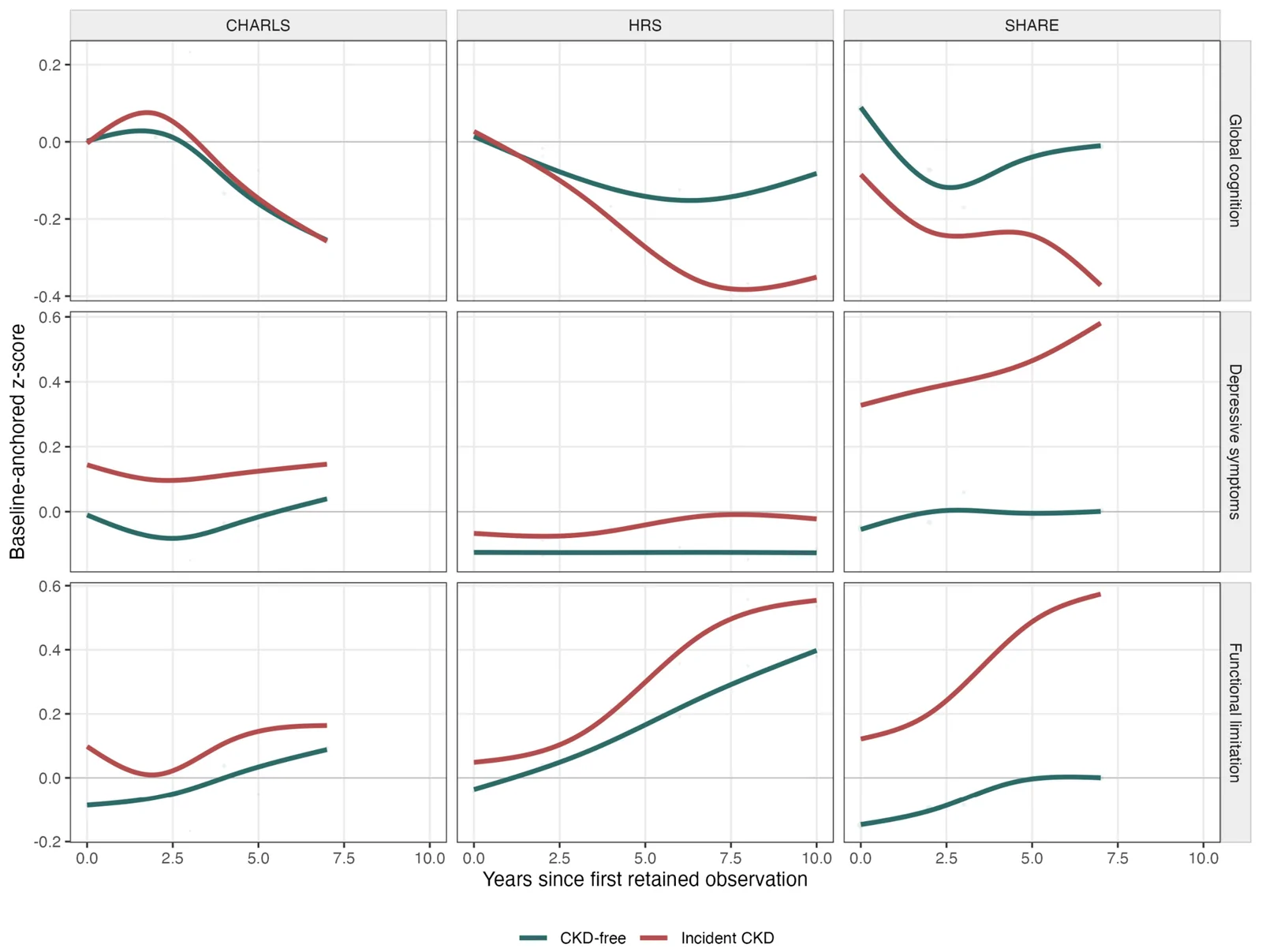
In an observational study, researchers analysed data from 75,044 adults aged 50 or older in China, the United States, Europe and Israel. They used repeated surveys and biological measurements from three cohorts. The comparison included 2,480 people with newly detected chronic kidney disease and 72,564 who remained free of it.
The researchers assessed thinking, depressive symptoms and functional limitations separately. After adjustment for baseline health conditions, body mass index, smoking and alcohol use, disease detection was associated with changes in their annual rates of change. These were minus 0.019 for thinking, 0.018 for depressive symptoms and 0.075 for functional limitations, in standardised units per year. These units put scores on a common statistical scale. The estimates described changes in rates over time, not sudden effects of disease.
Why it matters
Following thinking, mood and everyday functioning together addresses how different aspects of health in later life change around the first detection of chronic kidney disease.
Caveats
This observational study found adjusted associations, not evidence that kidney disease caused the changes. Its population was adults aged 50 or older, so the findings do not necessarily apply to younger people.
The paper
Central South University
Healthcare, 29 Sep 2026, Open access