Caffeine and Exercise in Obesity-Associated Brain Aging and Neurodegeneration: Mechanistic Insights into AMPK/SIRT1/PGC-1α, BDNF/TrkB, and NLRP3 Inflammasome Signaling
Abstract
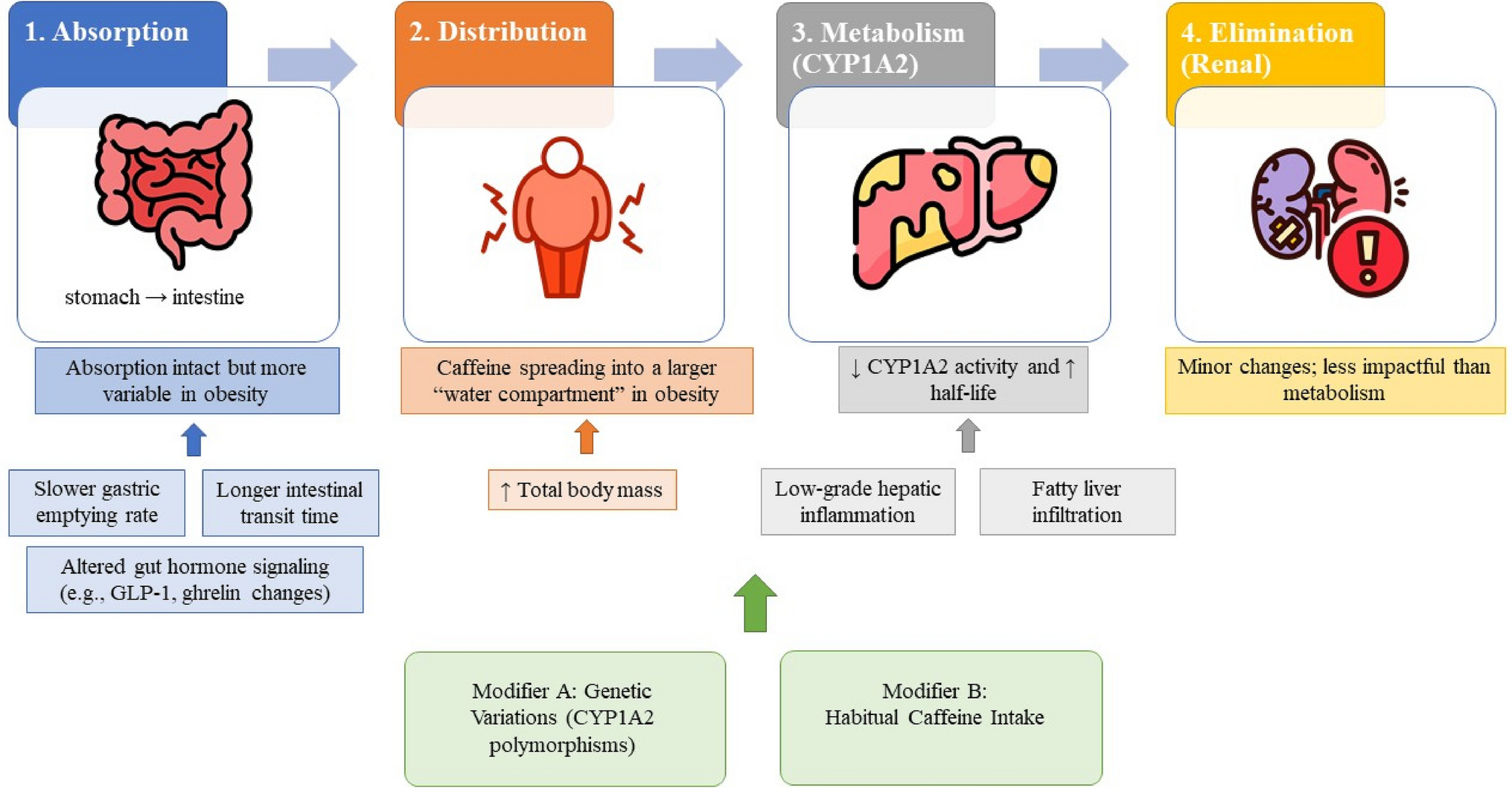
Brain aging and neurodegenerative disorders are increasingly associated with metabolic dysfunction, chronic low-grade inflammation, and physical inactivity. Obesity may accelerate adverse brain aging through neuroinflammation, insulin resistance, mitochondrial dysfunction, altered metabolic flexibility, and impaired neuroplasticity. Physical exercise remains a cornerstone strategy for metabolic and brain health, although individual responses vary. Caffeine has emerged as a potential adjunct to exercise because of its ergogenic effects and its ability to modulate adenosine signaling, energy metabolism, inflammation, and neuroplasticity. This narrative review critically synthesizes human and preclinical evidence on caffeine, exercise, and their combination in relation to exercise performance, metabolic health, cognitive function, brain aging, and neurodegeneration, with particular emphasis on obesity. Acute caffeine ingestion may improve selected aspects of exercise performance, perceived exertion, alertness, and cognition, whereas chronic caffeine use combined with exercise may favor body composition, cardiometabolic health, and neuronal resilience. Responses depend on caffeine dose and timing, habitual intake, exercise modality and intensity, and individual characteristics. Mechanistic evidence indicates convergence on adenosine A1/A2A receptors, AMPK/SIRT1/PGC-1α, BDNF/TrkB, mitochondrial quality control, and NLRP3-related inflammatory signaling, providing a plausible basis for complementary effects on metabolic adaptation, neuroinflammation, mitochondrial homeostasis, and synaptic plasticity. However, direct evidence demonstrating true caffeine-exercise synergy, particularly for human brain aging or neurodegenerative outcomes, remains limited, with substantial reliance on indirect and preclinical findings. Caffeine should therefore be considered a context-dependent adjunct rather than a disease-modifying intervention. Future adequately powered, long-term randomized trials integrating cognitive outcomes, neuroimaging, and mechanistic biomarkers are needed to establish whether combined interventions exert additive, synergistic, or independent effects and to develop safe, personalized protocols.
The paper
Shanxi University
Molecular Neurobiology, 16 Oct 2026